Loading...
Akbar the Great vs Henry the Fowler
Akbar the Great leads by 8.9 pts · 2 figures compared
…
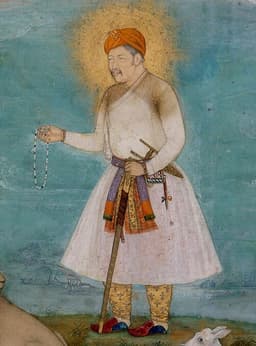
Akbar the Great
Emperor · Modern
69.8Total
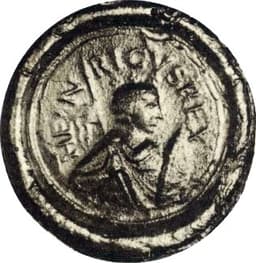
Henry the Fowler
Emperor · Medieval
60.9Total
Basic Information
Born
1542
876
Died
1605
936
Era
Modern
Medieval
Nationality
India
East Francia
Occupation
Emperor
Emperor
Civilization
Indian
Western
Score Comparison
Military (10%)
80.0
70.0
Political (20%)
82.0
59.3
Influence (20%)
68.0
55.0
Legacy (20%)
55.0
52.0
Leadership (15%)
80.0
85.0
Strategy (15%)
68.0
55.0
TOTAL
69.8
60.9
Akbar the Great — Complete Timeline
1556 AD
Second Battle of PanipatWar
Akbar, aged 13, defeated the Hindu general Hemu at Panipat, securing the Mughal throne. Hemu had captured Delhi and declared himself emperor. Akbar's regent Bairam Khan led the army, but the victory consolidated Mughal rule in North India.
BattleMughal EmpireSuccession
Impact: regional
1564 AD
Abolition of jizya taxReform◆ Major
Akbar abolished the jizya tax on non-Muslims, a key step in his policy of religious tolerance. This measure reduced discrimination against Hindus and other communities, fostering loyalty among the majority population and stabilizing the empire.
Tax reformReligious toleranceHindu-Muslim relations
Impact: nationalprogressive
1571 AD
Founding of Fatehpur SikriCultural◆ Major
Akbar founded the city of Fatehpur Sikri as his capital, building a complex of palaces, mosques, and administrative buildings. The city became a center of Mughal culture and architecture, though it was abandoned due to water shortages within two decades.
ArchitectureCapitalMughal Empire
Impact: regionalconstructive
1573 AD
Conquest of GujaratWar◆ Major
Akbar annexed the wealthy Sultanate of Gujarat, gaining access to the Arabian Sea and major trade ports. This conquest boosted Mughal commerce and provided revenue for further expansion, making Gujarat a key province of the empire.
ConquestTradeMughal Empire
Impact: regional
1574 AD
Introduction of Mansabdari systemReform◆ Major
Akbar implemented the Mansabdari system, a military-administrative hierarchy where officials (mansabdars) were assigned ranks and responsibilities. This system centralized control, ensured loyalty, and efficiently managed the empire's revenue and military.
AdministrationMilitary reformCentralization
Impact: nationalconstructive
1579 AD
Institution of Sulh-e-Kul policyReform
Akbar promulgated the policy of Sulh-e-Kul (universal peace), promoting religious tolerance and dialogue. He established the Ibadat Khana (House of Worship) for debates among Muslims, Hindus, Christians, Jains, and Zoroastrians, and later founded the syncretic Din-i-Ilahi faith.
Religious policySyncretismTolerance
Impact: nationalprogressive
Henry the Fowler — Complete Timeline
919 AD
Election as King of East FranciaPolitical Action
Henry the Fowler was elected King of East Francia by the Saxon and Frankish nobles at Fritzlar on May 6, 919. He was the first Saxon king, marking the transition from Carolingian to Ottonian rule. His election was contested by other dukes but he prevailed.
ElectionAccessionOttonian Dynasty
Impact: regionalconstructive
921 AD
Treaty of Bonn (921)Political Action◆ Major
Henry the Fowler signed the Treaty of Bonn with Charles the Simple of West Francia, recognizing each other's royal titles and establishing peaceful relations. This treaty ended Carolingian claims over East Francia and solidified Henry's legitimacy as an independent king.
TreatyRecognitionDiplomacy
Impact: regionalconstructive
924 AD
Nine-Year Truce with the MagyarsPolitical Action◆ Major
Henry the Fowler negotiated a nine-year truce with the Magyars, agreeing to pay tribute in exchange for a halt to their raids. He used this period to fortify towns, reorganize the army, and train cavalry. This strategic pause was crucial for his later military reforms.
TruceMagyarsMilitary Reform
Impact: regionalconstructive
929 AD
Battle of Lenzen (929)War◆ Major
Henry the Fowler's forces defeated a Slavic army at the Battle of Lenzen, securing the eastern frontier of East Francia. This victory allowed Henry to consolidate control over the Elbe region and establish the March of Brandenburg, a key step in German eastward expansion.
BattleSlavic WarsEastern Expansion
Impact: regionalconstructive
933 AD
Battle of Riade (933)War
After the truce with the Magyars expired, Henry the Fowler led a German army to victory at the Battle of Riade (near Merseburg). The defeat of the Magyar cavalry ended their raids into East Francia for a generation and established Henry's reputation as a defender of Christendom.
BattleMagyarsVictory
Impact: regionalconstructive
936 AD
Death of Henry the FowlerOther◆ Major
Henry the Fowler died on July 2, 936, at Memleben. He was succeeded by his son, Otto I, who would become Holy Roman Emperor. Henry's reign laid the foundations for the Ottonian dynasty and the medieval German kingdom.
DeathSuccessionOttonian
Impact: regional
Expert Analysis
Henry the Fowler vs Akbar the Great
# The Emperor and the King: Akbar’s World of Gold and Henry’s World of Iron
On a spring morning in 1579, Akbar stood in the courtyard of his newly built city, Fatehpur Sikri, and listened to the arguments of Hindus, Muslims, Jains, and Christians debating the nature of God. Half a continent away and six centuries earlier, Henry the Fowler, a king who had never learned to read, spent his days fortifying hilltops against Magyar raiders who burned villages and sold captives into slavery. The contrast between these two rulers is not merely one of time or geography—it is a contrast between two visions of what power could achieve. Akbar dreamed of universal peace; Henry dreamed of survival. Both succeeded, but their success took opposite forms.
Origins
Akbar was born in 1542, the grandson of Babur, the founder of the Mughal dynasty. His father, Humayun, had lost the empire before Akbar was out of childhood. The boy grew up in exile, surrounded by Persian tutors, Afghan warriors, and the constant threat of extinction. When Humayun died in 1556, Akbar was only thirteen—an age when most rulers would have been a figurehead. But the Mughal throne was not a place for the weak. Akbar’s early years taught him that power was fragile, that loyalty was bought with victory, and that the Hindu majority of India would never accept a purely Muslim ruler.
Henry the Fowler was born in 876, a century after Charlemagne’s empire had shattered into warring fragments. He was the son of Otto the Illustrious, a Saxon duke who controlled little more than his own lands. The East Frankish kingdom—what would become Germany—was a patchwork of rival duchies: Saxons, Franks, Bavarians, Swabians. Beyond its borders, the Magyars raided from the east, the Vikings from the north, and the Slavs pressed from the Elbe. Henry’s world was one of iron and blood, where a king’s first duty was not to reform but to defend.
Rise to Power
Akbar’s rise came in a single afternoon. On November 5, 1556, at the Second Battle of Panipat, his regent Bairam Khan led a Mughal army against Hemu, a Hindu general who had captured Delhi and crowned himself emperor. Hemu was winning until an arrow pierced his eye. The Mughals captured him, and Bairam Khan beheaded him on the spot. Akbar, watching from a distance, had done nothing but lend his name. Yet the victory was his. At thirteen, he had a throne.
Henry’s rise was slower and more political. In 919, the nobles of Saxony and Franconia gathered at Fritzlar and elected him king. But this was no coronation of glory. The Duke of Bavaria refused to recognize him. The Duke of Swabia ignored him. Henry had been chosen not because he was loved, but because he was the least threatening option. His first years as king were spent not conquering, but negotiating—convincing dukes to accept his authority, one by one, through a mix of threats, marriages, and patience.
Leadership & Governance
Akbar governed through vision. In 1564, he abolished the jizya tax on non-Muslims, a radical step that shocked orthodox Islamic scholars. He married Hindu princesses without forcing them to convert. He invited Jesuit missionaries to court and debated them for hours. In 1579, he formally proclaimed the policy of *Sulh-e-Kul*—universal peace—declaring that all religions were paths to the same God. This was not mere tolerance; it was a deliberate strategy to bind a vast, diverse empire together. His Mansabdari system, introduced in 1574, turned military commanders into imperial bureaucrats, their rank and salary fixed by the emperor. Every noble, Hindu or Muslim, Persian or Rajput, was bound into a single hierarchy.
Henry governed through necessity. He could not afford to alienate his dukes, so he did not try to centralize power. Instead, he made the best use of what he had. In 924, facing Magyar raids that no army could stop, he negotiated a nine-year truce and agreed to pay tribute. It was humiliating, but it bought time. During those nine years, Henry fortified towns, trained cavalry, and built a new kind of army—one that could fight the Magyars on their own terms. When the truce ended in 933, he met them at Riade and won. His victory was not a conquest; it was a defense. He had saved his kingdom, not expanded it.
Triumph & Tragedy
Akbar’s greatest triumph was the conquest of Gujarat in 1573. The wealthy sultanate gave the Mughals access to the Arabian Sea and the trade routes that connected India to the Ottoman Empire, Persia, and Europe. It was a stroke of strategic genius that transformed the Mughal economy. But Akbar’s ambitions had a darker side. His conquests were often brutal, and his later years were poisoned by family conflict. His son Jahangir rebelled; his closest friend Abu’l-Fazl was assassinated. The emperor who preached universal peace could not keep peace in his own house.
Henry’s greatest moment was the Battle of Riade in 933. After years of paying tribute and preparing in secret, he led his army against the Magyars and crushed them. The victory was decisive; the Magyars never again raided deep into German lands. But Henry’s tragedy was that he never saw the full fruit of his work. He died in 936, leaving his son Otto to complete the unification of Germany and claim the imperial crown. Henry had built the foundation, but Otto built the cathedral.
Character & Destiny
Akbar was a man of boundless curiosity and restless energy. He was said to have been illiterate, but he surrounded himself with scholars and listened to their debates for hours. He designed his own city, Fatehpur Sikri, and then abandoned it when the water ran dry. He was capable of great cruelty—he ordered the massacre of prisoners after one rebellion—and great magnanimity. His personality drove his policies: the same hunger for knowledge made him seek out other religions, and the same need for control made him build a bureaucracy that could reach every corner of his empire.
Henry was a man of patience and calculation. He knew that a king who rushed would lose. He endured the shame of paying tribute because he understood that shame was temporary and survival was permanent. He fortified his borders, built alliances, and waited. When the moment came, he struck. His destiny was not to be remembered as a conqueror, but as a founder—the man who gave Germany its first king who could defend it.
Legacy
Akbar is remembered as the greatest of the Mughals, the emperor who made India’s diversity a source of strength rather than division. His policies of religious tolerance influenced later rulers, from Shah Jahan to the British Raj. But his empire did not survive him intact. The Mansabdari system became corrupt; the religious tolerance faded under his successors. Today, his name is invoked by those who seek a pluralistic India, and by those who see him as a symbol of a lost golden age.
Henry is remembered as the founder of the Ottonian dynasty, the line that produced the first Holy Roman Emperors. He gave Germany a sense of identity that outlasted his own kingdom. But his legacy is quieter. He has no great monuments, no famous edicts, no city named after him. His victory at Riade is known only to historians. Yet without Henry, there would have been no Otto the Great, no Holy Roman Empire, no Germany as we know it.
Conclusion
Akbar and Henry lived in different worlds, but they faced the same fundamental question: how does a ruler hold together a kingdom that is bigger than his own tribe? Akbar answered with vision—he tried to create a civilization where everyone had a place. Henry answered with patience—he built a fortress that could outlast the storm. One reached for the heavens; the other dug into the earth. Both succeeded, and both failed, in ways that remind us that leadership is never about perfection. It is about making the best of the time and place you are given.
Rankings
🥇
Akbar the GreatLeader
Mil: 80.0Pol: 82.0Inf: 68.0
69.8
🥈
Henry the Fowler
Mil: 70.0Pol: 59.3Inf: 55.0
60.9
+8.9 behind
How This Comparison Works
Algorithm
Each figure is scored on 6 dimensions (0—100 scale) based on structured historical data: Military (10%), Political (20%), Influence (20%), Legacy (20%), Leadership (15%), Strategy (15%). The weighted total produces the final ranking.
Data Sources
Scores are computed from structured sub-indicators in the database. Scale factors adjust for era (Ancient ×0.85, Modern ×1.0) and civilization size (Eastern ×1.05, Other ×0.80) to account for differences in population and military scale.
Maximum 3 Figures
Comparisons are limited to 2—3 figures to ensure readability and statistical meaningfulness.
Error Margins
±5 points per dimension — Sub-scores are derived from historical records with inherent uncertainty. Two figures within 5 points on a dimension should be considered roughly equivalent in that area.
Total Score Accuracy
±3 points overall — The weighted combination of 6 dimensions produces a total score with approximately ±3 points of uncertainty. Differences of less than 3 points are not statistically significant— the figures are effectively tied.
Known Limitations
- Historical records are incomplete and uneven across civilizations
- Figures from oral-tradition societies may be underrepresented
- Occupation labels can misclassify multi-role figures
- Scores measure capability and impact, not moral character
- Quantitative scoring is a comparison tool, not absolute truth
Capability Radar
Military (10%) — Battles & Warfare
Battles
85
55
Win Rate
90
60
Expansion
88
60
Political (20%) — Governance & Reform
Reform
95
75
Diplomacy
92
70
Economy
88
65
Influence (20%) — Cultural & Global Reach
Cultural
85
55
Global
70
40
Legacy (20%) — Historical Impact
Historical
80
65
Longevity
75
60
Leadership (15%) — Power & Stability
Tenure
90
70
Stability
85
70
Strategy (15%) — Tactics & Innovation
Strategy
85
65
Tactics
80
50
Reform
75
70
Similar Comparisons
Comments & Discussion
OTTO'S REVENGE6/16/2026
Give me Akbar's religious tolerance over Henry's hill forts any day. Henry was just another feudal warlord who got lucky against Magyar raiders who were basically disorganized horse archers. Akbar built an empire that actually respected its people, instituting the Din-i-Ilahi and abolishing the jizya tax in 1579. He governed 100 million souls while Henry barely held onto a few thousand square miles of mud and misery. This comparison insults Mughal greatness.
DIGITAL DERVISH6/16/2026
你们这些西方史迷总是把亨利一世捧成什么"日耳曼之父",可他的真实政绩呢?搞了几座土堡垒就叫"铁器时代"?笑死了。阿克巴1579年废除吉兹亚税时,亨利连自己的名字都写不出来。他需要识字吗?不用,因为他统治的萨克森部落连个像样的税收系统都没有。阿克巴帝国年收入折合1亿英镑,亨利能凑出十分之一就烧高香了。这哪里是对比,简直是成人殴打婴儿。
CLASSICS CONTRAST6/16/2026
从文明史看,阿克巴和亨利代表了两种截然不同的政治哲学:包容vs.排他。阿克巴在法特赫布尔·西格里建造的伊巴达特哈纳,让锡克教、耆那教、基督教、伊斯兰教代表同台辩论宗教真理——这在16世纪任何地方都是惊人的。而亨利呢?他对付马扎尔人的"成功"就是把他们挡在边境外面,然后坐视斯拉夫村庄被焚烧。一个在创造文明,一个在勉强阻止野蛮。别搞错了,这不是时间差距,而是灵魂差距。
THE GRUDGING TRIBUTARY6/16/2026
Look, I respect Henry for one thing: he knew his limits. He didn't pretend to be a philosopher-king. Henry's priorities were right for his time—stop the Magyars, consolidate the duchies, build defensive burghs. His victory at the Battle of Riade in 933 ended Magyar incursions for good. Akbar was operating on a completely different scale with 16th-century technology and a unified subcontinent. It's like comparing a medieval sheriff to a modern prime minister. Both effective in context, but not co
JIZYA JAB6/16/2026
有个关键事实被你们忽略了:阿克巴1594年直接让拉杰普特王公曼·辛格当帝国最高将领,统帅莫卧儿军队。亨利能做到让一个文德人酋长指挥他的萨克森军队吗?想都别想,他连自己的儿子奥托都信不过。阿克巴建立了世界上第一个真正多民族、多宗教的官僚帝国,而亨利留下的"东法兰克王国"本质上就是一个部落联盟。六百年差距不是借口,是文明鸿沟。阿克巴