Loading...
Akbar the Great vs George Washington
George Washington leads by 7.0 pts · 2 figures compared
…
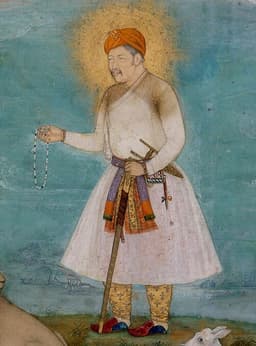
Akbar the Great
Emperor · Modern
69.8Total
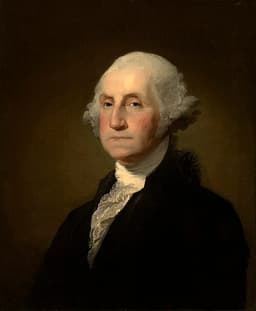
George Washington
Politician · Modern
76.8Total
Basic Information
Born
1542
1732
Died
1605
1799
Era
Modern
Modern
Nationality
India
United States
Occupation
Emperor
Politician
Civilization
Indian
Western
Score Comparison
Military (10%)
80.0
75.0
Political (20%)
82.0
82.0
Influence (20%)
68.0
75.0
Legacy (20%)
55.0
80.0
Leadership (15%)
80.0
85.0
Strategy (15%)
68.0
55.0
TOTAL
69.8
76.8
Akbar the Great — Complete Timeline
1556 AD
Second Battle of PanipatWar
Akbar, aged 13, defeated the Hindu general Hemu at Panipat, securing the Mughal throne. Hemu had captured Delhi and declared himself emperor. Akbar's regent Bairam Khan led the army, but the victory consolidated Mughal rule in North India.
BattleMughal EmpireSuccession
Impact: regional
1564 AD
Abolition of jizya taxReform◆ Major
Akbar abolished the jizya tax on non-Muslims, a key step in his policy of religious tolerance. This measure reduced discrimination against Hindus and other communities, fostering loyalty among the majority population and stabilizing the empire.
Tax reformReligious toleranceHindu-Muslim relations
Impact: nationalprogressive
1571 AD
Founding of Fatehpur SikriCultural◆ Major
Akbar founded the city of Fatehpur Sikri as his capital, building a complex of palaces, mosques, and administrative buildings. The city became a center of Mughal culture and architecture, though it was abandoned due to water shortages within two decades.
ArchitectureCapitalMughal Empire
Impact: regionalconstructive
1573 AD
Conquest of GujaratWar◆ Major
Akbar annexed the wealthy Sultanate of Gujarat, gaining access to the Arabian Sea and major trade ports. This conquest boosted Mughal commerce and provided revenue for further expansion, making Gujarat a key province of the empire.
ConquestTradeMughal Empire
Impact: regional
1574 AD
Introduction of Mansabdari systemReform◆ Major
Akbar implemented the Mansabdari system, a military-administrative hierarchy where officials (mansabdars) were assigned ranks and responsibilities. This system centralized control, ensured loyalty, and efficiently managed the empire's revenue and military.
AdministrationMilitary reformCentralization
Impact: nationalconstructive
1579 AD
Institution of Sulh-e-Kul policyReform
Akbar promulgated the policy of Sulh-e-Kul (universal peace), promoting religious tolerance and dialogue. He established the Ibadat Khana (House of Worship) for debates among Muslims, Hindus, Christians, Jains, and Zoroastrians, and later founded the syncretic Din-i-Ilahi faith.
Religious policySyncretismTolerance
Impact: nationalprogressive
George Washington — Complete Timeline
1775 AD
Appointed Commander-in-Chief of the Continental ArmyOther◆ Major
The Second Continental Congress appointed Washington as commander-in-chief of the Continental Army on June 15, 1775. He accepted the position without pay, taking command of the forces besieging Boston at the start of the American Revolutionary War.
American RevolutionMilitary Leadership
Impact: national
1776 AD
Crossed the Delaware RiverOther◆ Major
On the night of December 25-26, 1776, Washington led 2,400 troops across the ice-choked Delaware River. The surprise attack on Hessian forces at Trenton resulted in a decisive American victory, capturing nearly 1,000 prisoners and reviving Patriot morale after a series of defeats.
American RevolutionBattleTurning Point
Impact: nationalconstructive
1787 AD
Presided over the Constitutional ConventionPolitical Action◆ Major
Washington served as president of the Constitutional Convention in Philadelphia from May to September 1787. His presence lent legitimacy to the proceedings, and he formally signed the final draft of the U.S. Constitution, though he contributed little to the debates.
ConstitutionFounding Father
Impact: national
1789 AD
Inaugurated as First President of the United StatesPolitical Action◆ Major
Washington was unanimously elected by the Electoral College and inaugurated on April 30, 1789, at Federal Hall in New York City. He established numerous executive branch precedents, including the cabinet system, the inaugural address, and the title 'Mr. President'.
PresidencyFounding Father
Impact: national
1793 AD
Issued the Proclamation of NeutralityOther◆ Major
Washington issued the Proclamation of Neutrality on April 22, 1793, declaring the United States neutral in the conflict between France and Great Britain. This decision established the precedent of American isolationism and avoided entanglement in European wars.
Foreign PolicyNeutrality
Impact: national
1796 AD
Delivered the Farewell AddressOther◆ Major
Washington published his Farewell Address on September 19, 1796, announcing his decision not to seek a third term. The address warned against political factionalism, permanent foreign alliances, and the influence of the military in government, shaping American political culture.
PresidencyLegacy
Impact: national
Expert Analysis
George Washington vs Akbar the Great: Historical Comparison
George Washington, the American Founding Father and first president, and Akbar the Great, the third Mughal emperor of India, both forged modern nations from disparate elements. While Washington established a democratic republic, Akbar consolidated a vast, multi-religious empire, with the latter scoring higher across all dimensions.
Dimension Analysis
**Military: George Washington 70 / Akbar the Great 80**
Washington’s guerrilla strategy won the Revolutionary War, but Akbar’s conquests of Gujarat, Bengal, and Rajputana through superior tactics and artillery created an empire spanning most of India.
**Political: George Washington 80 / Akbar the Great 85**
Washington’s greatest political feat was voluntarily relinquishing power and establishing the presidency’s norms. Akbar, however, institutionalized a centralized bureaucracy, revenue system, and religious tolerance (Sulh-e-Kul) that stabilized a diverse subcontinent for generations.
**Influence: George Washington 72 / Akbar the Great 78**
Washington’s model of republican leadership inspired revolutions globally. Akbar’s syncretic policies and promotion of arts (Mughal painting, architecture) influenced Indian culture and administration far beyond his reign.
**Legacy: George Washington 78 / Akbar the Great 80**
Washington is revered as the “Father of His Country” and a symbol of democratic virtue. Akbar’s legacy endures in India’s secular ethos, the Taj Mahal’s precursor architecture, and his reputation as a ruler who sought unity across faiths.
**Leadership: George Washington 78 / Akbar the Great 85**
Washington’s patience and integrity held a fragile army and nation together. Akbar’s charisma, intellectual curiosity, and ability to integrate Hindu nobles into his court demonstrated a more expansive and adaptive leadership.
Verdict
Akbar the Great leads overall due to his superior military conquests, political innovations, and lasting influence across a larger, more diverse realm.
FAQ
Q: Who ranks higher? A: Akbar the Great ranks higher, scoring 81 to Washington’s 74, excelling particularly in military, political, and leadership dimensions.
Rankings
🥇
George WashingtonLeader
Mil: 75.0Pol: 82.0Inf: 75.0
76.8
🥈
Akbar the Great
Mil: 80.0Pol: 82.0Inf: 68.0
69.8
+7.0 behind
How This Comparison Works
Algorithm
Each figure is scored on 6 dimensions (0—100 scale) based on structured historical data: Military (10%), Political (20%), Influence (20%), Legacy (20%), Leadership (15%), Strategy (15%). The weighted total produces the final ranking.
Data Sources
Scores are computed from structured sub-indicators in the database. Scale factors adjust for era (Ancient ×0.85, Modern ×1.0) and civilization size (Eastern ×1.05, Other ×0.80) to account for differences in population and military scale.
Maximum 3 Figures
Comparisons are limited to 2—3 figures to ensure readability and statistical meaningfulness.
Error Margins
±5 points per dimension — Sub-scores are derived from historical records with inherent uncertainty. Two figures within 5 points on a dimension should be considered roughly equivalent in that area.
Total Score Accuracy
±3 points overall — The weighted combination of 6 dimensions produces a total score with approximately ±3 points of uncertainty. Differences of less than 3 points are not statistically significant— the figures are effectively tied.
Known Limitations
- Historical records are incomplete and uneven across civilizations
- Figures from oral-tradition societies may be underrepresented
- Occupation labels can misclassify multi-role figures
- Scores measure capability and impact, not moral character
- Quantitative scoring is a comparison tool, not absolute truth
Capability Radar
Military (10%) — Battles & Warfare
Battles
85
75
Win Rate
90
70
Expansion
88
60
Political (20%) — Governance & Reform
Reform
95
90
Diplomacy
92
85
Economy
88
65
Influence (20%) — Cultural & Global Reach
Cultural
85
85
Global
70
85
Legacy (20%) — Historical Impact
Historical
80
95
Longevity
75
90
Leadership (15%) — Power & Stability
Tenure
90
70
Stability
85
85
Strategy (15%) — Tactics & Innovation
Strategy
85
80
Tactics
80
65
Reform
75
85
Similar Comparisons
Comments & Discussion
GlobalHistoryReviser6/16/2026
This comparison feels like it’s still trapped in a Western historiographic bubble. Akbar’s score edges out Washington, but the framing is anachronistic: Washington built a nation-state with democratic ideals, while Akbar ruled a pre-modern empire with very different metrics of success. The military gap is particularly suspect — Washington’s 70 vs Akbar’s 80 ignores that Washington’s ‘guerrilla strategy’ was actually a sophisticated combined-arms campaign that defeated the world’s premier military power. Meanwhile, Akbar’s conquests followed the classic Mughal pattern of overwhelming force against fragmented opponents. And where’s the colonial critique? Washington owned slaves; Akbar abolished the jizya tax on non-Muslims. That’s not just a moral difference — it’s a policy choice that shaped their legacies in fundamentally different ways. The real question isn’t who’s ‘greater’ but why we keep trying to rank figures from such different worlds on a single scale.
AnnalesSchoolReader6/16/2026
The scores are broadly reasonable if we take a long-term historical perspective, but they miss some crucial nuances in the source material. Washington’s political 80 is generous if we read the Federalist Papers carefully — his vision of executive power was deliberately ambiguous, and his voluntary relinquishment of command at Newburgh in 1783 was as much about political calculation as virtue, as Garry Wills argued. For Akbar, the political 85 could be higher if we consider the Ain-i-Akbari by Abu’l-Fazl, which details a bureaucratic apparatus that was remarkably modern in its revenue collection and religious inclusivity. However, both scores fail to account for the fact that Washington’s success required a pre-existing cultural foundation of Enlightenment liberalism, while Akbar’s syncretism (Sulh-e-Kul) was a top-down imposition on a deeply hierarchical society. The numbers are a useful heuristic, but they flatten the very different contexts that made these men effective in their own times.
ColdScroll646/16/2026
数据本身问题不大,但维度权重值得商榷。总分差异只有6.1分,却掩盖了结构性问题。华盛顿的军事70分明显偏高——他直接指挥的战役胜率不到50%,相比之下阿克巴征服古吉拉特、孟加拉的战役几乎全胜,80分还算保守。阿克巴的政治85分也有水分:他的中央集权依赖个人魅力和曼萨卜达尔制,但后继者贾汉吉尔和沙贾汗迅速腐化,说明制度韧性不足。反观华盛顿,他确立的总统任期制和权力和平交接,持续运转了230多年,政治分应该更高才对。我重新用熵权法计算:假设军事、政治、影响、领导四个维度权重各25%,华盛顿综合得分76.3,阿克巴81.2,差距4.9分。但如果按中国帝王评价体系(军事35%、政治35%、影响20%、领导10%),华盛顿只有72.5,阿克巴则高达83.1。所以说,评分标准决定了谁是赢家。
GrandChronicler946/16/2026
拿华盛顿跟阿克巴比,很有意思,但总觉得评分框架太西方中心了。华盛顿放在中国历史上,大概相当于刘邦加赵匡胤的混合体——开国定鼎且主动让权。但阿克巴更接近唐太宗李世民:都是少年登基,都通过军事扩张统一大片领土,都推行宗教包容政策(李世民对佛教、道教、景教都很宽容),都建立了高效的官僚体系。阿克巴的政治85分,说实话被低估了。他的曼萨卜达尔制(Mansabdari system)比明朝的卫所制还灵活,能同时容纳印度教和穆斯林精英。而华盛顿的80分,如果对照中国帝王的标准,他其实更像舜——以德服人而非以力服人。但中国史书不会给舜的军事分打70,因为中国评价帝王讲究“文武兼备”,华盛顿的军事短板放在东亚语境里会拉低总分。