Loading...
Akbar the Great vs Elizabeth I
Akbar the Great leads by 4.1 pts · 2 figures compared
…
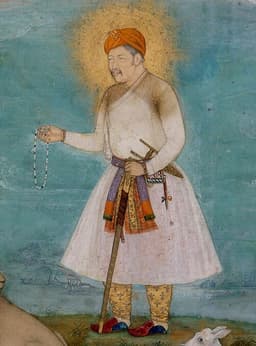
Akbar the Great
Emperor · Modern
69.8Total
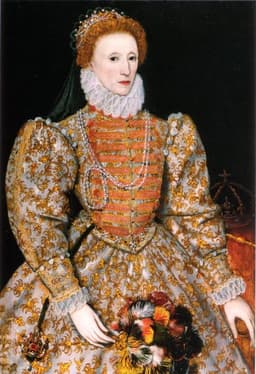
Elizabeth I
Politician · Modern
65.7Total
Basic Information
Born
1542
1533
Died
1605
1603
Era
Modern
Modern
Nationality
India
England
Occupation
Emperor
Politician
Civilization
Indian
Western
Score Comparison
Military (10%)
80.0
45.0
Political (20%)
82.0
78.0
Influence (20%)
68.0
65.0
Legacy (20%)
55.0
68.0
Leadership (15%)
80.0
75.0
Strategy (15%)
68.0
50.0
TOTAL
69.8
65.7
Akbar the Great — Complete Timeline
1556 AD
Second Battle of PanipatWar
Akbar, aged 13, defeated the Hindu general Hemu at Panipat, securing the Mughal throne. Hemu had captured Delhi and declared himself emperor. Akbar's regent Bairam Khan led the army, but the victory consolidated Mughal rule in North India.
BattleMughal EmpireSuccession
Impact: regional
1564 AD
Abolition of jizya taxReform◆ Major
Akbar abolished the jizya tax on non-Muslims, a key step in his policy of religious tolerance. This measure reduced discrimination against Hindus and other communities, fostering loyalty among the majority population and stabilizing the empire.
Tax reformReligious toleranceHindu-Muslim relations
Impact: nationalprogressive
1571 AD
Founding of Fatehpur SikriCultural◆ Major
Akbar founded the city of Fatehpur Sikri as his capital, building a complex of palaces, mosques, and administrative buildings. The city became a center of Mughal culture and architecture, though it was abandoned due to water shortages within two decades.
ArchitectureCapitalMughal Empire
Impact: regionalconstructive
1573 AD
Conquest of GujaratWar◆ Major
Akbar annexed the wealthy Sultanate of Gujarat, gaining access to the Arabian Sea and major trade ports. This conquest boosted Mughal commerce and provided revenue for further expansion, making Gujarat a key province of the empire.
ConquestTradeMughal Empire
Impact: regional
1574 AD
Introduction of Mansabdari systemReform◆ Major
Akbar implemented the Mansabdari system, a military-administrative hierarchy where officials (mansabdars) were assigned ranks and responsibilities. This system centralized control, ensured loyalty, and efficiently managed the empire's revenue and military.
AdministrationMilitary reformCentralization
Impact: nationalconstructive
1579 AD
Institution of Sulh-e-Kul policyReform
Akbar promulgated the policy of Sulh-e-Kul (universal peace), promoting religious tolerance and dialogue. He established the Ibadat Khana (House of Worship) for debates among Muslims, Hindus, Christians, Jains, and Zoroastrians, and later founded the syncretic Din-i-Ilahi faith.
Religious policySyncretismTolerance
Impact: nationalprogressive
Elizabeth I — Complete Timeline
1559 AD
Act of Supremacy 1559Political Action◆ Major
Elizabeth I re-established the Church of England's independence from Rome, declaring herself Supreme Governor. This act, part of the Elizabethan Religious Settlement, restored Protestantism while maintaining some Catholic traditions, creating a via media that aimed to unify the nation.
Religious SettlementProtestantismChurch of England
Impact: nationalconstructive
1587 AD
Execution of Mary, Queen of ScotsPolitical Action◆ Major
After years of imprisonment, Elizabeth I signed the death warrant for Mary, Queen of Scots, who had been implicated in the Babington Plot to assassinate Elizabeth and claim the English throne. Mary's execution removed a major Catholic rival and solidified Elizabeth's position.
ExecutionCatholic RivalPlot
Impact: nationaltragic
1588 AD
Defeat of the Spanish ArmadaWar
The English navy under Lord Howard and Sir Francis Drake defeated the Spanish Armada, a massive invasion fleet sent by Philip II. Storms and English fireships scattered the Spanish fleet, preventing the invasion and establishing England as a major naval power.
Naval BattleSpainProtestantism
Impact: globalconstructive
1600 AD
Chartering of the East India CompanyPolitical Action◆ Major
Elizabeth I granted a royal charter to the East India Company, giving it a monopoly on English trade with Asia. This company would become a powerful instrument of British imperialism, eventually controlling large parts of India and shaping global trade.
TradeColonialismCharter
Impact: globalconstructive
1601 AD
Golden SpeechPolitical Action
In her final address to Parliament, Elizabeth I delivered the 'Golden Speech,' expressing her love for her subjects and her dedication to the realm. She addressed grievances over monopolies, promising reform, and cemented her image as a beloved monarch devoted to her people.
SpeechParliamentMonarchy
Impact: nationalconstructive
Expert Analysis
Elizabeth I vs Akbar the Great
### The Virgin Queen and the Great Mughal: Two Visions of Power
In the autumn of 1588, as bonfires blazed across England celebrating the dispersal of the Spanish Armada, a red-haired queen in a white silk gown rode among her troops at Tilbury, promising to live or die among them. Half a world away, in the red sandstone city of Fatehpur Sikri, a bearded emperor in a jeweled turban presided over a hall of interfaith debate, where Jesuits, Hindus, Jains, and Zoroastrians argued theology under his watchful gaze. Elizabeth I and Akbar the Great ruled their respective worlds at nearly the same moment in history, yet they could not have been more different. One was a cautious Protestant queen navigating a sea of religious hatred; the other, a confident Muslim emperor forging a pluralistic empire. What drove them down such divergent paths?
### Origins
Elizabeth was born into danger. Her father, Henry VIII, had broken with Rome to marry her mother, Anne Boleyn, and when Anne fell from favor and lost her head, the infant princess was declared illegitimate. She grew up in the shadows of the Tower, learning to read Latin and Greek while mastering the art of survival. Her England was a small, fractious island, perpetually threatened by Catholic Spain and France, its treasury lean, its navy modest. Elizabeth’s world was one of scarcity, where every decision carried mortal risk.
Akbar, by contrast, was born to a throne already in motion. His grandfather Babur had founded the Mughal dynasty in India, and his father Humayun had reclaimed it after years of exile. When Akbar was thirteen, his regent Bairam Khan led him to victory at the Second Battle of Panipat (1556), where they crushed the Hindu general Hemu, who had seized Delhi. The boy emperor inherited a sprawling, wealthy subcontinent, rich in spices, textiles, and gold. His India was a land of abundance, but also of profound diversity—Hindus, Muslims, Jains, and Sikhs lived side by side, and the empire could only hold if it learned to reconcile them.
### Rise to Power
Elizabeth’s ascent was a tightrope walk. She was twenty-five when she became queen in 1558, inheriting a kingdom torn between Catholics and Protestants. Her sister Mary had burned nearly three hundred Protestants at the stake; Elizabeth’s first task was to stop the bleeding. She passed the Act of Supremacy in 1559, re-establishing the Church of England with herself as Supreme Governor—a title carefully chosen to avoid the word “Head,” which sounded too papal. She did not persecute Catholics unless they conspired against her. She was a pragmatist, not a zealot.
Akbar’s rise was more straightforward. He was a warrior from the start. At thirteen, he had already won a decisive battle. By twenty, he was personally leading campaigns. He conquered Gujarat in 1573, gaining access to the Arabian Sea and its lucrative ports. He did not inherit a stable empire; he built one. But unlike Elizabeth, who had to work with a Parliament and a fractious nobility, Akbar ruled as an absolute monarch. His power was limited only by the reach of his sword and the loyalty of his generals.
### Leadership & Governance
Elizabeth’s leadership was defined by indirection. She never married, using the prospect of a royal match as a diplomatic tool to keep France and Spain at odds. She was famously parsimonious, refusing to fund wars she could not win. When the Spanish Armada sailed in 1588, she put Lord Howard and Sir Francis Drake in command, not herself. Her greatest gift was choosing capable men—William Cecil, Francis Walsingham—and listening to them. She governed through patronage, flattery, and delay, often saying, “I know I have the body but of a weak and feeble woman, but I have the heart and stomach of a king.”
Akbar governed through system and vision. He introduced the Mansabdari system in 1574, a military-administrative hierarchy that ranked officials by the number of horsemen they commanded, tying their salary to performance. He abolished the jizya tax on non-Muslims in 1564, a radical act of religious tolerance that won him the loyalty of his Hindu subjects. In 1579, he promulgated Sulh-e-Kul—universal peace—and built the Ibadat Khana, a House of Worship, where scholars of all faiths debated. He was a reformer, not a survivor. Where Elizabeth balanced, Akbar built.
### Triumph & Tragedy
Elizabeth’s greatest triumph was the defeat of the Spanish Armada in 1588. It was a victory of weather and strategy as much as seamanship, but it cemented England’s status as a naval power and Elizabeth as a national icon. Her tragedy was the execution of Mary, Queen of Scots, in 1587. For years, Elizabeth had resisted signing the death warrant of her Catholic cousin, knowing it would set a dangerous precedent. When she finally did, she wept and claimed her ministers had acted without her consent. It was a lie, but a necessary one. The act haunted her.
Akbar’s greatest triumph was the conquest of Gujarat in 1573, which opened India to global trade. His tragedy was more personal: his son Salim (later Emperor Jahangir) rebelled against him, and his beloved capital Fatehpur Sikri was abandoned due to water shortages. The city he built as a symbol of harmony became a ghost town. Akbar died in 1605, having seen his dream of a unified India fray at the edges.
### Character & Destiny
Elizabeth was cautious, calculating, and deeply private. She never traveled far from London, never fought in battle, never wrote a memoir. Her motto was *Video et Taceo*—I see and keep silent. She understood that in a world of men, silence was a weapon. Akbar was bold, curious, and open. He could read neither Persian nor Arabic, yet he surrounded himself with scholars and translators. He was said to have invented a new religion, the Din-i-Ilahi, though it attracted few followers. He was a seeker, restless and experimental.
Their characters shaped their fates. Elizabeth’s caution kept England independent but small; Akbar’s ambition created an empire that would last two centuries. Yet both faced the same fundamental problem: how to rule a divided people. Elizabeth chose compromise and control; Akbar chose inclusion and transformation.
### Legacy
Elizabeth’s legacy is the Elizabethan Age: Shakespeare, Drake, the East India Company (chartered in 1600), and the myth of Gloriana. She is remembered as the Virgin Queen who made England Protestant and powerful. Akbar’s legacy is the Mughal Empire at its zenith: the Taj Mahal, the miniature paintings, the administrative systems that survived into British rule. He is remembered as Akbar the Great, the emperor who tried to build a nation out of faiths.
### Conclusion
Elizabeth and Akbar never met, but their worlds touched. The East India Company Elizabeth chartered would one day conquer the empire Akbar built. That irony—that the cautious queen’s small commercial venture would outlast the great emperor’s grand design—is history’s quiet punchline. They were both products of their times, but also shapers of them. Elizabeth taught the world that a woman could rule with wit and will. Akbar taught that a conqueror could also be a peacemaker. In the end, both understood that power is not just about winning battles, but about winning hearts. And on that score, both left a mark that still endures.
Rankings
🥇
Akbar the GreatLeader
Mil: 80.0Pol: 82.0Inf: 68.0
69.8
🥈
Elizabeth I
Mil: 45.0Pol: 78.0Inf: 65.0
65.7
+4.1 behind
How This Comparison Works
Algorithm
Each figure is scored on 6 dimensions (0—100 scale) based on structured historical data: Military (10%), Political (20%), Influence (20%), Legacy (20%), Leadership (15%), Strategy (15%). The weighted total produces the final ranking.
Data Sources
Scores are computed from structured sub-indicators in the database. Scale factors adjust for era (Ancient ×0.85, Modern ×1.0) and civilization size (Eastern ×1.05, Other ×0.80) to account for differences in population and military scale.
Maximum 3 Figures
Comparisons are limited to 2—3 figures to ensure readability and statistical meaningfulness.
Error Margins
±5 points per dimension — Sub-scores are derived from historical records with inherent uncertainty. Two figures within 5 points on a dimension should be considered roughly equivalent in that area.
Total Score Accuracy
±3 points overall — The weighted combination of 6 dimensions produces a total score with approximately ±3 points of uncertainty. Differences of less than 3 points are not statistically significant— the figures are effectively tied.
Known Limitations
- Historical records are incomplete and uneven across civilizations
- Figures from oral-tradition societies may be underrepresented
- Occupation labels can misclassify multi-role figures
- Scores measure capability and impact, not moral character
- Quantitative scoring is a comparison tool, not absolute truth
Capability Radar
Military (10%) — Battles & Warfare
Battles
85
45
Win Rate
90
70
Expansion
88
55
Political (20%) — Governance & Reform
Reform
95
80
Diplomacy
92
85
Economy
88
80
Influence (20%) — Cultural & Global Reach
Cultural
85
85
Global
70
80
Legacy (20%) — Historical Impact
Historical
80
85
Longevity
75
85
Leadership (15%) — Power & Stability
Tenure
90
90
Stability
85
75
Strategy (15%) — Tactics & Innovation
Strategy
85
75
Tactics
80
60
Reform
75
65
Similar Comparisons
Comments & Discussion
SPANISH ARMADA BURNER6/16/2026
The Tilbury speech was pure theater. Elizabeth never slept among her troops—she was back in London within 48 hours, safe behind stone walls. Meanwhile Akbar actually led his armies personally at the Siege of Chittorgarh in 1568. Elizabeth’s power was carefully managed illusion; Akbar’s was proven steel. One queen played dress-up for morale, the other emperor soaked his hands in Rajput blood to build an empire.
数字怀疑论者6/16/2026
数据对比就是扯淡。1588年英国GDP只有200万英镑出头,莫卧儿帝国光是德里单城收入就顶它五倍。拿弹丸岛国和次大陆帝国比,本身就欺负人。伊丽莎白搞贸易特许状,阿克巴搞土地税制改革,根本不同量级。要我说,阿克巴统治的2亿人口能碾碎伊丽莎白的400万——但历史书总爱让弱者赚同情分。
SANSKRIT SCEPTIC6/16/2026
You revisionists miss the point: Akbar’s *Din-i-Ilahi* was a flop. He forced courtiers to convert? Barely 19 followers. Elizabeth’s religious settlement, despite Catholic rebellions, endured for centuries. Akbar had to paper over sectarian fractures with imperial charisma; Elizabeth built a durable national church. One created a cult, the other a constitution. Don’t confuse novelty with legacy.
古典迷6/16/2026
两人思想根源差五百年。伊丽莎白受文艺复兴人文主义熏陶,能读拉丁文希腊文原著,和塞西尔大臣讨论柏拉图的《理想国》。阿克巴再开明,军事上的波斯化封建制本质上仍是帕米尔高原游牧传统。Jizya人头税取消是善政,但归根结底是统治术。一个手不释卷,一个剑不离身。真要论治理现代性的种子,英格兰的蛋先孵出鸡。
GLOBALIST REBEL6/16/2026
Akbar outclassed Elizabeth by any metric: his empire spanned 4 million km², hers barely 150,000. He personally studied Sanskrit, Persian, and Hindi; she spoke French poorly and no Arabic. He abolished the pilgrimage tax in 1563; she executed Mary Queen of Scots for political gain. One built the Ibadat Khana for interfaith dialogue; the other burned Catholic priests at Tyburn. Elizabeth was a brilliant provincial manager. Akbar was a world-historical figure.