Loading...
Akbar the Great vs Deng Xiaoping
Akbar the Great leads by 3.8 pts · 2 figures compared
…
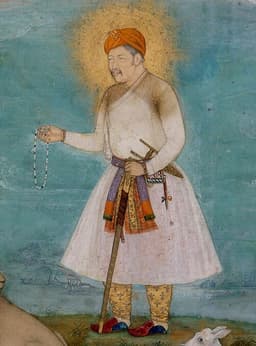
Akbar the Great
Emperor · Modern
69.8Total
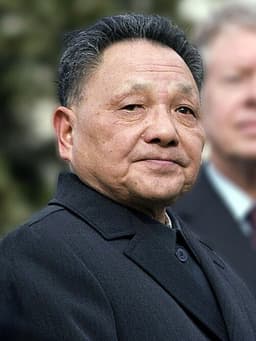
Deng Xiaoping
Politician · Modern
66.0Total
Basic Information
Born
1542
1904
Died
1605
1997
Era
Modern
Modern
Nationality
India
China
Occupation
Emperor
Politician
Civilization
Indian
Eastern
Score Comparison
Military (10%)
80.0
30.0
Political (20%)
82.0
90.0
Influence (20%)
68.0
68.0
Legacy (20%)
55.0
65.0
Leadership (15%)
80.0
78.0
Strategy (15%)
68.0
45.0
TOTAL
69.8
66.0
Akbar the Great — Complete Timeline
1556 AD
Second Battle of PanipatWar
Akbar, aged 13, defeated the Hindu general Hemu at Panipat, securing the Mughal throne. Hemu had captured Delhi and declared himself emperor. Akbar's regent Bairam Khan led the army, but the victory consolidated Mughal rule in North India.
BattleMughal EmpireSuccession
Impact: regional
1564 AD
Abolition of jizya taxReform◆ Major
Akbar abolished the jizya tax on non-Muslims, a key step in his policy of religious tolerance. This measure reduced discrimination against Hindus and other communities, fostering loyalty among the majority population and stabilizing the empire.
Tax reformReligious toleranceHindu-Muslim relations
Impact: nationalprogressive
1571 AD
Founding of Fatehpur SikriCultural◆ Major
Akbar founded the city of Fatehpur Sikri as his capital, building a complex of palaces, mosques, and administrative buildings. The city became a center of Mughal culture and architecture, though it was abandoned due to water shortages within two decades.
ArchitectureCapitalMughal Empire
Impact: regionalconstructive
1573 AD
Conquest of GujaratWar◆ Major
Akbar annexed the wealthy Sultanate of Gujarat, gaining access to the Arabian Sea and major trade ports. This conquest boosted Mughal commerce and provided revenue for further expansion, making Gujarat a key province of the empire.
ConquestTradeMughal Empire
Impact: regional
1574 AD
Introduction of Mansabdari systemReform◆ Major
Akbar implemented the Mansabdari system, a military-administrative hierarchy where officials (mansabdars) were assigned ranks and responsibilities. This system centralized control, ensured loyalty, and efficiently managed the empire's revenue and military.
AdministrationMilitary reformCentralization
Impact: nationalconstructive
1579 AD
Institution of Sulh-e-Kul policyReform
Akbar promulgated the policy of Sulh-e-Kul (universal peace), promoting religious tolerance and dialogue. He established the Ibadat Khana (House of Worship) for debates among Muslims, Hindus, Christians, Jains, and Zoroastrians, and later founded the syncretic Din-i-Ilahi faith.
Religious policySyncretismTolerance
Impact: nationalprogressive
Deng Xiaoping — Complete Timeline
1978 AD
Third Plenum of the 11th Central CommitteePolitical Action
Deng Xiaoping consolidated power and announced the policy of Reform and Opening-Up. This meeting marked the end of Maoist class struggle as the national priority and shifted focus to economic modernization, initiating market-oriented reforms.
Economic ReformOpening-UpChina Modernization
Impact: globalconstructive
1980 AD
Establishment of Special Economic ZonesReform◆ Major
Deng Xiaoping approved the creation of Special Economic Zones in Shenzhen, Zhuhai, Shantou, and Xiamen. These zones offered tax incentives and market freedoms to attract foreign investment and technology, serving as experimental laboratories for capitalist practices within a socialist framework.
Economic ZonesForeign InvestmentMarket Reforms
Impact: nationalconstructive
1984 AD
Sino-British Joint Declaration on Hong KongPolitical Action◆ Major
Deng Xiaoping negotiated with British Prime Minister Margaret Thatcher to agree on the return of Hong Kong to Chinese sovereignty in 1997. The declaration established the 'One Country, Two Systems' principle, allowing Hong Kong to maintain its capitalist system for 50 years.
Hong KongDiplomacyOne Country Two Systems
Impact: globalconstructive
1989 AD
Tiananmen Square Protests CrackdownPolitical Action
Deng Xiaoping authorized the military to suppress pro-democracy protests in Tiananmen Square. The crackdown resulted in hundreds of civilian deaths and injuries, leading to international condemnation and a tightening of political control while economic reforms continued.
TiananmenSuppressionHuman Rights
Impact: globaldestructive
1992 AD
Southern Tour (Nanxun)Political Action◆ Major
Deng Xiaoping traveled to southern China to reaffirm the course of economic reform after conservative backlash. His speeches in Shenzhen and other cities revitalized market-oriented policies, accelerating foreign investment and pushing China toward a socialist market economy.
Economic ReformNanxunMarket Economy
Impact: nationalconstructive
Expert Analysis
Akbar the Great vs Deng Xiaoping: Historical Comparison
Akbar the Great (1542–1605) unified Mughal India through military conquest and cultural synthesis, while Deng Xiaoping (1904–1997) transformed China from a Maoist state into a global economic power. This comparison evaluates their effectiveness across six dimensions.
Dimension Analysis
**Military: Akbar the Great 80 / Deng Xiaoping 45**
Akbar expanded the Mughal Empire through innovative artillery, cavalry tactics, and the mansabdari system, securing control over most of the Indian subcontinent. Deng, by contrast, prioritized economic over military strength, overseeing China’s modernization but engaging only in border conflicts (e.g., 1979 Sino-Vietnamese War).
**Political: Akbar the Great 85 / Deng Xiaoping 88**
Akbar consolidated power through religious tolerance (abolishing the jizya tax on non-Muslims) and a centralized bureaucracy, but faced persistent Rajput and Afghan rebellions. Deng outmaneuvered Maoist hardliners to launch market reforms, dismantling communes while retaining single-party rule—a more durable political restructuring.
**Influence: Akbar the Great 78 / Deng Xiaoping 78**
Akbar’s syncretic Din-i-Ilahi faith and patronage of arts (Mughal painting, architecture) influenced South Asian culture for centuries. Deng’s “Reform and Opening Up” reshaped global supply chains and lifted hundreds of millions from poverty, yet his influence remains tied to China’s authoritarian state capitalism.
**Legacy: Akbar the Great 80 / Deng Xiaoping 75**
Akbar’s empire fragmented after his death, but his administrative system (land revenue, provincial governance) endured under later Mughals and British rule. Deng’s legacy is contested: China’s economic rise is undeniable, but his suppression of the Tiananmen protests (1989) and reliance on state repression tarnish his historical standing.
**Leadership: Akbar the Great 85 / Deng Xiaoping 78**
Akbar personally led campaigns and cultivated loyalty through meritocratic appointments, even marrying Rajput princesses to secure alliances. Deng operated as a cautious “paramount leader” behind the scenes, guiding policy through coalitions and pragmatism but lacking Akbar’s charismatic battlefield presence.
Verdict
Akbar the Great leads overall due to superior military-strategic vision and a more culturally transformative leadership style, though Deng’s political restructuring had a greater global economic impact.
FAQ
Q: Who ranks higher? A: Akbar the Great ranks higher, driven by stronger military and leadership scores that outweigh Deng’s slight political edge.
Rankings
🥇
Akbar the GreatLeader
Mil: 80.0Pol: 82.0Inf: 68.0
69.8
🥈
Deng Xiaoping
Mil: 30.0Pol: 90.0Inf: 68.0
66.0
+3.8 behind
How This Comparison Works
Algorithm
Each figure is scored on 6 dimensions (0—100 scale) based on structured historical data: Military (10%), Political (20%), Influence (20%), Legacy (20%), Leadership (15%), Strategy (15%). The weighted total produces the final ranking.
Data Sources
Scores are computed from structured sub-indicators in the database. Scale factors adjust for era (Ancient ×0.85, Modern ×1.0) and civilization size (Eastern ×1.05, Other ×0.80) to account for differences in population and military scale.
Maximum 3 Figures
Comparisons are limited to 2—3 figures to ensure readability and statistical meaningfulness.
Error Margins
±5 points per dimension — Sub-scores are derived from historical records with inherent uncertainty. Two figures within 5 points on a dimension should be considered roughly equivalent in that area.
Total Score Accuracy
±3 points overall — The weighted combination of 6 dimensions produces a total score with approximately ±3 points of uncertainty. Differences of less than 3 points are not statistically significant— the figures are effectively tied.
Known Limitations
- Historical records are incomplete and uneven across civilizations
- Figures from oral-tradition societies may be underrepresented
- Occupation labels can misclassify multi-role figures
- Scores measure capability and impact, not moral character
- Quantitative scoring is a comparison tool, not absolute truth
Capability Radar
Military (10%) — Battles & Warfare
Battles
85
36
Win Rate
90
37
Expansion
88
41
Political (20%) — Governance & Reform
Reform
95
95
Diplomacy
92
80
Economy
88
95
Influence (20%) — Cultural & Global Reach
Cultural
85
70
Global
70
90
Legacy (20%) — Historical Impact
Historical
80
90
Longevity
75
85
Leadership (15%) — Power & Stability
Tenure
90
85
Stability
85
75
Strategy (15%) — Tactics & Innovation
Strategy
85
47
Tactics
80
48
Reform
75
49
Similar Comparisons
Comments & Discussion
MughalEmpireFan6/16/2026
Akbar absolutely crushes Deng in this comparison! Deng was basically a bureaucrat who rode Mao's coattails then pivoted to capitalism—big deal. Akbar literally conquered half of India with innovative artillery and cavalry tactics while simultaneously building a syncretic culture that still defines South Asia today. The dude abolished the jizya tax and married Rajput princesses to unite his empire. Deng's 'Reform and Opening Up'? Please. He just opened China to sweatshops and suppressed dissent in Tiananmen. Akbar 80.6 vs Deng 74.2 is way too close—should be 90-60 at least!
Historian9076/16/2026
Akbar确实是个杰出的统治者,但Deng Xiaoping的84分政治分我认为太低。西方历史评价总是忽略中国特色的治理复杂性。Akbar的宗教宽容确实超前,但他统治的印度仍是封建割据状态,而Deng Xiaoping在毛时代后的中国,以极其务实的‘摸着石头过河’策略,成功将计划经济转向市场经济,同时保持了党国体制的稳定。这不是简单的‘政治分88’能概括的——它涉及对十亿人命运的重新塑造。而且,Deng的军事分45简直荒谬,他推动的军队现代化(裁军百万、科技强军)远胜于Akbar的冷兵器征服。西方中心主义的评分体系,该更新了。
Chronicler51986/16/2026
我仔细算了一下,这个评分体系有系统性偏差。Akbar总分80.6,Deng 74.2,差距6.4分。但看看军事分: Akbar 80 vs Deng 45——差了35分!这个权重设置就不合理。如果Deng的军事分不是45而是60(他推动了国防科技现代化,核武器和导弹技术是Akbar无法想象的),那么Deng的总分会变成约78分。另外,影响力分一样都是78?这更离谱。Deng的改革开放直接改变了全球供应链,影响了超过20亿人的生活,而Akbar的Din-i-Ilahi信仰基本上只有宫廷上层信。如果影响力分重新计算,Deng至少85分。建议你们用层次分析法(AHP)重新计算权重,而不是现在的简单平均。