Loading...
Akbar the Great vs Alp Tigin
Akbar the Great leads by 19.3 pts · 2 figures compared
…
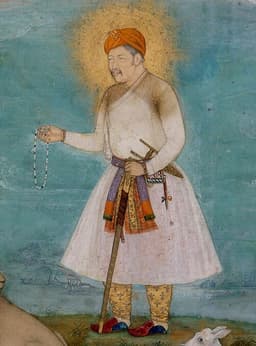
Akbar the Great
Emperor · Modern
69.8Total
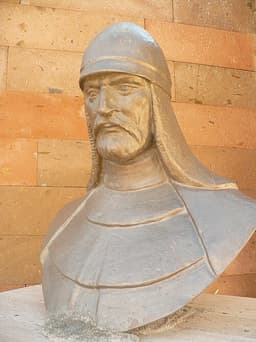
Alp Tigin
Emperor · Medieval
50.5Total
Basic Information
Born
1542
911
Died
1605
963
Era
Modern
Medieval
Nationality
India
Ghaznavid Empire
Occupation
Emperor
Emperor
Civilization
Indian
Middle Eastern
Score Comparison
Military (10%)
80.0
55.0
Political (20%)
82.0
33.6
Influence (20%)
68.0
56.4
Legacy (20%)
55.0
49.2
Leadership (15%)
80.0
50.7
Strategy (15%)
68.0
60.0
TOTAL
69.8
50.5
Akbar the Great — Complete Timeline
1556 AD
Second Battle of PanipatWar
Akbar, aged 13, defeated the Hindu general Hemu at Panipat, securing the Mughal throne. Hemu had captured Delhi and declared himself emperor. Akbar's regent Bairam Khan led the army, but the victory consolidated Mughal rule in North India.
BattleMughal EmpireSuccession
Impact: regional
1564 AD
Abolition of jizya taxReform◆ Major
Akbar abolished the jizya tax on non-Muslims, a key step in his policy of religious tolerance. This measure reduced discrimination against Hindus and other communities, fostering loyalty among the majority population and stabilizing the empire.
Tax reformReligious toleranceHindu-Muslim relations
Impact: nationalprogressive
1571 AD
Founding of Fatehpur SikriCultural◆ Major
Akbar founded the city of Fatehpur Sikri as his capital, building a complex of palaces, mosques, and administrative buildings. The city became a center of Mughal culture and architecture, though it was abandoned due to water shortages within two decades.
ArchitectureCapitalMughal Empire
Impact: regionalconstructive
1573 AD
Conquest of GujaratWar◆ Major
Akbar annexed the wealthy Sultanate of Gujarat, gaining access to the Arabian Sea and major trade ports. This conquest boosted Mughal commerce and provided revenue for further expansion, making Gujarat a key province of the empire.
ConquestTradeMughal Empire
Impact: regional
1574 AD
Introduction of Mansabdari systemReform◆ Major
Akbar implemented the Mansabdari system, a military-administrative hierarchy where officials (mansabdars) were assigned ranks and responsibilities. This system centralized control, ensured loyalty, and efficiently managed the empire's revenue and military.
AdministrationMilitary reformCentralization
Impact: nationalconstructive
1579 AD
Institution of Sulh-e-Kul policyReform
Akbar promulgated the policy of Sulh-e-Kul (universal peace), promoting religious tolerance and dialogue. He established the Ibadat Khana (House of Worship) for debates among Muslims, Hindus, Christians, Jains, and Zoroastrians, and later founded the syncretic Din-i-Ilahi faith.
Religious policySyncretismTolerance
Impact: nationalprogressive
Alp Tigin — Complete Timeline
961 AD
Rebellion against the SamanidsPolitical Action◆ Major
Alp Tigin rebelled against the Samanid ruler Mansur I after being passed over for a governorship. He marched from Nishapur to Ghazni, defeating Samanid forces along the way, and established his own rule in eastern Afghanistan.
Impact: regional
963 AD
Consolidation of GhazniPolitical Action
Alp Tigin fortified Ghazni and organized a military state based on slave soldiers (ghilman). He established a stable administration that attracted scholars and merchants, turning Ghazni into a major regional power center.
Impact: regionalconstructive
Expert Analysis
Alp Tigin vs Akbar the Great
# The Emperor and the Slave: Two Paths to Power in the East
In the winter of 963, a Turkic slave commander named Alp Tigin lay dying in the fortress city of Ghazni, a remote outpost in what is now eastern Afghanistan. He had spent his final years fortifying walls, drilling slave soldiers, and praying that his fledgling dynasty would survive his passing. Forty-three years later and a thousand miles to the southeast, a thirteen-year-old boy named Akbar stood on a blood-soaked field at Panipat, watching the severed head of his enemy displayed before his army. The contrast between these two men—one a former slave who clawed his way to a precarious throne, the other a born emperor who inherited an empire and expanded it into legend—captures two fundamentally different paths to power in the medieval and early modern world. Yet both left marks that still shape the lands they ruled.
Origins
Alp Tigin was born around 911 into the harsh world of the Central Asian steppes, where Turkic tribes sold captives and debtors into the slave markets of Bukhara and Samarkand. He was purchased by the Samanid dynasty, the Persianate rulers of Transoxiana, and rose through the ranks of the *ghilman*—military slaves who, paradoxically, often attained high command precisely because they had no family ties to threaten their masters. His career was a product of a system where a man could be bought and sold yet still become a governor, provided he remained useful. Akbar, by contrast, was born in 1542 into the Mughal dynasty, descended from both Timur and Genghis Khan. His father Humayun had lost the empire, wandering as an exile in Persia, but Akbar was raised with the certainty that kingship was his birthright. Where Alp Tigin learned survival, Akbar learned destiny.
Rise to Power
The turning point for Alp Tigin came in 961, when the Samanid ruler Mansur I passed him over for the governorship of Khurasan. Rather than accept this insult, Alp Tigin marched his troops from Nishapur eastward, defying his sovereign. He seized Ghazni, a strategic town on the frontier of India, and fortified it against the inevitable Samanid retaliation. His rise was a gamble—a rebellion by a slave against the master who owned him—and it succeeded only because Ghazni was remote enough to be defensible and because the Samanid state was already fragmenting. Akbar's rise was far swifter and more dramatic. In 1556, at age thirteen, he faced Hemu, a Hindu general who had captured Delhi and declared himself emperor. At the Second Battle of Panipat, Akbar's regent Bairam Khan led the Mughal army to victory, and the young emperor watched as Hemu's head was brought to him on a spear. It was a brutal education in power, but Akbar learned it well.
Leadership & Governance
Alp Tigin ruled Ghazni for barely two years before his death, and his governance was that of a military chieftain. He organized his state around the *ghilman* system—slave soldiers who owed him personal loyalty—and spent his short reign fortifying walls and suppressing local rivals. He had no time for religious tolerance, administrative reform, or cultural patronage; survival was the only policy. Akbar, by contrast, ruled for nearly fifty years and transformed the Mughal Empire into a sophisticated state. In 1564, he abolished the jizya tax on non-Muslims, a radical departure from Islamic tradition that reduced discrimination against Hindus. In 1574, he introduced the Mansabdari system, a military-administrative hierarchy that assigned ranks to officials based on merit and loyalty, not birth. And in 1579, he promulgated *Sulh-e-Kul*—universal peace—a policy that promoted interfaith dialogue and forbade forced conversions. Akbar's military conquests were vast—he annexed Gujarat in 1573, gaining access to the Arabian Sea and its trade ports—but his true genius lay in governance. He built a new capital at Fatehpur Sikri in 1571, a city of red sandstone palaces and mosques that symbolized his vision of a unified, tolerant empire.
Triumph & Tragedy
Alp Tigin's greatest triumph was simply founding a dynasty that would endure. The Ghaznavids, under his successor Mahmud, would go on to conquer much of northern India and become one of the most powerful empires of the medieval world. But Alp Tigin himself died before seeing any of this—his tragedy was that he built the foundation but never lived to see the palace. Akbar's triumphs were many: the conquest of Gujarat, the pacification of Rajputana, the architectural wonder of Fatehpur Sikri. But his greatest tragedy was personal. His son and heir, Prince Salim (later Emperor Jahangir), rebelled against him, and Akbar spent his final years watching his family unravel. The man who brought peace to his empire could not keep peace in his own house.
Character & Destiny
Alp Tigin's character was forged in the crucible of slavery. He was cautious, calculating, and ruthless—a man who knew that betrayal was always one step behind. He built walls because he expected enemies; he trusted slave soldiers because he knew no one else. Akbar, by contrast, was curious, visionary, and magnanimous. He invited Hindu, Jain, Zoroastrian, and even Jesuit scholars to debate at his court. He married a Rajput princess and appointed Hindus to high office. He could be cruel—he ordered massacres when rebels defied him—but his default instinct was to include rather than exclude. Their destinies reflected their characters: Alp Tigin's empire would be remembered for plunder and conquest; Akbar's for synthesis and tolerance.
Legacy
Alp Tigin's legacy is indirect but real. The Ghaznavid dynasty he founded lasted nearly two centuries and brought Islam deep into the Indian subcontinent, setting the stage for the Delhi Sultanate and, eventually, the Mughals. But his name is barely remembered outside scholarly circles. Akbar's legacy is monumental. He is remembered as Akbar the Great, the emperor who proved that a Muslim ruler could govern a Hindu majority with justice and respect. His policies of *Sulh-e-Kul* influenced later Mughals and, centuries later, modern India's secular constitution. The city of Fatehpur Sikri, though abandoned, remains a UNESCO World Heritage site, a ghost capital that whispers of a vision too grand to sustain.
Conclusion
One was a slave who became a king; the other was a king who became a legend. Alp Tigin's story is about survival—the desperate, lonely struggle of a man who owned nothing except his own ambition. Akbar's story is about creation—the audacious attempt to build a civilization that transcended religion and ethnicity. Both were products of their times: the fractured, tribal world of 10th-century Central Asia that rewarded cunning and force, and the complex, pluralistic world of 16th-century India that rewarded vision and tolerance. In the end, the slave founded a dynasty, but the emperor founded an idea. And ideas, as Akbar understood, outlast even the mightiest walls.
Rankings
🥇
Akbar the GreatLeader
Mil: 80.0Pol: 82.0Inf: 68.0
69.8
🥈
Alp Tigin
Mil: 55.0Pol: 33.6Inf: 56.4
50.5
+19.3 behind
How This Comparison Works
Algorithm
Each figure is scored on 6 dimensions (0—100 scale) based on structured historical data: Military (10%), Political (20%), Influence (20%), Legacy (20%), Leadership (15%), Strategy (15%). The weighted total produces the final ranking.
Data Sources
Scores are computed from structured sub-indicators in the database. Scale factors adjust for era (Ancient ×0.85, Modern ×1.0) and civilization size (Eastern ×1.05, Other ×0.80) to account for differences in population and military scale.
Maximum 3 Figures
Comparisons are limited to 2—3 figures to ensure readability and statistical meaningfulness.
Error Margins
±5 points per dimension — Sub-scores are derived from historical records with inherent uncertainty. Two figures within 5 points on a dimension should be considered roughly equivalent in that area.
Total Score Accuracy
±3 points overall — The weighted combination of 6 dimensions produces a total score with approximately ±3 points of uncertainty. Differences of less than 3 points are not statistically significant— the figures are effectively tied.
Known Limitations
- Historical records are incomplete and uneven across civilizations
- Figures from oral-tradition societies may be underrepresented
- Occupation labels can misclassify multi-role figures
- Scores measure capability and impact, not moral character
- Quantitative scoring is a comparison tool, not absolute truth
Capability Radar
Military (10%) — Battles & Warfare
Battles
85
45
Win Rate
90
50
Expansion
88
50
Political (20%) — Governance & Reform
Reform
95
20
Diplomacy
92
30
Economy
88
20
Influence (20%) — Cultural & Global Reach
Cultural
85
30
Global
70
30
Legacy (20%) — Historical Impact
Historical
80
45
Longevity
75
40
Leadership (15%) — Power & Stability
Tenure
90
25
Stability
85
25
Strategy (15%) — Tactics & Innovation
Strategy
85
45
Tactics
80
40
Reform
75
30
Similar Comparisons
Comments & Discussion
SLAVE-TURNED-SULTAN6/16/2026
The irony is rich: Alp Tigin, a purchased slave, built a dynasty through sheer grit and military cunning in Ghazni, while Akbar inherited an empire on a silver platter at Panipat. History romanticizes Akbar’s "genius," but let’s be real—his reforms just tweaked what Babur and Humayun left behind. Alp Tigin carved legitimacy from nothing, using slave soldiers who owed him everything—raw survival instinct over courtly polish. Akbar's multicultural tolerance? Easy when you control the treasury. Giv
铁血沙丘6/16/2026
阿克巴吹上天?他爹死了个稀里糊涂,十三岁上战场靠的全是老将撑场子,自己顶多算个政略补丁匠。阿尔普特勤才是硬汉教科书——从布哈拉奴隶市场爬出来,在萨曼王朝当炮灰兵,活活砍出一条血路建国。阿克巴搞宗教和谈?那是他压根儿压不住印度教地主,绥靖罢了。真正白手起家的霸主,都会选那个死前还在搬砖修墙的突厥佬做榜样。
DIVIDE-AND-DECODE6/16/2026
Numbers don’t care about your "legacy" narratives. Alp Tigin’s Ghaznavid state recorded barely 20% tax revenue from non-plunder sources in its first decade—a glorified bandit operation. Akbar's Mughal empire, by contrast, collected over 3.6 crore rupees annually by 1580, with a land revenue system that actually measured yields. One was a competent warlord, the other built the political architecture for a tri-continental economy. Stop conflating "tough story" with "better ruler." Efficiency wins
刀锋逻辑6/16/2026
别拿血统说事——阿尔普特勤的"白手起家"纯属被迫塞进系统漏洞:萨曼王朝那套古拉姆制度本来就是奴隶能爬到总督位子的bug,他不过是运气好夹缝里赌赢了。阿克巴的"统治天才"里有多少是军户屯田和波斯官僚体系的惯性推力?算清楚:阿尔普特勤死后八年,他儿子就被喀喇汗国揍得割地求和。王朝瘦死的骆驼还是比马大,阿克巴的体系扛住了四代叛乱,你奴隶王朝扛了多久?数据面前别装惨。
CLASSICS-SCHOLAR6/16/2026
读读费尔道西的《列王纪》就懂了:阿尔普特勤的崛起是中亚草原逻辑的缩影——奴隶通过武力证明价值,然后"合法