Loading...
Ahmet Necdet Sezer vs Branko Crvenkovski
Branko Crvenkovski leads by 0.2 pts · 2 figures compared
…

Ahmet Necdet Sezer
Politician · Modern
52.8Total
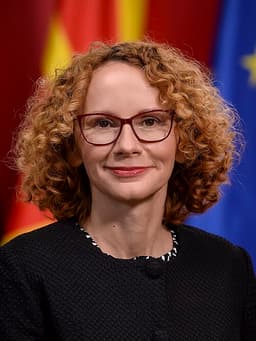
Branko Crvenkovski
Politician · Modern
53.0Total
Basic Information
Born
1941
1962
Died
—
—
Era
Modern
Modern
Nationality
Turkey
North Macedonia
Occupation
Politician
Politician
Civilization
Middle Eastern
Western
Score Comparison
Military (10%)
38.4
49.3
Political (20%)
68.0
68.0
Influence (20%)
51.8
49.4
Legacy (20%)
42.5
41.7
Leadership (15%)
72.0
72.0
Strategy (15%)
43.5
43.0
TOTAL
52.8
53.0
Ahmet Necdet Sezer — Complete Timeline
1998 AD
Appointed as President of the Constitutional CourtPolitical Action◆ Major
Ahmet Necdet Sezer was appointed as the President of the Turkish Constitutional Court, the highest judicial authority. He served in this role until 2000.
Constitutional CourtJudiciaryChief Justice
Impact: nationalconstructive
2000 AD
Elected President of TurkeyPolitical Action◆ Major
Sezer was elected as the 10th President of Turkey by the Grand National Assembly. He was the first president from a judicial background and was seen as a secularist.
PresidencySecularismJudicial Background
Impact: nationalconstructive
2002 AD
Vetoed Constitutional Amendments on HeadscarfPolitical Action◆ Major
Sezer vetoed constitutional amendments proposed by the AK Party government that would have allowed women to wear headscarves in universities. He argued the amendments violated secular principles.
Headscarf BanSecularismConstitutional Veto
Impact: national
2003 AD
Clashed with the AK Party GovernmentPolitical Action
Sezer frequently vetoed AK Party legislation and criticized the government for undermining secularism. His presidency was marked by tensions between the secularist establishment and the Islamist-rooted government.
AK PartySecularismPolitical Tensions
Impact: national
2007 AD
End of Presidential TermPolitical Action
Sezer's seven-year presidential term ended. He was succeeded by Abdullah Gul, whose election sparked a constitutional crisis due to his AK Party background and his wife's headscarf.
Presidential TermSuccessionConstitutional Crisis
Impact: national
Branko Crvenkovski — Complete Timeline
1992 AD
Elected Prime Minister of MacedoniaPolitical Action◆ Major
Crvenkovski became the first post-communist Prime Minister of independent Macedonia, leading the country through its early years of independence, including the 2001 insurgency and economic transition.
IndependenceGovernmentMacedonia
Impact: nationalconstructive
2001 AD
Signed the Ohrid Framework AgreementPolitical Action
As Prime Minister, Crvenkovski signed the Ohrid Framework Agreement, ending the 2001 insurgency by ethnic Albanian rebels. The agreement granted greater rights to Albanians, including language and decentralization.
Peace AgreementEthnic ConflictOhrid
Impact: nationalconstructive
2004 AD
Elected President of MacedoniaPolitical Action◆ Major
Crvenkovski was elected President, serving until 2009. His presidency focused on Euro-Atlantic integration, but was marked by political instability and the unresolved name dispute with Greece.
PresidencyIntegrationMacedonia
Impact: nationalconstructive
2009 AD
Lost presidential re-election bidPolitical Action
Crvenkovski lost the presidential election to Gjorge Ivanov, ending his tenure. His defeat reflected public dissatisfaction with the pace of reforms and the ongoing name dispute.
ElectionDefeatPolitics
Impact: national
Expert Analysis
Origins
Ahmet Necdet Sezer was born on September 13, 1941, in Afyonkarahisar, Turkey, into a modest family. He studied law at Ankara University, graduating in 1962, and began his career as a judge. His background was purely judicial, with no military or political experience before his rise to the highest courts. Branko Crvenkovski was born on October 12, 1962, in Sarajevo, Bosnia and Herzegovina (then Yugoslavia), but grew up in Skopje, Macedonia. He studied computer science at the University of Skopje and later joined the League of Communists of Macedonia. His early career was in engineering and politics, becoming a member of parliament in 1990.
Rise to Power
Sezer climbed the judicial ladder steadily, becoming a member of the Constitutional Court in 1988 and its president in 1998. His reputation as a strict secularist and defender of the constitution led to his election as President of Turkey on May 5, 2000, by the Grand National Assembly, with backing from the military and secularist parties. He was the first president from a judicial background. Crvenkovski rose quickly in the post-communist era. After Macedonia's independence in 1991, he became Prime Minister in 1992 at age 29, leading the Social Democratic Union of Macedonia (SDSM). He was the first prime minister of independent Macedonia, navigating the country through the breakup of Yugoslavia and a fragile economy.
Leadership & Governance
Sezer's leadership was defined by his role as a guardian of secularism. He frequently vetoed legislation from the AK Party government, including a 2008 law to allow headscarves in universities, arguing it violated constitutional secularism. He also vetoed budget laws and appointments, leading to gridlock. His governance style was confrontational and principled, but critics say he overstepped his role. Crvenkovski, as prime minister (1992-1998, 2002-2004) and president (2004-2009), focused on stability and integration. He signed the Ohrid Framework Agreement in 2001, ending an ethnic Albanian insurgency by granting greater rights to Albanians. His governance was pragmatic, aiming to balance ethnic tensions and push for NATO and EU membership. However, his leadership was often criticized for corruption and slow reforms.
Triumph & Tragedy
Sezer's greatest triumph was maintaining secularism against political Islam. His vetoes blocked several laws, and his stance was praised by secularists. His tragedy was his inability to prevent the erosion of secularism after his term; the AK Party later passed similar laws. His legacy is mixed: a principled stand but limited long-term impact. Crvenkovski's triumph was the Ohrid Agreement, which stopped a civil war and set Macedonia on a path to multi-ethnic democracy. His tragedy was the failure to fully implement the agreement, leading to ongoing ethnic tensions and a 2014-2015 political crisis. He also lost re-election in 2009, reflecting public disappointment.
Character & Destiny
Sezer was seen as rigid and uncompromising, a trait that made him a symbol of secularism but also a polarizing figure. His judicial background made him cautious and legalistic, but he lacked political flexibility. Crvenkovski was pragmatic and adaptable, but sometimes seen as indecisive or too willing to compromise. His character helped him navigate crises but also led to accusations of corruption and lack of vision.
Legacy
Sezer's legacy is tied to his defense of secularism in Turkey. He scored 42.5 in Legacy, reflecting his limited lasting impact. He is remembered as a principled but ultimately unsuccessful guardian. Crvenkovski's legacy is the Ohrid Agreement and his role in Macedonia's early independence. He scored 41.7 in Legacy. He is remembered as a peacemaker but also as a leader of a transitional period that fell short of expectations.
Conclusion
While Sezer and Crvenkovski have similar total scores (52.8 vs 53.0), Crvenkovski had a greater tangible impact on his country's survival and stability. Sezer's defense of secularism was principled but did not prevent the AK Party's consolidation of power. Crvenkovski's Ohrid Agreement was a concrete achievement that prevented civil war and set a framework for ethnic relations. Therefore, Crvenkovski is the more impactful figure.
Rankings
🥇
Branko CrvenkovskiLeader
Mil: 49.3Pol: 68.0Inf: 49.4
53.0
🥈
Ahmet Necdet Sezer
Mil: 38.4Pol: 68.0Inf: 51.8
52.8
+0.2 behind
How This Comparison Works
Algorithm
Each figure is scored on 6 dimensions (0—100 scale) based on structured historical data: Military (10%), Political (20%), Influence (20%), Legacy (20%), Leadership (15%), Strategy (15%). The weighted total produces the final ranking.
Data Sources
Scores are computed from structured sub-indicators in the database. Scale factors adjust for era (Ancient ×0.85, Modern ×1.0) and civilization size (Eastern ×1.05, Other ×0.80) to account for differences in population and military scale.
Maximum 3 Figures
Comparisons are limited to 2—3 figures to ensure readability and statistical meaningfulness.
Error Margins
±5 points per dimension — Sub-scores are derived from historical records with inherent uncertainty. Two figures within 5 points on a dimension should be considered roughly equivalent in that area.
Total Score Accuracy
±3 points overall — The weighted combination of 6 dimensions produces a total score with approximately ±3 points of uncertainty. Differences of less than 3 points are not statistically significant— the figures are effectively tied.
Known Limitations
- Historical records are incomplete and uneven across civilizations
- Figures from oral-tradition societies may be underrepresented
- Occupation labels can misclassify multi-role figures
- Scores measure capability and impact, not moral character
- Quantitative scoring is a comparison tool, not absolute truth
Capability Radar
Military (10%) — Battles & Warfare
Battles
22
27
Win Rate
26
34
Expansion
25
35
Political (20%) — Governance & Reform
Reform
45
55
Diplomacy
50
60
Economy
40
50
Influence (20%) — Cultural & Global Reach
Cultural
20
20
Global
20
15
Legacy (20%) — Historical Impact
Historical
25
30
Longevity
20
20
Leadership (15%) — Power & Stability
Tenure
55
65
Stability
50
45
Strategy (15%) — Tactics & Innovation
Strategy
33
40
Tactics
33
40
Reform
35
44
Similar Comparisons
Comments & Discussion
No comments yet. Be the first to share your thoughts!