Loading...
This comparison has not been analyzed yet.
One-time AI generation (~1 minute). Scores and timeline are already available below.
Ahmet Davutoglu vs Hor Namhong
Ahmet Davutoglu leads by 10.2 pts · 2 figures compared
…
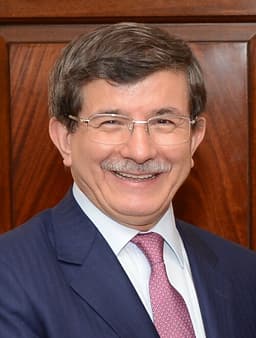
Ahmet Davutoglu
Politician · Modern
51.0Total
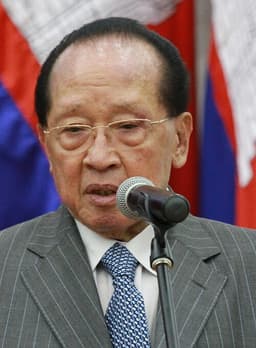
Hor Namhong
Politician · Modern
40.8Total
Basic Information
Born
1959
1935
Died
—
—
Era
Modern
Modern
Nationality
Turkey
Cambodia
Occupation
Politician
Politician
Civilization
Middle Eastern
Eastern
Score Comparison
Military (10%)
48.6
10.5
Political (20%)
61.3
39.4
Influence (20%)
55.7
47.1
Legacy (20%)
42.5
39.2
Leadership (15%)
55.3
64.0
Strategy (15%)
40.7
26.3
TOTAL
51.0
40.8
Ahmet Davutoglu — Complete Timeline
2001 AD
Published 'Strategic Depth'Cultural◆ Major
Davutoglu published 'Strategic Depth: Turkey's International Position', outlining a foreign policy doctrine based on historical and geographical depth. The book influenced Turkey's neo-Ottoman foreign policy.
Foreign PolicyNeo-OttomanismStrategy
Impact: globalconstructive
2009 AD
Appointed Minister of Foreign AffairsPolitical Action◆ Major
Davutoglu was appointed Foreign Minister under Prime Minister Erdogan. He implemented his 'zero problems with neighbors' policy, improving relations with Middle Eastern countries and engaging in peace mediation.
Foreign AffairsDiplomacyTurkey
Impact: regionalconstructive
2014 AD
Became Prime Minister of TurkeyPolitical Action◆ Major
Davutoglu became Prime Minister after Erdogan was elected President. He served until 2016, continuing AKP policies but facing tensions with Erdogan over executive power.
Prime MinisterAKPLeadership
Impact: national
2016 AD
Resigned as Prime MinisterPolitical Action◆ Major
Davutoglu resigned as Prime Minister and AKP leader after reported disagreements with President Erdogan over policy and party control. He was succeeded by Binali Yildirim.
ResignationPolitical ConflictTurkey
Impact: national
Hor Namhong — Complete Timeline
1979 AD
Appointed Minister of Foreign Affairs of CambodiaPolitical Action◆ Major
Hor Namhong was appointed Foreign Minister of the People's Republic of Kampuchea, the Vietnamese-backed government. He represented Cambodia in international forums during the Cold War, seeking recognition and aid.
Foreign MinisterDiplomacyCambodia
Impact: national
1991 AD
Led Cambodia's delegation to the Paris Peace AccordsPolitical Action◆ Major
Hor Namhong was a key negotiator for the Cambodian government during the Paris Peace Accords. His efforts helped secure the agreement that ended the Cambodian
Peace TreatyNegotiationCambodia
Impact: regionalconstructive
1998 AD
Served as Deputy Prime Minister and Foreign MinisterPolitical Action◆ Major
Hor Namhong was appointed Deputy Prime Minister and Minister of Foreign Affairs and International Cooperation in the coalition government. He held this position for over a decade, managing Cambodia's foreign relations and integration into ASEAN.
Foreign MinisterASEANDiplomacy
Impact: regionalconstructive
This comparison has not been analyzed yet.
One-time AI generation (~1 minute). Scores and timeline are already available below.
Rankings
🥇
Ahmet DavutogluLeader
Mil: 48.6Pol: 61.3Inf: 55.7
51.0
🥈
Hor Namhong
Mil: 10.5Pol: 39.4Inf: 47.1
40.8
+10.2 behind
How This Comparison Works
Algorithm
Each figure is scored on 6 dimensions (0—100 scale) based on structured historical data: Military (10%), Political (20%), Influence (20%), Legacy (20%), Leadership (15%), Strategy (15%). The weighted total produces the final ranking.
Data Sources
Scores are computed from structured sub-indicators in the database. Scale factors adjust for era (Ancient ×0.85, Modern ×1.0) and civilization size (Eastern ×1.05, Other ×0.80) to account for differences in population and military scale.
Maximum 3 Figures
Comparisons are limited to 2—3 figures to ensure readability and statistical meaningfulness.
Error Margins
±5 points per dimension — Sub-scores are derived from historical records with inherent uncertainty. Two figures within 5 points on a dimension should be considered roughly equivalent in that area.
Total Score Accuracy
±3 points overall — The weighted combination of 6 dimensions produces a total score with approximately ±3 points of uncertainty. Differences of less than 3 points are not statistically significant— the figures are effectively tied.
Known Limitations
- Historical records are incomplete and uneven across civilizations
- Figures from oral-tradition societies may be underrepresented
- Occupation labels can misclassify multi-role figures
- Scores measure capability and impact, not moral character
- Quantitative scoring is a comparison tool, not absolute truth
Capability Radar
Military (10%) — Battles & Warfare
Battles
23
17
Win Rate
23
18
Expansion
28
20
Political (20%) — Governance & Reform
Reform
40
20
Diplomacy
55
55
Economy
35
15
Influence (20%) — Cultural & Global Reach
Cultural
25
10
Global
40
10
Legacy (20%) — Historical Impact
Historical
35
20
Longevity
20
15
Leadership (15%) — Power & Stability
Tenure
30
65
Stability
20
10
Strategy (15%) — Tactics & Innovation
Strategy
32
23
Tactics
35
28
Reform
35
30
Similar Comparisons
Comments & Discussion
No comments yet. Be the first to share your thoughts!