Loading...
This comparison has not been analyzed yet.
One-time AI generation (~1 minute). Scores and timeline are already available below.
Ahmed Vefik Pasha vs Joachim Gauck
Joachim Gauck leads by 9.5 pts · 2 figures compared
…
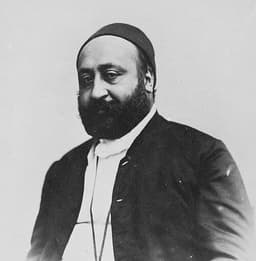
Ahmed Vefik Pasha
Politician · Modern
47.0Total

Joachim Gauck
Politician · Modern
56.5Total
Basic Information
Born
1823
1940
Died
1891
—
Era
Modern
Modern
Nationality
Ottoman Empire
Germany
Occupation
Politician
Politician
Civilization
Middle Eastern
Western
Score Comparison
Military (10%)
47.1
48.3
Political (20%)
43.7
68.0
Influence (20%)
55.7
60.0
Legacy (20%)
42.5
48.3
Leadership (15%)
45.0
68.0
Strategy (15%)
44.6
42.4
TOTAL
47.0
56.5
Ahmed Vefik Pasha — Complete Timeline
1863 AD
Served as Governor of BursaPolitical Action
As governor of Bursa, Ahmed Vefik Pasha implemented modernization projects including road construction, public buildings, and educational reforms. He also established the first theater in Bursa and promoted cultural activities.
GovernorModernizationBursa
constructive
1870 AD
Translated Molière's Works into TurkishCultural◆ Major
Ahmed Vefik Pasha translated several plays by Moli
TranslationTheaterCultural Exchange
Impact: nationalconstructive
1876 AD
Published the First Turkish DictionaryCultural◆ Major
Ahmed Vefik Pasha compiled and published 'Lehce-i Osmani', a comprehensive dictionary of Ottoman Turkish. This work standardized Turkish vocabulary and grammar, becoming a foundational text for modern Turkish linguistics.
DictionaryLanguageScholarship
Impact: nationalconstructive
1878 AD
Appointed Grand VizierPolitical Action◆ Major
Ahmed Vefik Pasha served as Grand Vizier for a brief period in 1878 during the aftermath of the Russo-Turkish War. His tenure lasted only a few months as he was unable to stabilize the empire's finances or secure peace terms.
Grand VizierRusso-Turkish War
Impact: national
Joachim Gauck — Complete Timeline
1990 AD
Served as Federal Commissioner for the Stasi RecordsPolitical Action◆ Major
Gauck was appointed as the first Federal Commissioner for the Stasi Records, overseeing the preservation and opening of files from the East German secret police. This role made him a key figure in the process of coming to terms with the GDR past.
StasiGDRLustration
Impact: nationalconstructive
2012 AD
Elected President of GermanyPolitical Action◆ Major
Joachim Gauck was elected as the eleventh President of Germany by the Federal Assembly. He served from 2012 to 2017. His presidency focused on civil liberties, democracy, and the legacy of the East German dictatorship.
PresidencyCivil RightsGerman Politics
Impact: nationalconstructive
2014 AD
Delivered Speech on 25th Anniversary of Peaceful RevolutionCultural
President Gauck delivered a major speech commemorating the 25th anniversary of the peaceful revolution in East Germany. He emphasized the importance of freedom and democracy, and warned against authoritarian tendencies.
Peaceful RevolutionFreedomDemocracy
Impact: nationalconstructive
This comparison has not been analyzed yet.
One-time AI generation (~1 minute). Scores and timeline are already available below.
Rankings
🥇
Joachim GauckLeader
Mil: 48.3Pol: 68.0Inf: 60.0
56.5
🥈
Ahmed Vefik Pasha
Mil: 47.1Pol: 43.7Inf: 55.7
47.0
+9.5 behind
How This Comparison Works
Algorithm
Each figure is scored on 6 dimensions (0—100 scale) based on structured historical data: Military (10%), Political (20%), Influence (20%), Legacy (20%), Leadership (15%), Strategy (15%). The weighted total produces the final ranking.
Data Sources
Scores are computed from structured sub-indicators in the database. Scale factors adjust for era (Ancient ×0.85, Modern ×1.0) and civilization size (Eastern ×1.05, Other ×0.80) to account for differences in population and military scale.
Maximum 3 Figures
Comparisons are limited to 2—3 figures to ensure readability and statistical meaningfulness.
Error Margins
±5 points per dimension — Sub-scores are derived from historical records with inherent uncertainty. Two figures within 5 points on a dimension should be considered roughly equivalent in that area.
Total Score Accuracy
±3 points overall — The weighted combination of 6 dimensions produces a total score with approximately ±3 points of uncertainty. Differences of less than 3 points are not statistically significant— the figures are effectively tied.
Known Limitations
- Historical records are incomplete and uneven across civilizations
- Figures from oral-tradition societies may be underrepresented
- Occupation labels can misclassify multi-role figures
- Scores measure capability and impact, not moral character
- Quantitative scoring is a comparison tool, not absolute truth
Capability Radar
Military (10%) — Battles & Warfare
Battles
20
28
Win Rate
26
34
Expansion
28
36
Political (20%) — Governance & Reform
Reform
35
60
Diplomacy
40
65
Economy
30
40
Influence (20%) — Cultural & Global Reach
Cultural
45
45
Global
20
45
Legacy (20%) — Historical Impact
Historical
30
50
Longevity
25
40
Leadership (15%) — Power & Stability
Tenure
15
50
Stability
20
55
Strategy (15%) — Tactics & Innovation
Strategy
29
35
Tactics
31
42
Reform
39
45
Similar Comparisons
Comments & Discussion
No comments yet. Be the first to share your thoughts!