Loading...
Ahmed Ben Bella vs Paul Keating
Paul Keating leads by 1.7 pts · 2 figures compared
…

Ahmed Ben Bella
Politician · Modern
57.6Total
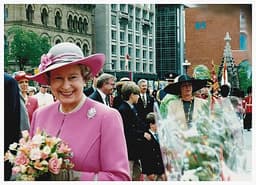
Paul Keating
Politician · Modern
59.3Total
Basic Information
Born
1916
1944
Died
2012
—
Era
Modern
Modern
Nationality
Algeria
Australia
Occupation
Politician
Politician
Civilization
Middle Eastern
Western
Score Comparison
Military (10%)
36.6
49.4
Political (20%)
68.0
72.0
Influence (20%)
60.0
62.0
Legacy (20%)
49.2
52.0
Leadership (15%)
74.0
72.0
Strategy (15%)
53.0
42.8
TOTAL
57.6
59.3
Ahmed Ben Bella — Complete Timeline
1950 AD
Imprisonment by French AuthoritiesPolitical Action◆ Major
Ahmed Ben Bella was arrested by French authorities for his role in the Algerian nationalist movement. He was imprisoned in France, becoming a symbol of the struggle for independence and gaining international attention for the Algerian cause.
ImprisonmentNationalismAlgerian War
Impact: regional
1962 AD
Evian AccordsPolitical Action
Ben Bella, as a leader of the National Liberation Front (FLN), participated in negotiations that resulted in the Evian Accords. These agreements ended the Algerian War and granted Algeria independence from France after 132 years of colonial rule.
IndependenceTreatyAlgerian War
Impact: regionalconstructive
1963 AD
Election as First PresidentPolitical Action◆ Major
Ahmed Ben Bella was elected as the first President of independent Algeria. He established a socialist government, nationalized industries, and pursued land reform. His presidency marked the beginning of Algeria's post-colonial state-building.
PresidencySocialismState-Building
Impact: national
1965 AD
Overthrow by Houari BoumediennePolitical Action◆ Major
Ben Bella was overthrown in a military coup led by his defense minister, Houari Boumedienne. He was placed under house arrest for 14 years, ending his presidency and his influence over Algerian politics. The coup marked a shift toward military rule.
CoupBoumedienneHouse Arrest
Impact: nationaltragic
Paul Keating — Complete Timeline
1991 AD
Became Prime Minister of AustraliaPolitical Action◆ Major
Keating successfully challenged Bob Hawke for the leadership of the Australian Labor Party, becoming prime minister. His victory marked the beginning of a period of intense economic reform and a push for an Australian republic.
LeadershipLabor PartyPrime Minister
Impact: national
1992 AD
Introduced Superannuation GuaranteeReform◆ Major
Keating's government introduced the Superannuation Guarantee, requiring employers to contribute to employees' retirement savings. This policy created a compulsory national savings system, transforming Australia's retirement income landscape.
SuperannuationRetirementEconomic Reform
Impact: nationalconstructive
Delivered the Redfern SpeechCultural◆ Major
Keating delivered a landmark speech at Redfern Park in Sydney, acknowledging the dispossession and suffering of Indigenous Australians. The speech was a powerful call for reconciliation and marked a shift in official discourse on Aboriginal issues.
IndigenousReconciliationSpeech
Impact: nationalprogressive
1993 AD
Promoted Australian RepublicanismPolitical Action◆ Major
Keating established the Republic Advisory Committee to explore options for Australia becoming a republic. He argued that a republic was necessary for Australia to have a fully independent identity, though the proposal was not implemented during his term.
RepublicConstitutional ReformIdentity
Impact: nationalprogressive
1996 AD
Defeated in 1996 ElectionPolitical Action◆ Major
Keating's Labor government was defeated by John Howard's Liberal-National coalition in the 1996 federal election. The loss ended 13 years of Labor rule and marked the beginning of a long period of conservative government.
ElectionDefeatLiberal Party
Impact: nationaltragic
Expert Analysis
Origins
Ahmed Ben Bella was born on December 25, 1916, in Maghnia, Algeria, then a French colony. He came from a modest rural family and received a French education, but his early life was marked by exposure to nationalist ideas. He served in the French army during World War II, earning the Croix de Guerre, but after the war, he became disillusioned with French rule. In 1947, he joined the nationalist movement, eventually co-founding the Revolutionary Committee of Unity and Action (CRUA) in 1954, which evolved into the National Liberation Front (FLN).
Paul Keating was born on January 18, 1944, in Sydney, Australia, into a working-class Irish Catholic family. He left school at 14 to work, but his interest in politics led him to join the Australian Labor Party. He studied economics through correspondence courses and became a research assistant for a union. His early career was shaped by his ambition and sharp intellect, leading to his election to the House of Representatives in 1969 at age 25.
Rise to Power
Ben Bella's rise was forged in the crucible of revolution. He became a key figure in the FLN, organizing armed resistance against French colonial rule. In 1956, he was arrested by French authorities and imprisoned for the duration of the war, becoming a symbol of the nationalist struggle. While in prison, he was elected vice-premier of the provisional government. After his release following the Evian Accords in 1962, he returned to a hero's welcome and was elected as the first President of independent Algeria in 1963, consolidating power through the FLN.
Keating's rise was through the ranks of the Labor Party. He served as Treasurer under Prime Minister Bob Hawke from 1983 to 1991, implementing sweeping economic reforms. In 1991, he challenged Hawke for leadership, delivering a famous speech that criticized Hawke's indecisiveness. He won the leadership and became Prime Minister on December 20, 1991. His political acumen scored 72.0, reflecting his ability to navigate party politics.
Leadership & Governance
Ben Bella governed as a socialist, nationalizing key industries and pursuing land reform. He centralized power, creating a single-party state with the FLN as the only legal party. His leadership style was charismatic but autocratic, scoring 74.0 in leadership. He sought to project Algeria as a leader of the Non-Aligned Movement and supported anti-colonial movements globally. However, his governance was marked by economic mismanagement and political repression, alienating many within the FLN.
Keating was a reformist leader, continuing the economic liberalization begun under Hawke. He introduced the Superannuation Guarantee in 1992, mandating employer contributions to retirement savings, which created a national savings pool. He also deregulated the financial sector and floated the Australian dollar. Politically, he scored 72.0 in leadership, using his oratory to push for a republic and reconciliation with Indigenous Australians. His approach was confrontational but effective in driving change.
Triumph & Tragedy
Ben Bella's greatest triumph was leading Algeria to independence after 132 years of French colonial rule. His political score of 68.0 reflects his role in unifying the nationalist movement. However, his tragedy was his overthrow in a 1965 coup led by his defense minister, Houari Boumedienne. He spent 14 years under house arrest, his socialist experiment largely reversed. His legacy score of 49.2 indicates a mixed impact, as later regimes distanced themselves from his policies.
Keating's triumph was his economic legacy: the Superannuation Guarantee and microeconomic reforms that modernized Australia's economy. His influence score of 62.0 reflects his role in promoting republicanism, though Australia remains a constitutional monarchy. His tragedy was his defeat in the 1996 election, losing to John Howard's coalition. His vision for a republic and reconciliation was rejected by voters at the time, though his policies endured.
Character & Destiny
Ben Bella was charismatic and idealistic, but his authoritarian tendencies and inability to build inclusive institutions led to his downfall. His strategic score of 53.0 reflects a lack of foresight in securing his position. He was a revolutionary who struggled to transition to peacetime governance.
Keating was intelligent and pugnacious, known for his aggressive debating style. His strategy score of 42.8 suggests that his confrontational approach alienated allies, contributing to his electoral defeat. However, his determination to implement long-term reforms shaped his legacy.
Legacy
Ben Bella's legacy is as a founding father of independent Algeria, but his immediate impact was reversed. He is remembered as a nationalist icon, but his socialist policies were largely abandoned. His influence waned after the coup, and he spent decades in obscurity.
Keating's legacy is more enduring. The Superannuation Guarantee transformed Australian retirement savings, and his economic reforms are credited with boosting productivity. His Redfern Speech on Indigenous reconciliation remains a landmark. He scored 52.0 in legacy, reflecting his lasting policy impact.
Conclusion
While Ben Bella's role in decolonization was crucial, his governance failures and short tenure limit his impact. Keating's economic reforms had a more lasting effect on Australia's prosperity. With a total score of 59.3 to Ben Bella's 57.6, Keating emerges as the more effective leader in terms of sustained legacy and concrete policy achievements. Ben Bella's symbolic importance as a revolutionary leader is undeniable, but Keating's tangible contributions to his nation's economic framework give him the edge.
Rankings
🥇
Paul KeatingLeader
Mil: 49.4Pol: 72.0Inf: 62.0
59.3
🥈
Ahmed Ben Bella
Mil: 36.6Pol: 68.0Inf: 60.0
57.6
+1.7 behind
How This Comparison Works
Algorithm
Each figure is scored on 6 dimensions (0—100 scale) based on structured historical data: Military (10%), Political (20%), Influence (20%), Legacy (20%), Leadership (15%), Strategy (15%). The weighted total produces the final ranking.
Data Sources
Scores are computed from structured sub-indicators in the database. Scale factors adjust for era (Ancient ×0.85, Modern ×1.0) and civilization size (Eastern ×1.05, Other ×0.80) to account for differences in population and military scale.
Maximum 3 Figures
Comparisons are limited to 2—3 figures to ensure readability and statistical meaningfulness.
Error Margins
±5 points per dimension — Sub-scores are derived from historical records with inherent uncertainty. Two figures within 5 points on a dimension should be considered roughly equivalent in that area.
Total Score Accuracy
±3 points overall — The weighted combination of 6 dimensions produces a total score with approximately ±3 points of uncertainty. Differences of less than 3 points are not statistically significant— the figures are effectively tied.
Known Limitations
- Historical records are incomplete and uneven across civilizations
- Figures from oral-tradition societies may be underrepresented
- Occupation labels can misclassify multi-role figures
- Scores measure capability and impact, not moral character
- Quantitative scoring is a comparison tool, not absolute truth
Capability Radar
Military (10%) — Battles & Warfare
Battles
5
29
Win Rate
5
32
Expansion
5
36
Political (20%) — Governance & Reform
Reform
55
75
Diplomacy
60
70
Economy
40
80
Influence (20%) — Cultural & Global Reach
Cultural
50
55
Global
50
55
Legacy (20%) — Historical Impact
Historical
55
60
Longevity
40
50
Leadership (15%) — Power & Stability
Tenure
60
65
Stability
30
60
Strategy (15%) — Tactics & Innovation
Strategy
5
37
Tactics
5
43
Reform
10
44
Similar Comparisons
Comments & Discussion
No comments yet. Be the first to share your thoughts!