Loading...
This comparison has not been analyzed yet.
One-time AI generation (~1 minute). Scores and timeline are already available below.
Ahmad Shah Massoud vs Yonai Mitsumasa
Ahmad Shah Massoud leads by 2.9 pts · 2 figures compared
…

Ahmad Shah Massoud
General · Modern
60.7Total
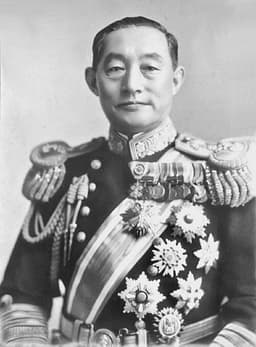
Yonai Mitsumasa
General · Modern
57.8Total
Basic Information
Born
1953
1880
Died
—
1948
Era
Modern
Modern
Nationality
Afghanistan
Japan
Occupation
General
General
Civilization
Middle Eastern
Eastern
Score Comparison
Military (10%)
82.0
50.0
Political (20%)
62.7
68.0
Influence (20%)
55.0
55.7
Legacy (20%)
52.0
48.3
Leadership (15%)
62.0
72.0
Strategy (15%)
70.0
57.5
TOTAL
60.7
57.8
Ahmad Shah Massoud — Complete Timeline
1980 AD
Defense of the Panjshir Valley (1980s)War◆ Major
Massoud led mujahideen forces in the Panjshir Valley against nine Soviet offensives from 1980 to 1985. His guerrilla tactics and defensive strategies prevented Soviet forces from capturing the valley, earning him the nickname 'Lion of Panjshir' and making him a symbol of Afghan resistance.
Soviet-Afghan WarGuerrilla WarfareResistance
Impact: regional
1996 AD
Formation of the Northern AlliancePolitical Action◆ Major
Massoud united various anti-Taliban factions to form the Northern Alliance (United Islamic Front for the Salvation of Afghanistan). He served as its military and political leader, resisting Taliban rule from his stronghold in the Panjshir Valley.
Northern AllianceAnti-TalibanCoalition
Impact: national
2001 AD
Assassination by Al-QaedaPolitical Action◆ Major
Massoud was assassinated by two Al-Qaeda operatives posing as journalists in Khwaja Bahauddin, Afghanistan. The attack occurred two days before 9/11 and was intended to weaken the Northern Alliance ahead of the U.S. invasion. His death removed a key leader from the anti-Taliban coalition.
AssassinationAl-Qaeda9/11 Context
Impact: globaltragic
Yonai Mitsumasa — Complete Timeline
1940 AD
Opposition to War with the AlliesPolitical Action◆ Major
As Prime Minister in 1940, Yonai Mitsumasa opposed signing the Tripartite Pact with Germany and Italy, arguing it would lead to war with the United States and Britain. His resistance delayed the alliance but ultimately failed, and he was forced to resign.
Tripartite PactOppositionForeign Policy
Impact: globalconstructive
Resignation Over Tripartite PactPolitical Action◆ Major
Yonai resigned as Prime Minister in July 1940 after the army forced his hand over the Tripartite Pact. His resignation cleared the way for the pro-Axis cabinet of Konoe Fumimaro, which signed the pact in September 1940.
ResignationAxis Alliance
Impact: nationaltragic
Service as Prime MinisterPolitical Action◆ Major
Yonai Mitsumasa became Prime Minister in January 1940, succeeding Abe Nobuyuki. His cabinet pursued a neutral foreign policy and sought to avoid war, but faced intense pressure from the military to align with Germany.
Prime MinisterNeutrality
Impact: national
1945 AD
Post-War Role as Deputy Prime MinisterPolitical Action◆ Major
After Japan's surrender, Yonai served as Deputy Prime Minister in the Higashikuni and Shidehara cabinets from 1945 to 1946. He oversaw the demobilization of the Japanese military and cooperated with the Allied occupation authorities.
Post-WarOccupationDemobilization
Impact: nationalconstructive
This comparison has not been analyzed yet.
One-time AI generation (~1 minute). Scores and timeline are already available below.
Rankings
🥇
Ahmad Shah MassoudLeader
Mil: 82.0Pol: 62.7Inf: 55.0
60.7
🥈
Yonai Mitsumasa
Mil: 50.0Pol: 68.0Inf: 55.7
57.8
+2.9 behind
How This Comparison Works
Algorithm
Each figure is scored on 6 dimensions (0—100 scale) based on structured historical data: Military (10%), Political (20%), Influence (20%), Legacy (20%), Leadership (15%), Strategy (15%). The weighted total produces the final ranking.
Data Sources
Scores are computed from structured sub-indicators in the database. Scale factors adjust for era (Ancient ×0.85, Modern ×1.0) and civilization size (Eastern ×1.05, Other ×0.80) to account for differences in population and military scale.
Maximum 3 Figures
Comparisons are limited to 2—3 figures to ensure readability and statistical meaningfulness.
Error Margins
±5 points per dimension — Sub-scores are derived from historical records with inherent uncertainty. Two figures within 5 points on a dimension should be considered roughly equivalent in that area.
Total Score Accuracy
±3 points overall — The weighted combination of 6 dimensions produces a total score with approximately ±3 points of uncertainty. Differences of less than 3 points are not statistically significant— the figures are effectively tied.
Known Limitations
- Historical records are incomplete and uneven across civilizations
- Figures from oral-tradition societies may be underrepresented
- Occupation labels can misclassify multi-role figures
- Scores measure capability and impact, not moral character
- Quantitative scoring is a comparison tool, not absolute truth
Capability Radar
Military (10%) — Battles & Warfare
Battles
75
20
Win Rate
80
15
Expansion
60
10
Political (20%) — Governance & Reform
Reform
50
40
Diplomacy
65
70
Economy
40
30
Influence (20%) — Cultural & Global Reach
Cultural
60
25
Global
60
40
Legacy (20%) — Historical Impact
Historical
65
50
Longevity
55
30
Leadership (15%) — Power & Stability
Tenure
55
55
Stability
30
45
Strategy (15%) — Tactics & Innovation
Strategy
80
55
Tactics
85
40
Reform
70
50
Similar Comparisons
Comments & Discussion
No comments yet. Be the first to share your thoughts!