Loading...
Agrippa I vs King Gwanggaeto the Great
King Gwanggaeto the Great leads by 17.3 pts · 2 figures compared
…
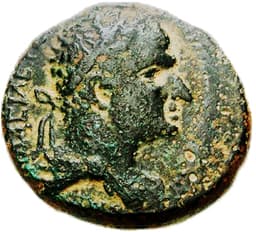
Agrippa I
Emperor · Ancient
42.3Total

King Gwanggaeto the Great
Emperor · Ancient
59.6Total
Basic Information
Born
-11
374
Died
44
413
Era
Ancient
Ancient
Nationality
Judea
Korea
Occupation
Emperor
Emperor
Civilization
Middle Eastern
Eastern
Score Comparison
Military (10%)
22.6
75.0
Political (20%)
43.7
45.0
Influence (20%)
48.6
58.3
Legacy (20%)
38.3
52.0
Leadership (15%)
51.9
72.0
Strategy (15%)
39.6
70.0
TOTAL
42.3
59.6
Agrippa I — Complete Timeline
36 AD
Imprisoned by TiberiusPolitical Action◆ Major
Agrippa I was imprisoned by Emperor Tiberius after making a remark interpreted as wishing for Tiberius's death. He was held in chains for six months until Tiberius's death in 37 AD, when he was released by the new emperor Caligula, who granted him territories.
ImprisonmentTiberiusCaligula
Impact: regionaltragic
37 AD
Appointed King of Judea by CaligulaPolitical Action◆ Major
Upon his release from prison, Emperor Caligula appointed Agrippa I as king of the territories formerly held by his uncle Philip (Batanea, Trachonitis, and Gaulanitis). In 39 AD, Caligula added the tetrarchy of Herod Antipas (Galilee and Perea) after Antipas's exile.
KingshipCaligulaTerritorial Expansion
Impact: regionalconstructive
44 AD
Persecuted the Apostles and Executed JamesPolitical Action◆ Major
According to the Acts of the Apostles, King Agrippa I began persecuting the early Christian church. He executed James, son of Zebedee, by the sword. This was the first apostolic martyrdom recorded in the New Testament. The persecution pleased the Jewish authorities.
Christian PersecutionJames the ApostleMartyrdom
Impact: regionaldestructive
Imprisoned Peter the ApostlePolitical Action◆ Major
Agrippa I arrested Peter the Apostle during Passover and imprisoned him, intending to execute him after the festival. According to Acts, Peter was freed by an angel and escaped. Agrippa executed the guards who had been responsible for Peter's custody.
Peter the ApostleImprisonmentMiraculous Escape
Impact: regionaldestructive
Death at Caesarea MaritimaOther◆ Major
Agrippa I died suddenly at Caesarea Maritima during a public festival. According to Josephus and Acts, he was struck down by an angel of God after accepting acclamation as a god. He was eaten by worms and died after five days of illness. His death ended the Herodian kingdom.
DeathDivine JudgmentEnd of Kingdom
Impact: regionaltragic
King Gwanggaeto the Great — Complete Timeline
391 AD
Conquered the Han River BasinWar
Gwanggaeto the Great led a campaign to seize the Han River basin from Baekje. This strategic region gave Goguryeo control over trade routes and access to the Yellow Sea, boosting its economic power.
Territorial ExpansionGoguryeoWar
Impact: regionalconstructive
395 AD
Subjugated the Khitan TribesWar◆ Major
Gwanggaeto launched a campaign against the Khitan tribes in Manchuria, defeating them and incorporating their lands into Goguryeo. This expanded Goguryeo's territory northward and secured its borders.
WarKhitanManchuria
Impact: regionalconstructive
400 AD
Defeated the Japanese Invasion of SillaWar◆ Major
Gwanggaeto sent 50,000 troops to aid the Silla kingdom against a Japanese invasion. The Goguryeo army expelled the Japanese forces, securing Silla as a tributary ally and extending Goguryeo's influence.
WarSillaJapan
Impact: regionalconstructive
410 AD
Expanded Goguryeo to Its Greatest ExtentWar
By the end of his reign, Gwanggaeto had expanded Goguryeo to control most of the Korean Peninsula and parts of Manchuria. His empire became the largest in Korean history, dominating Northeast Asia.
Territorial ExpansionGoguryeoEmpire
Impact: regionalconstructive
414 AD
Erected the Gwanggaeto SteleCultural◆ Major
Gwanggaeto's son commissioned a stele in Ji'an, China, recording the king's conquests and achievements. The stele provides crucial historical evidence of Goguryeo's military campaigns and territorial extent.
SteleInscriptionHistory
Impact: regionalconstructive
Expert Analysis
Origins
**Agrippa I** (born 10 BCE) was a grandson of Herod the Great and a member of the Herodian dynasty. His mother was Berenice, and he was raised in Rome alongside future emperors. His early life was marked by debt and political maneuvering; he lived extravagantly and had to flee Judea after accumulating massive debts. His Roman education and connections shaped his later career.
**King Gwanggaeto the Great** (born 374 CE) was the 19th monarch of Goguryeo, one of the Three Kingdoms of Korea. He ascended the throne at age 18 after his father King Gogukyang's death. His early years were spent in the Goguryeo court, learning military strategy and statecraft. The kingdom faced threats from Baekje and Japanese incursions, setting the stage for his expansionist policies.
Rise to Power
Agrippa I's rise was unconventional. He ingratiated himself with Roman aristocrats, including Tiberius's son Drusus. However, after Drusus's death, he was imprisoned by Tiberius in 36 CE for making a remark interpreted as wishing the emperor's death. He spent six months in chains. Upon Caligula's accession, Agrippa was released and granted the territories of his uncle Philip (Batanea, Trachonitis, etc.) in 37 CE, with the title of king. Later, Claudius added Judea and Samaria, making him the sole ruler of the entire Jewish kingdom by 41 CE.
Gwanggaeto became king in 391 CE at age 18. He immediately launched campaigns against Baekje and the Khitan tribes. His first major victory was the conquest of the Han River basin in 392 CE, a strategic region that gave Goguryeo control over trade routes. His military successes rapidly expanded Goguryeo's territory, and he earned the title 'Great' through his conquests.
Leadership & Governance
Agrippa I ruled as a client king under Roman suzerainty. He sought to maintain Jewish traditions while pleasing Rome. He rebuilt Jerusalem's walls and observed Jewish laws, but also persecuted early Christians to gain favor with Jewish leaders. He executed James, son of Zebedee, by the sword in 44 CE and imprisoned Peter, who was freed by an angel according to Acts. His governance was a balancing act between Roman demands and Jewish expectations.
Gwanggaeto ruled as an absolute monarch and military leader. He centralized power and expanded the kingdom through aggressive warfare. His governance focused on territorial expansion and securing borders. He maintained a strong army and used diplomatic marriages to secure alliances. His leadership was characterized by direct military command and a vision of Goguryeo hegemony.
Triumph & Tragedy
Agrippa I's greatest success was uniting the Herodian territories under his rule, becoming the last king of Judea. He also successfully negotiated with Caligula to prevent the desecration of the Jerusalem Temple. However, his sudden death at Caesarea in 44 CE, after accepting divine honors, was a tragedy. He was struck down by an angel, according to Acts, after being hailed as a god. His death ended the unified Herodian kingdom.
Gwanggaeto's triumphs include conquering the Han River basin, defeating Japanese forces in Silla, and subjugating the Khitan tribes. He expanded Goguryeo to its greatest extent, controlling most of the Korean Peninsula and parts of Manchuria. His tragedy is the lack of detailed records; his achievements are primarily known from the Gwanggaeto Stele, which may exaggerate his conquests. His early death at age 39 left a legacy built on incomplete evidence.
Character & Destiny
Agrippa I was a skilled diplomat and courtier, adept at navigating Roman politics. He was generous but also ruthless, as shown by his persecution of Christians. His character was shaped by his Roman upbringing and Jewish heritage. His destiny was to be the last king of a united Judea, and his death marked the end of Herodian rule.
Gwanggaeto was a warrior king with a strategic mind. He was determined and ambitious, driven by the goal of expanding Goguryeo. His character is reflected in his military campaigns and the stele's boastful inscriptions. His destiny was to create a brief golden age for Goguryeo, but his early death prevented him from consolidating his conquests.
Legacy
Agrippa I's legacy is mixed. He is remembered in Jewish history as a king who tried to preserve Jewish identity, but in Christian tradition as a persecutor. His reign is a footnote in Roman history. His score of 38.3 in Legacy reflects his limited impact; his kingdom dissolved after his death, and he left no lasting institutions.
Gwanggaeto's legacy is immense in Korean history. He is revered as a national hero who expanded Korean territory. The Gwanggaeto Stele is a critical historical source. His military score of 75.0 and leadership score of 72.0 underscore his effectiveness. His legacy score of 52.0 is higher than Agrippa's, reflecting his enduring impact on Korean identity and historiography.
Conclusion
King Gwanggaeto the Great had a greater impact than Agrippa I. With a total score of 59.6 compared to Agrippa's 42.3, the 17.3-point gap reflects Gwanggaeto's superior military achievements and lasting legacy. While Agrippa I ruled a small client kingdom under Roman shadow, Gwanggaeto expanded a native kingdom to its peak and left a historical record that continues to shape Korean nationalism. Agrippa's reign was ephemeral, but Gwanggaeto's conquests defined an era. The evidence clearly supports Gwanggaeto as the more consequential figure.
Rankings
🥇
King Gwanggaeto the GreatLeader
Mil: 75.0Pol: 45.0Inf: 58.3
59.6
🥈
Agrippa I
Mil: 22.6Pol: 43.7Inf: 48.6
42.3
+17.3 behind
How This Comparison Works
Algorithm
Each figure is scored on 6 dimensions (0—100 scale) based on structured historical data: Military (10%), Political (20%), Influence (20%), Legacy (20%), Leadership (15%), Strategy (15%). The weighted total produces the final ranking.
Data Sources
Scores are computed from structured sub-indicators in the database. Scale factors adjust for era (Ancient ×0.85, Modern ×1.0) and civilization size (Eastern ×1.05, Other ×0.80) to account for differences in population and military scale.
Maximum 3 Figures
Comparisons are limited to 2—3 figures to ensure readability and statistical meaningfulness.
Error Margins
±5 points per dimension — Sub-scores are derived from historical records with inherent uncertainty. Two figures within 5 points on a dimension should be considered roughly equivalent in that area.
Total Score Accuracy
±3 points overall — The weighted combination of 6 dimensions produces a total score with approximately ±3 points of uncertainty. Differences of less than 3 points are not statistically significant— the figures are effectively tied.
Known Limitations
- Historical records are incomplete and uneven across civilizations
- Figures from oral-tradition societies may be underrepresented
- Occupation labels can misclassify multi-role figures
- Scores measure capability and impact, not moral character
- Quantitative scoring is a comparison tool, not absolute truth
Capability Radar
Military (10%) — Battles & Warfare
Battles
10
85
Win Rate
10
90
Expansion
5
90
Political (20%) — Governance & Reform
Reform
30
65
Diplomacy
60
70
Economy
30
60
Influence (20%) — Cultural & Global Reach
Cultural
30
75
Global
20
65
Legacy (20%) — Historical Impact
Historical
30
80
Longevity
20
70
Leadership (15%) — Power & Stability
Tenure
40
75
Stability
25
70
Strategy (15%) — Tactics & Innovation
Strategy
10
85
Tactics
10
80
Reform
5
70
Similar Comparisons
Comments & Discussion
No comments yet. Be the first to share your thoughts!