Loading...
Agesilaus II vs Crassus
Crassus leads by 2.8 pts · 2 figures compared
…

Agesilaus II
General · Ancient
52.7Total
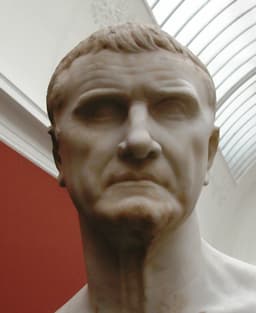
Crassus
General · Ancient
55.5Total
Basic Information
Born
-444
-115
Died
-360
-53
Era
Ancient
Ancient
Nationality
Greece
Roman Republic
Occupation
General
General
Civilization
Western
Western
Score Comparison
Military (10%)
61.7
65.0
Political (20%)
36.5
46.6
Influence (20%)
56.4
57.2
Legacy (20%)
46.7
50.0
Leadership (15%)
65.0
61.1
Strategy (15%)
55.0
60.0
TOTAL
52.7
55.5
Agesilaus II — Complete Timeline
396 BC
Campaign in Asia Minor (396-394 BC)War◆ Major
Agesilaus II led a Spartan expedition to Asia Minor to liberate Greek cities from Persian control. He campaigned successfully against Persian satraps, winning several battles and gaining tribute, but was recalled to Greece due to the outbreak of the Corinthian War.
Spartan-Persian ConflictAsia MinorMilitary Campaign
Impact: regional
394 BC
Battle of Coronea (394 BC)War◆ Major
Agesilaus II defeated a coalition of Greek states (Thebes, Athens, Argos, Corinth) at Coronea in Boeotia. The battle was a tactical victory for Sparta but costly, and Agesilaus was wounded. It solidified his reputation as a capable commander.
Corinthian WarBattleSparta
Impact: regional
362 BC
Defense of Sparta against Epaminondas (362 BC)War◆ Major
During the Theban invasion of Laconia led by Epaminondas, Agesilaus II organized the defense of Sparta itself, which had not been threatened in centuries. He successfully prevented the capture of the city, though the Thebans ravaged the countryside.
Theban HegemonyDefenseSparta
Impact: national
361 BC
Expedition to Egypt (361-360 BC)War
Agesilaus II traveled to Egypt as a mercenary commander to support King Tachos against the Persian Empire. He later switched sides to support a rival claimant, Nectanebo II, in exchange for payment, demonstrating his pragmatism and need for funds for Sparta.
Mercenary CampaignEgyptPersia
Impact: regional
Crassus — Complete Timeline
71 BC
Suppression of Spartacus's RevoltWar◆ Major
Crassus raised and commanded six legions to crush the slave rebellion led by Spartacus. After cornering and defeating the rebels in Lucania, he crucified 6,000 survivors along the Appian Way, ending the Third Servile War.
Slave RevoltSpartacusCrucifixionThird Servile War
Impact: nationaldestructive
60 BC
Formation of the First TriumviratePolitical Action
Crassus allied with Julius Caesar and Pompey the Great to form an informal political coalition known as the First Triumvirate. This alliance dominated Roman politics, advancing each member's interests against the Senate.
Political AllianceCaesarPompeySenate
Impact: global
53 BC
Battle of CarrhaeWar◆ Major
Crassus invaded Parthia without proper support and was defeated at Carrhae. His army was annihilated by Parthian cavalry, and Crassus was killed during negotiations. This disaster marked a major Roman defeat and ended the Triumvirate.
Parthian WarDefeatDeath
Impact: regionaltragic
Expert Analysis
Origins
Agesilaus II was born around 444 BC into the Eurypontid dynasty of Sparta. He was the younger son of King Archidamus II and was raised in the agoge, the rigorous Spartan education system that emphasized discipline, endurance, and military skill. Despite a lame leg, which nearly led to his being exposed at birth, he became king in 399 BC after the death of his half-brother Agis II, with the support of the influential advisor Lysander. His early life was shaped by Spartan militarism and a deep-seated hostility toward Persia, stemming from the Greco-Persian Wars.
Marcus Licinius Crassus was born around 115 BC into a wealthy and politically connected plebeian family in Rome. His father, Publius Licinius Crassus, was a consul and censor who opposed Gaius Marius during the civil wars. After his father and brother were killed by Marian forces, Crassus fled to Spain and later raised an army to support Sulla. His formative years were marked by political violence, proscriptions, and the acquisition of wealth through confiscated properties. He became known as the richest man in Rome, a reputation built on real estate, mining, and slave trading.
Rise to Power
Agesilaus II ascended to the Spartan throne in 399 BC after a contested succession. His first major campaign was in Asia Minor (396-394 BC), where he led a Spartan expedition to liberate Greek cities from Persian control. He campaigned successfully against Persian satraps, winning several engagements and even negotiating a truce that temporarily secured Greek autonomy. However, his ambitions were curtailed by the Corinthian War (395-387 BC), which forced his recall to Greece. His rise was tied to his military prowess and his ability to rally Spartan allies against Persian influence.
Crassus rose to prominence through a combination of wealth and military success. He amassed a fortune by buying properties during Sulla's proscriptions and later by exploiting the economic turmoil of the late Republic. His political breakthrough came in 70 BC when he served as praetor and then consul alongside Pompey. However, his greatest fame came from suppressing the Spartacus revolt (73-71 BC). Crassus raised six legions and defeated the slave army in Lucania, crucifying 6,000 survivors along the Appian Way. This victory earned him a triumph and immense political capital, though it was overshadowed by Pompey's claim to have ended the war.
Leadership & Governance
Agesilaus II governed Sparta as a traditionalist king, adhering to the Lycurgan system and resisting reforms. He led by example on the battlefield, often fighting in the front lines, which earned him respect but also exposed him to danger. His leadership style was autocratic yet consultative with the ephors and gerousia. In foreign policy, he pursued a pro-Spartan hegemony, intervening in Thebes and Corinth to maintain dominance. However, his rigid adherence to Spartan customs limited his adaptability, as seen in his refusal to fortify Sparta against Theban invasions.
Crassus was a master of political manipulation and coalition-building. He used his wealth to buy influence, lending money to senators and funding public works. As a governor, he was pragmatic but often prioritized personal gain over administrative reform. His leadership during the Spartacus revolt was methodical but harsh: he revived the decimation punishment to discipline his troops. In the First Triumvirate (60 BC), he balanced the ambitions of Caesar and Pompey, but his governance was always secondary to his desire for military glory, which led to his ill-fated Parthian campaign.
Triumph & Tragedy
Agesilaus II's greatest triumph was the defense of Sparta in 362 BC against the Theban general Epaminondas, who had invaded Laconia. Agesilaus organized a successful defense of the unwalled city, a feat that had not been accomplished in centuries. His earlier campaigns in Asia Minor also demonstrated his tactical skill, scoring 55.0 in strategy. However, his greatest failure was his inability to prevent the rise of Thebes under Epaminondas and Pelopidas. The Spartan defeat at Leuctra in 371 BC, though not directly under his command, marked the decline of Spartan power. His final expedition to Egypt (361-360 BC) as a mercenary commander ended in failure, with Agesilaus dying on the return journey at age 84.
Crassus's triumph was the suppression of Spartacus's revolt, which earned him a military score of 65.0. He destroyed the slave army and restored Roman order in Italy. His political achievement in forming the First Triumvirate also secured his influence for a decade. However, his tragedy was the Battle of Carrhae in 53 BC, where he invaded Parthia with inadequate preparation. His army of 40,000 was annihilated by Parthian cavalry, and Crassus was killed during negotiations. This defeat was a catastrophic loss for Rome and a personal disgrace, as he failed to match the military successes of his rivals.
Character & Destiny
Agesilaus II was known for his frugality, discipline, and devotion to Spartan ideals. He was a capable tactician but lacked strategic vision beyond preserving Spartan dominance. His stubbornness and suspicion of change contributed to Sparta's isolation and eventual decline. Historians like Xenophon praised his leadership, but modern assessments note his role in Sparta's overextension. His character—loyal to tradition but unimaginative—shaped his destiny as a king who defended his homeland but failed to adapt to a changing Greek world.
Crassus was ambitious, greedy, and politically astute. His relentless pursuit of wealth and military glory drove his actions, but his arrogance and underestimation of enemies led to his downfall. He was a skilled financier but a mediocre general, as evidenced by his military score of 65.0 compared to his political score of 46.6. His death at Carrhae was a direct result of his hubris, as he ignored advice and marched into a trap. His legacy is overshadowed by his disastrous end, which cemented his reputation as a cautionary tale of overreach.
Legacy
Agesilaus II is remembered as the last great Spartan king, a symbol of the city's military ethos. He influenced later military thinkers through Xenophon's writings, which highlighted his campaigns. However, his legacy is limited by Sparta's decline; he scored 46.7 in legacy. His defense of Sparta and Asian campaigns are studied as examples of Spartan tactics, but his impact on world history is modest compared to figures like Alexander.
Crassus left a mixed legacy. His suppression of Spartacus is a landmark in Roman history, and his wealth set a precedent for the role of money in politics. The First Triumvirate paved the way for the end of the Republic, but Crassus's death at Carrhae marked a turning point, destabilizing the triumvirate and leading to civil war. His legacy score of 50.0 reflects his influence on Roman political dynamics, though his military failure is more famous than his achievements.
Conclusion
While Crassus holds a higher total score (55.5 vs. 52.7), his impact on history is more significant due to his role in the First Triumvirate and the suppression of Spartacus. Agesilaus II was a competent Spartan king who defended his city but failed to reverse its decline. Crassus's actions shaped the late Roman Republic, contributing to the rise of Caesar and the fall of the Republic. However, Crassus's military failure at Carrhae tarnishes his record. Ultimately, Crassus had a greater impact on the course of history, as his wealth and political maneuvers influenced the transition from Republic to Empire, while Agesilaus's impact was confined to the fading world of Greek city-states.
Rankings
🥇
CrassusLeader
Mil: 65.0Pol: 46.6Inf: 57.2
55.5
🥈
Agesilaus II
Mil: 61.7Pol: 36.5Inf: 56.4
52.7
+2.8 behind
How This Comparison Works
Algorithm
Each figure is scored on 6 dimensions (0—100 scale) based on structured historical data: Military (10%), Political (20%), Influence (20%), Legacy (20%), Leadership (15%), Strategy (15%). The weighted total produces the final ranking.
Data Sources
Scores are computed from structured sub-indicators in the database. Scale factors adjust for era (Ancient ×0.85, Modern ×1.0) and civilization size (Eastern ×1.05, Other ×0.80) to account for differences in population and military scale.
Maximum 3 Figures
Comparisons are limited to 2—3 figures to ensure readability and statistical meaningfulness.
Error Margins
±5 points per dimension — Sub-scores are derived from historical records with inherent uncertainty. Two figures within 5 points on a dimension should be considered roughly equivalent in that area.
Total Score Accuracy
±3 points overall — The weighted combination of 6 dimensions produces a total score with approximately ±3 points of uncertainty. Differences of less than 3 points are not statistically significant— the figures are effectively tied.
Known Limitations
- Historical records are incomplete and uneven across civilizations
- Figures from oral-tradition societies may be underrepresented
- Occupation labels can misclassify multi-role figures
- Scores measure capability and impact, not moral character
- Quantitative scoring is a comparison tool, not absolute truth
Capability Radar
Military (10%) — Battles & Warfare
Battles
55
55
Win Rate
60
60
Expansion
50
30
Political (20%) — Governance & Reform
Reform
45
30
Diplomacy
55
60
Economy
40
85
Influence (20%) — Cultural & Global Reach
Cultural
45
40
Global
35
45
Legacy (20%) — Historical Impact
Historical
50
55
Longevity
40
50
Leadership (15%) — Power & Stability
Tenure
70
65
Stability
50
40
Strategy (15%) — Tactics & Innovation
Strategy
60
40
Tactics
65
45
Reform
30
10
Similar Comparisons
Comments & Discussion
No comments yet. Be the first to share your thoughts!