Loading...
Agamemnon vs Marcian
Marcian leads by 2.6 pts · 2 figures compared
…

Agamemnon
Emperor · Ancient
52.4Total
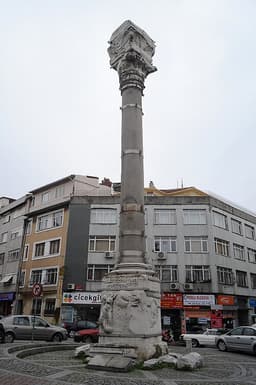
Marcian
Emperor · Ancient
55.0Total
Basic Information
Born
-1210
392
Died
-1180
457
Era
Ancient
Ancient
Nationality
Mycenae
Byzantine Empire
Occupation
Emperor
Emperor
Civilization
Western
Western
Score Comparison
Military (10%)
70.0
47.5
Political (20%)
37.9
61.3
Influence (20%)
55.0
56.4
Legacy (20%)
52.0
48.3
Leadership (15%)
48.4
65.7
Strategy (15%)
57.5
50.0
TOTAL
52.4
55.0
Agamemnon — Complete Timeline
1190 BC
Led the Greek Expedition to TroyWar
Agamemnon, as the most powerful Greek king, assembled and commanded the coalition of Greek forces that sailed to Troy to retrieve Helen. He served as the supreme commander throughout the ten-year war.
Trojan WarCommandCoalition
Impact: global
Sacrificed Iphigenia at AulisCultural◆ Major
To appease the goddess Artemis and gain favorable winds for the fleet, Agamemnon sacrificed his daughter Iphigenia at Aulis. This act caused deep resentment in his wife Clytemnestra.
SacrificeFamilyMythology
Impact: regionaltragic
1185 BC
Quarreled with Achilles over BriseisPolitical Action◆ Major
Agamemnon seized the war prize Briseis from Achilles, causing the hero to withdraw from battle. This quarrel nearly cost the Greeks the war and is the central theme of Homer's Iliad.
IliadQuarrelAchilles
Impact: regionaldestructive
1180 BC
Captured and Sacked TroyWar
After a ten-year siege, Agamemnon's forces used the Trojan Horse stratagem to enter and destroy Troy. The victory brought immense wealth and glory to Mycenae.
Trojan WarVictorySack
Impact: global
Murdered by Clytemnestra and AegisthusPolitical Action◆ Major
Upon returning to Mycenae, Agamemnon was killed in his bath by his wife Clytemnestra and her lover Aegisthus. This murder was revenge for Iphigenia's sacrifice and continued the curse on the House of Atreus.
AssassinationRevengeCurse
Impact: regionaltragic
Marcian — Complete Timeline
450 AD
Refused tribute to Attila the HunPolitical Action
Upon becoming Eastern Roman Emperor, Marcian reversed the policy of paying tribute to Attila the Hun. He declared that he had gold for his friends but iron for his enemies. This defiance marked a shift in Eastern policy and contributed to Attila's decision to invade the West.
Foreign PolicyHunnic Wars
Impact: regionalconstructive
451 AD
Convened the Council of ChalcedonCultural
Marcian convened the Council of Chalcedon, the fourth ecumenical council. The council condemned the Monophysite heresy and defined the Chalcedonian Creed, which affirmed the two natures of Christ. This decision had lasting theological and political consequences for the Christian world.
Ecumenical CouncilChristian TheologyReligious Policy
Impact: globalconstructive
452 AD
Stabilized the Eastern Empire's financesReform◆ Major
Marcian implemented fiscal reforms that stabilized the Eastern Roman Empire's economy. He abolished the tax on the city of Constantinople and reduced state expenditures, leaving a substantial treasury surplus upon his death.
Economic ReformFiscal Policy
Impact: nationalconstructive
Expert Analysis
Origins
Agamemnon, born around 1250 BCE in Mycenae, was the son of King Atreus and Queen Aerope. His lineage was cursed with violence: Atreus feuded with his brother Thyestes, leading to a cycle of murder. Agamemnon grew up in the wealthy citadel of Mycenae, learning warfare and kingship. He married Clytemnestra, daughter of King Tyndareus of Sparta, cementing an alliance. His brother Menelaus became king of Sparta. Agamemnon's early life was shaped by the demands of Mycenaean palace culture, where tribute, trade, and military might were paramount.
Marcian, born around 392 CE in Thrace or Illyria, was the son of a soldier. He served in the Roman army for years, rising through the ranks. He became a tribune and later a senator. His military career under emperors like Theodosius II gave him administrative experience. He was known for competence and integrity, avoiding the palace intrigues of Constantinople. When Emperor Theodosius II died in 450 CE, the powerful general Aspar chose Marcian as a puppet emperor, but Marcian proved independent.
Rise to Power
Agamemnon inherited the throne of Mycenae after his father Atreus was murdered. He expanded his power through marriage and alliances. When Helen, wife of Menelaus, was abducted by Paris of Troy, Agamemnon used the oath of the suitors to assemble a massive Greek coalition. He was chosen as commander-in-chief due to his wealth and influence. The expedition to Troy began around 1190 BCE, with over 1,000 ships and 100,000 men. Agamemnon's leadership was tested immediately: he sacrificed his daughter Iphigenia to Artemis for favorable winds, a decision that haunted him.
Marcian rose to power through military service and patronage. He was a trusted officer under Aspar, the Alan general who dominated Eastern Roman politics. When Theodosius II died, Aspar elevated Marcian to emperor, expecting compliance. However, Marcian quickly asserted independence. He refused to continue tribute payments to Attila the Hun, declaring that he had gold for friends but iron for enemies. This bold move defined his reign. He also convened the Council of Chalcedon in 451 CE, asserting imperial authority over church matters.
Leadership & Governance
Agamemnon led through personal authority and wealth. He commanded the Greek army at Troy for ten years, but his leadership caused friction. His quarrel with Achilles over the slave Briseis nearly lost the war. Agamemnon's governance of Mycenae relied on tribute and palace bureaucracy, but details are scarce. He was a warrior king, leading from the front in battle. However, his political score of 37.9 reflects poor handling of alliances and internal dissent. His decision to sacrifice Iphigenia alienated his wife and subjects.
Marcian governed with fiscal prudence and religious authority. He stabilized the Eastern Empire's economy by abolishing the chrysargyron tax on Constantinople and reducing state spending. His political score of 61.3 indicates effective administration. He convened the Council of Chalcedon, which defined orthodox Christology and condemned Monophysitism. This strengthened ties with the Western Church but created divisions in Egypt and Syria. Marcian's leadership score of 65.7 reflects his ability to assert authority without military force, relying on diplomacy and reform.
Triumph & Tragedy
Agamemnon's greatest triumph was the capture and sack of Troy. After ten years, the Greeks used the Trojan Horse to enter the city, leading to its destruction. Agamemnon returned home with immense wealth and the prophetess Cassandra. His tragedy was his murder: Clytemnestra and Aegisthus killed him in his bath, avenging Iphigenia and seizing power. His death ended the Atreid dynasty in Mycenae. His military success was overshadowed by personal failure and a bloody homecoming.
Marcian's triumph was defying Attila. By refusing tribute, he forced Attila to focus on the Western Roman Empire, saving Constantinople from attack. Attila's death in 453 CE removed the Hunnic threat. Marcian also convened the Council of Chalcedon, which shaped Christian doctrine for centuries. His tragedy was limited: he died peacefully in 457 CE, but his religious policies fueled the Monophysite schism, weakening Byzantine unity. His reforms were successful but not transformative.
Character & Destiny
Agamemnon was proud, decisive, but flawed. His quarrel with Achilles shows arrogance and poor judgment. He was a capable commander but lacked diplomatic finesse. His destiny was tied to his family curse: the murder of his daughter and his own death were consequences of his lineage. Ancient sources like Homer portray him as a majestic but tragic figure, whose hubris led to ruin. His leadership score of 48.4 reflects mixed abilities.
Marcian was prudent, firm, and religious. He was known for piety and fiscal responsibility. His refusal to bow to Attila demonstrated courage. He avoided the corruption of the court and died of natural causes. His character allowed him to stabilize the empire after decades of Hunnic pressure. His destiny was to be a transitional figure, bridging the Theodosian and Leonid dynasties.
Legacy
Agamemnon's legacy is primarily literary. He is a central figure in Homer's Iliad and Greek tragedy. His story shaped Western concepts of heroism and tragedy. The Mycenaean civilization declined after his death, but his name became synonymous with kingly authority. His influence score of 55.0 reflects cultural impact, but historical accuracy is uncertain. The Trojan War may have been a real conflict, but Agamemnon himself is semi-mythical.
Marcian's legacy is institutional. The Council of Chalcedon defined Christian orthodoxy for the Eastern Orthodox and Roman Catholic churches. His fiscal policies set precedents for Byzantine administration. He is remembered as a pious emperor who strengthened the state. His legacy score of 48.3 is moderate, as his reign was short (450-457) and his reforms were later overshadowed by Justinian. However, his defiance of Attila is a notable achievement.
Conclusion
Marcian had greater impact than Agamemnon. Marcian's total score of 55.0 exceeds Agamemnon's 52.4. Agamemnon's influence is cultural and mythic, but his historical reality is uncertain. Marcian's concrete actions—defying Attila, convening Chalcedon, stabilizing finances—shaped the Byzantine Empire and Christianity. Agamemnon's military score (70.0) is higher, but Marcian's political (61.3) and leadership (65.7) scores reflect effective governance. Marcian's legacy endures in church doctrine, while Agamemnon's is literary. In terms of verifiable historical impact, Marcian was more significant.
Rankings
🥇
MarcianLeader
Mil: 47.5Pol: 61.3Inf: 56.4
55.0
🥈
Agamemnon
Mil: 70.0Pol: 37.9Inf: 55.0
52.4
+2.6 behind
How This Comparison Works
Algorithm
Each figure is scored on 6 dimensions (0—100 scale) based on structured historical data: Military (10%), Political (20%), Influence (20%), Legacy (20%), Leadership (15%), Strategy (15%). The weighted total produces the final ranking.
Data Sources
Scores are computed from structured sub-indicators in the database. Scale factors adjust for era (Ancient ×0.85, Modern ×1.0) and civilization size (Eastern ×1.05, Other ×0.80) to account for differences in population and military scale.
Maximum 3 Figures
Comparisons are limited to 2—3 figures to ensure readability and statistical meaningfulness.
Error Margins
±5 points per dimension — Sub-scores are derived from historical records with inherent uncertainty. Two figures within 5 points on a dimension should be considered roughly equivalent in that area.
Total Score Accuracy
±3 points overall — The weighted combination of 6 dimensions produces a total score with approximately ±3 points of uncertainty. Differences of less than 3 points are not statistically significant— the figures are effectively tied.
Known Limitations
- Historical records are incomplete and uneven across civilizations
- Figures from oral-tradition societies may be underrepresented
- Occupation labels can misclassify multi-role figures
- Scores measure capability and impact, not moral character
- Quantitative scoring is a comparison tool, not absolute truth
Capability Radar
Military (10%) — Battles & Warfare
Battles
60
20
Win Rate
55
30
Expansion
50
10
Political (20%) — Governance & Reform
Reform
20
50
Diplomacy
45
65
Economy
35
30
Influence (20%) — Cultural & Global Reach
Cultural
70
55
Global
65
45
Legacy (20%) — Historical Impact
Historical
75
60
Longevity
80
50
Leadership (15%) — Power & Stability
Tenure
40
40
Stability
20
45
Strategy (15%) — Tactics & Innovation
Strategy
65
35
Tactics
50
25
Reform
30
10
Similar Comparisons
Comments & Discussion
No comments yet. Be the first to share your thoughts!