Loading...
Marcian vs Nectanebo I
Marcian leads by 0.3 pts · 2 figures compared
…

Marcian
Emperor · Ancient
55.0Total
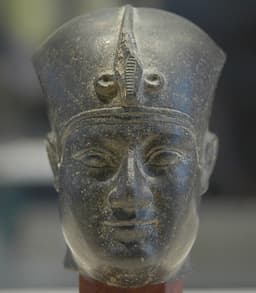
Nectanebo I
Emperor · Ancient
54.7Total
Basic Information
Born
392
-380
Died
457
-362
Era
Ancient
Ancient
Nationality
Byzantine Empire
Egypt
Occupation
Emperor
Emperor
Civilization
Western
Middle Eastern
Score Comparison
Military (10%)
47.5
55.0
Political (20%)
61.3
45.0
Influence (20%)
56.4
56.4
Legacy (20%)
48.3
48.3
Leadership (15%)
65.7
68.0
Strategy (15%)
50.0
60.7
TOTAL
55.0
54.7
Marcian — Complete Timeline
450 AD
Refused tribute to Attila the HunPolitical Action
Upon becoming Eastern Roman Emperor, Marcian reversed the policy of paying tribute to Attila the Hun. He declared that he had gold for his friends but iron for his enemies. This defiance marked a shift in Eastern policy and contributed to Attila's decision to invade the West.
Foreign PolicyHunnic Wars
Impact: regionalconstructive
451 AD
Convened the Council of ChalcedonCultural
Marcian convened the Council of Chalcedon, the fourth ecumenical council. The council condemned the Monophysite heresy and defined the Chalcedonian Creed, which affirmed the two natures of Christ. This decision had lasting theological and political consequences for the Christian world.
Ecumenical CouncilChristian TheologyReligious Policy
Impact: globalconstructive
452 AD
Stabilized the Eastern Empire's financesReform◆ Major
Marcian implemented fiscal reforms that stabilized the Eastern Roman Empire's economy. He abolished the tax on the city of Constantinople and reduced state expenditures, leaving a substantial treasury surplus upon his death.
Economic ReformFiscal Policy
Impact: nationalconstructive
Nectanebo I — Complete Timeline
380 BC
Foundation of the 30th dynastyPolitical Action◆ Major
Nectanebo I overthrew the Persian-backed ruler and established the 30th dynasty, the last native Egyptian dynasty. He seized power after the death of Pharaoh Nepherites II. This marked the beginning of a period of renewed Egyptian independence from Persian rule.
DynastyIndependencePersia
Impact: globalconstructive
373 BC
Defense against Persian invasion (373 BC)War◆ Major
Nectanebo I successfully repelled a Persian invasion led by Pharnabazus and Iphicrates. The Persian army was delayed by the flooding of the Nile and Egyptian defenses. The invasion failed due to poor coordination and the Egyptians' effective use of the terrain. This victory preserved Egyptian independence.
PersiaInvasionDefense
Impact: regional
370 BC
Construction of the temple of Isis at PhilaeCultural◆ Major
Nectanebo I began the construction of the temple of Isis at Philae, one of the most important religious sites in Egypt. The temple complex was expanded by later rulers and became a major center of the cult of Isis. This project demonstrated his patronage of traditional Egyptian religion.
TempleIsisReligion
Impact: regionalconstructive
Building program across EgyptCultural
Nectanebo I undertook an extensive building program, including additions to the temples at Karnak, Luxor, and Heliopolis. He also constructed a large naos for the temple of Amun at Karnak. These projects revived Egyptian monumental architecture after a period of decline.
ArchitectureTemplesRevival
Impact: nationalconstructive
Expert Analysis
Origins
**Marcian** (c. 392–457 AD) was born in Illyria or Thrace to a family of modest means. He served as a soldier for much of his early life, rising through the ranks under the command of the general Aspar. His military career took him to campaigns in Persia and Africa, but his humble origins meant he lacked the aristocratic pedigree of many Roman emperors. Marcian was reportedly a man of integrity and simple tastes, which later influenced his fiscal policies.
**Nectanebo I** (c. 380–362 BC) was a native Egyptian general from Sebennytos. He came to power after the death of the Persian-backed ruler, possibly through a coup. Egypt had been under Persian rule intermittently for decades, and Nectanebo sought to restore native sovereignty. His background as a military commander gave him experience in leading armies and fortifying defenses.
Rise to Power
Marcian became emperor in 450 AD after the death of Theodosius II. He was chosen by the influential general Aspar and the empress Pulcheria, whom Marcian married to legitimize his claim. His accession was notable for his immediate policy reversal regarding Attila the Hun. Unlike his predecessor, Marcian refused to pay tribute, declaring that he had gold for his friends but only iron for his enemies. This bold stance defined his reign.
Nectanebo I seized power in 379 BC after the death of Nepherites II, the last pharaoh of the 29th dynasty. He quickly established the 30th dynasty, which would be the last native Egyptian ruling house. His rise was facilitated by his military reputation and the desire among Egyptians to throw off Persian influence. He consolidated control by eliminating rivals and securing the support of the priesthood through building projects.
Leadership & Governance
Marcian's leadership was marked by fiscal prudence and religious orthodoxy. He abolished the tax on Constantinople and reduced state expenditures, stabilizing the Eastern Roman economy. In religious affairs, he convened the Council of Chalcedon in 451 AD, which defined the dual nature of Christ and condemned Monophysitism. This decision, however, alienated large parts of Egypt and Syria, creating lasting divisions.
Nectanebo I focused on strengthening Egypt's defenses and cultural identity. He invested heavily in fortifications, particularly in the Delta region, to repel Persian invasions. His building program included the temple of Isis at Philae and additions to Karnak and Luxor, reinforcing the role of traditional religion. Politically, he maintained stability by balancing the power of local nomarchs and the priesthood. His administrative reforms improved tax collection but did not fundamentally alter the system.
Triumph & Tragedy
Marcian's greatest triumph was his defiance of Attila. Despite threats, the Huns turned their attention to the Western Roman Empire, sparing the East. The Council of Chalcedon was a theological milestone, but it also deepened the rift between the Eastern and Oriental Orthodox churches. His fiscal policies left the treasury with a surplus of 100,000 pounds of gold at his death. However, his refusal to aid the Western Empire against the Vandals and Huns contributed to its decline.
Nectanebo I's major success was repelling the Persian invasion of 373 BC. The Persian forces, led by Pharnabazus and the Greek mercenary Iphicrates, were delayed by the Nile's flooding and Egyptian defenses, ultimately withdrawing. His building projects revived Egyptian art and architecture. However, his reign did not achieve long-term security; Persia continued to threaten, and his dynasty ended with his grandson Nectanebo II. Egypt fell to the Persians again in 343 BC.
Character & Destiny
Marcian was known for his integrity and religious piety. He refused to compromise on doctrinal issues, even at the cost of unity. His decision not to pay tribute to Attila was risky but calculated, as he strengthened the army and fortifications. His character, as described by historians, was modest and just, earning him a reputation as a good emperor in a turbulent era. He died of natural causes in 457 AD.
Nectanebo I was a pragmatic ruler who prioritized stability and cultural revival. He was a competent general and administrator, but his focus on defense and building projects came at the expense of aggressive expansion. He lacked the vision to permanently secure Egypt's independence. His death in 362 BC led to a succession that ultimately failed to withstand Persian resurgence. His scores of 55.0 in military and 68.0 in leadership reflect his capabilities but also limitations.
Legacy
Marcian's legacy is tied to the Council of Chalcedon, which shaped Christology for centuries. His fiscal reforms stabilized the Eastern Empire, providing a foundation for later prosperity. He is remembered as a saint in the Eastern Orthodox Church. However, his policies indirectly weakened the Western Empire. In terms of influence, he scored 56.4, comparable to Nectanebo's 56.4.
Nectanebo I is remembered as the founder of the last native Egyptian dynasty. His building projects, especially the temple of Isis at Philae, became iconic. He symbolized resistance to foreign domination and inspired later Egyptian nationalism. His legacy score of 48.3 reflects the ultimate failure of his dynasty. Yet, he is often considered one of the last great pharaohs.
Conclusion
While both rulers faced existential threats and made significant contributions, Marcian had a greater impact on world history. His defiance of Attila altered the course of the Hunnic invasions, and the Council of Chalcedon defined Christian doctrine for billions. Nectanebo I, though a capable leader, presided over a brief revival that did not prevent Egypt's subjugation. Marcian's total score of 55.0 edges out Nectanebo's 54.7, but more importantly, his decisions had enduring consequences that shaped the medieval world. Thus, Marcian is the more influential figure.
Rankings
🥇
MarcianLeader
Mil: 47.5Pol: 61.3Inf: 56.4
55.0
🥈
Nectanebo I
Mil: 55.0Pol: 45.0Inf: 56.4
54.7
+0.3 behind
How This Comparison Works
Algorithm
Each figure is scored on 6 dimensions (0—100 scale) based on structured historical data: Military (10%), Political (20%), Influence (20%), Legacy (20%), Leadership (15%), Strategy (15%). The weighted total produces the final ranking.
Data Sources
Scores are computed from structured sub-indicators in the database. Scale factors adjust for era (Ancient ×0.85, Modern ×1.0) and civilization size (Eastern ×1.05, Other ×0.80) to account for differences in population and military scale.
Maximum 3 Figures
Comparisons are limited to 2—3 figures to ensure readability and statistical meaningfulness.
Error Margins
±5 points per dimension — Sub-scores are derived from historical records with inherent uncertainty. Two figures within 5 points on a dimension should be considered roughly equivalent in that area.
Total Score Accuracy
±3 points overall — The weighted combination of 6 dimensions produces a total score with approximately ±3 points of uncertainty. Differences of less than 3 points are not statistically significant— the figures are effectively tied.
Known Limitations
- Historical records are incomplete and uneven across civilizations
- Figures from oral-tradition societies may be underrepresented
- Occupation labels can misclassify multi-role figures
- Scores measure capability and impact, not moral character
- Quantitative scoring is a comparison tool, not absolute truth
Capability Radar
Military (10%) — Battles & Warfare
Battles
20
45
Win Rate
30
50
Expansion
10
40
Political (20%) — Governance & Reform
Reform
50
60
Diplomacy
65
65
Economy
30
55
Influence (20%) — Cultural & Global Reach
Cultural
55
45
Global
45
35
Legacy (20%) — Historical Impact
Historical
60
50
Longevity
50
40
Leadership (15%) — Power & Stability
Tenure
40
55
Stability
45
50
Strategy (15%) — Tactics & Innovation
Strategy
35
60
Tactics
25
55
Reform
10
65
Similar Comparisons
Comments & Discussion
No comments yet. Be the first to share your thoughts!