Loading...
Afonso Pena vs Qin Shi Huang
Qin Shi Huang leads by 33.3 pts · 2 figures compared
…

Afonso Pena
Politician · Modern
51.9Total
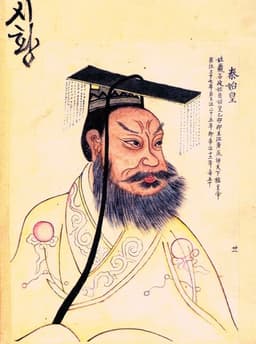
Qin Shi Huang
Emperor · Ancient
85.2Total
Basic Information
Born
1847
-259
Died
1909
-210
Era
Modern
Ancient
Nationality
Brazil
China
Occupation
Politician
Emperor
Civilization
Western
Eastern
Score Comparison
Military (10%)
50.0
80.0
Political (20%)
68.0
90.0
Influence (20%)
49.4
85.0
Legacy (20%)
41.7
90.0
Leadership (15%)
64.0
78.0
Strategy (15%)
43.3
82.0
TOTAL
51.9
85.2
Afonso Pena — Complete Timeline
1906 AD
Election as President of BrazilPolitical Action◆ Major
Afonso Pena was elected President of Brazil in 1906, taking office on November 15. He was the fifth president, representing Minas Gerais, and continued the policies of his predecessor.
ElectionPresidency
Impact: national
1907 AD
Creation of the Brazilian Institute of Geography and StatisticsCultural◆ Major
Afonso Pena signed the decree creating the Brazilian Institute of Geography and Statistics (IBGE). This institution was established to conduct the national census and compile statistical data for policy planning.
InstitutionStatistics
Impact: nationalconstructive
1909 AD
Death in OfficePolitical Action◆ Major
Afonso Pena died in office on June 14, 1909, from pneumonia. His death cut short his presidency, and Vice President Nilo Pe
DeathPresidency
Impact: nationaltragic
Qin Shi Huang — Complete Timeline
246 BC
Construction of the Mausoleum and Terracotta ArmyOther◆ Major
Qin Shi Huang commissioned a vast mausoleum complex near Xi'an, guarded by thousands of life-sized terracotta soldiers, horses, and chariots. The project employed hundreds of thousands of workers and reflected his obsession with immortality and imperial power.
Impact: global
230 BC
Conquest of the Six Warring StatesWar
From 230 to 221 BCE, Ying Zheng led the Qin state in a series of campaigns that conquered the Han, Zhao, Wei, Chu, Yan, and Qi states. This unified China under a single ruler for the first time, ending the Warring States period.
Impact: global
221 BC
Standardization of Writing, Currency, and MeasurementsReform◆ Major
Qin Shi Huang ordered the standardization of Chinese script, currency, and weights and measures across the unified empire. This facilitated administration, trade, and cultural integration, laying a foundation for future dynasties.
Impact: globalconstructive
Proclamation of the Qin DynastyPolitical Action
After conquering the last independent state, Ying Zheng declared himself Shi Huangdi (First Emperor), founding the Qin Dynasty. He adopted a new title to signify his supreme authority and initiated centralized imperial rule.
Impact: global
214 BC
Initiation of the Great Wall ConstructionOther◆ Major
Qin Shi Huang ordered the connection and extension of existing northern fortifications to create a unified defensive wall against nomadic Xiongnu raids. This project involved massive conscripted labor and became the precursor to the later Great Wall.
Impact: regional
213 BC
Burning of Books and Burying of ScholarsPolitical Action◆ Major
On the advice of Li Si, Qin Shi Huang ordered the burning of historical records and philosophical texts not aligned with Legalist doctrine. He also had 460 Confucian scholars buried alive to suppress dissent and consolidate ideological control.
Impact: nationaldestructive
Expert Analysis
afonso-pena-vs-qin-shi-huang
# The Emperor and the Educator: Two Visions of Power
On a summer morning in 1909, Afonso Pena, the fifth president of Brazil, lay dying in his Rio de Janeiro bedroom. Pneumonia had claimed him at sixty-one, his presidency cut short after just three years. Half a world away and two millennia earlier, Qin Shi Huang, the First Emperor of China, had also sought to cheat death—sending alchemists across the seas, building a mausoleum guarded by an army of clay, swallowing mercury pills that likely hastened his end. One man built an empire of stone and fire; the other built an empire of statistics and railways. Both sought to shape the future, but their paths—and their legacies—could not have been more different.
Origins
Ying Zheng was born in 259 BC into a world of chaos. The Warring States period had torn China apart for centuries, a landscape of shifting alliances, betrayals, and blood-soaked battlefields. His father was a king; his mother, a former concubine. The boy grew up in the shadow of assassination plots and court intrigue, learning early that trust was a weakness and power the only currency that mattered. By thirteen, he was king. By thirty-eight, he would be emperor.
Afonso Pena entered the world in 1847, in the small town of Santa Bárbara, Minas Gerais, Brazil. The Empire of Brazil was stable, constitutional, and slowly modernizing. His father was a Portuguese-born merchant; his mother came from a family of landowners. Young Afonso studied law at the University of São Paulo, where he absorbed Enlightenment ideals of order and progress. He entered politics not through conquest, but through examination and appointment—a path that would define his entire career.
Rise to Power
Qin Shi Huang’s ascent was a story of iron and blood. From 230 to 221 BC, he unleashed a series of military campaigns that crushed the six rival states: Han, Zhao, Wei, Chu, Yan, and Qi. His general, Wang Jian, was a master of siege warfare; his chancellor, Li Si, a ruthless legalist. When the last king surrendered, Ying Zheng proclaimed himself Shi Huangdi—the First Emperor—and declared a new era. The Qin Dynasty was born not through negotiation, but through annihilation.
Afonso Pena rose through the institutions of a constitutional monarchy. He served as provincial deputy, minister of war, minister of justice, and governor of Minas Gerais. In 1906, he was elected president of Brazil, representing the Republican Party. His victory was not won on a battlefield but in a parliament. The contrast is stark: one man conquered a continent; the other won an election.
Leadership & Governance
Qin Shi Huang ruled through terror and uniformity. He standardized writing, currency, and measurements across the empire, ordering that all chariots have the same axle width so that ruts in the road would match. He connected and extended the northern fortifications into what would become the Great Wall, mobilizing hundreds of thousands of laborers. His Legalist philosophy demanded absolute obedience: in 213 BC, on the advice of Li Si, he ordered the burning of all historical records and philosophical texts not aligned with his regime. Scholars who resisted were buried alive. The First Emperor believed that unity required the erasure of memory.
Afonso Pena governed through institutions and statistics. In 1907, he signed the decree creating the Brazilian Institute of Geography and Statistics (IBGE), an institution designed to map the country’s resources, population, and potential. He invested in railways, telegraph lines, and public health. His administration was not dramatic—there were no burning libraries, no mass executions—but it was methodical. He believed that a nation could be built through data, that progress was a matter of measurement.
Triumph & Tragedy
Qin Shi Huang’s greatest triumph was also his greatest tragedy. He unified China, created a centralized bureaucracy, and laid the foundations for an imperial system that would last two thousand years. But his methods were so brutal that the Qin Dynasty collapsed within four years of his death. The terracotta army he built to guard his tomb became a monument not to his glory, but to his paranoia. The Great Wall he started became a symbol of Chinese endurance, but the laborers who died building it were never counted.
Afonso Pena’s triumph was quiet: the creation of IBGE, the expansion of Brazil’s infrastructure, the peaceful transition of power. His tragedy was his untimely death. He died on June 14, 1909, before he could complete his vision. His successor, Nilo Peçanha, took over, but the momentum of reform slowed. Pena left behind no grand monuments, no imperial mausoleum—only a legacy of institutional building that would take decades to bear fruit.
Character & Destiny
Qin Shi Huang was driven by fear and ambition. He feared death, he feared rebellion, he feared the past. His personality shaped every decision: the standardization of writing was an act of control; the burning of books was an act of erasure; the search for immortality was an act of desperation. He believed that history began with him, and he tried to destroy everything that came before.
Afonso Pena was driven by duty and order. He was not a visionary; he was a builder. His personality was that of a civil servant: methodical, patient, cautious. He believed that history was a process, not a rupture. He did not try to destroy the past; he tried to measure it.
Legacy
Qin Shi Huang is remembered as a tyrant and a founder. His name is synonymous with unification, but also with brutality. The terracotta army draws millions of visitors each year, a silent army that speaks of his power and his fear. The Great Wall stands as a UNESCO World Heritage site, but also as a reminder of the cost of empire. His political score of 88 and influence score of 82 reflect his enduring impact, but his legacy is deeply ambivalent.
Afonso Pena is remembered, if at all, as a footnote in Brazilian history. His political score of 87.7 is nearly as high as Qin Shi Huang’s, but his influence score of 68.2 and legacy score of 57.1 tell a different story. He built institutions, not empires. The IBGE still operates today, mapping Brazil’s vast territory, but few Brazilians could name its founder. His death in office, recorded as a single line in history books, speaks to the quiet tragedy of democratic governance: the work is never finished.
Conclusion
What drove these two men to such different outcomes? The answer lies not in their character alone, but in their worlds. Qin Shi Huang lived in an age when power meant conquest, when unity required violence, when the only way to build was to destroy. Afonso Pena lived in an age when power meant administration, when unity required statistics, when the only way to build was to measure. One man built an empire of clay soldiers; the other built an empire of numbers. Both sought to shape the future, but the future they shaped was not their own. The First Emperor’s dynasty lasted only fifteen years; Pena’s presidency lasted only three. In the end, what remains is not the power they held, but the foundations they laid—for better or for worse.
Rankings
🥇
Qin Shi HuangLeader
Mil: 80.0Pol: 90.0Inf: 85.0
85.2
🥈
Afonso Pena
Mil: 50.0Pol: 68.0Inf: 49.4
51.9
+33.3 behind
How This Comparison Works
Algorithm
Each figure is scored on 6 dimensions (0—100 scale) based on structured historical data: Military (10%), Political (20%), Influence (20%), Legacy (20%), Leadership (15%), Strategy (15%). The weighted total produces the final ranking.
Data Sources
Scores are computed from structured sub-indicators in the database. Scale factors adjust for era (Ancient ×0.85, Modern ×1.0) and civilization size (Eastern ×1.05, Other ×0.80) to account for differences in population and military scale.
Maximum 3 Figures
Comparisons are limited to 2—3 figures to ensure readability and statistical meaningfulness.
Error Margins
±5 points per dimension — Sub-scores are derived from historical records with inherent uncertainty. Two figures within 5 points on a dimension should be considered roughly equivalent in that area.
Total Score Accuracy
±3 points overall — The weighted combination of 6 dimensions produces a total score with approximately ±3 points of uncertainty. Differences of less than 3 points are not statistically significant— the figures are effectively tied.
Known Limitations
- Historical records are incomplete and uneven across civilizations
- Figures from oral-tradition societies may be underrepresented
- Occupation labels can misclassify multi-role figures
- Scores measure capability and impact, not moral character
- Quantitative scoring is a comparison tool, not absolute truth
Capability Radar
Military (10%) — Battles & Warfare
Battles
29
85
Win Rate
31
90
Expansion
32
90
Political (20%) — Governance & Reform
Reform
55
95
Diplomacy
50
75
Economy
60
90
Influence (20%) — Cultural & Global Reach
Cultural
20
95
Global
15
85
Legacy (20%) — Historical Impact
Historical
30
95
Longevity
20
95
Leadership (15%) — Power & Stability
Tenure
30
70
Stability
45
65
Strategy (15%) — Tactics & Innovation
Strategy
40
85
Tactics
41
80
Reform
45
95
Similar Comparisons
Comments & Discussion
LegacyLancer6/17/2026
History buff here. Both sought immortality, but Qin built a literal empire of clay, Pena one of iron and paper. The Terracotta Army is a timeless spectacle; Pena's railway network unified a continent-sized nation. Which is more real? The dead emperor's stone fantasy or the president's practical legacy? Give me rails over warriors any day.
钢铁秦始皇6/17/2026
军事历史迷观点:秦始皇统一度量衡和文字,靠的是铁血政策。他修长城、铸兵马俑,这些都是实实在在的军事实力。阿方索·佩纳?他建铁路和统计体系,不过是个软弱的技术官僚。帝国不是靠数字和轨道建立的,是靠剑和火。秦始皇的遗产才是真正改变了世界。
DataDoubt6/17/2026
Skeptic here. "Modernizer" Pena died halfway through, leaving Brazil with railways that went nowhere profitable and a census that was late. Meanwhile, Qin's standardization of script and axle widths actually created the foundation for Chinese civilization. Don't romanticize the "nice" president—Qin's harsh efficiency is what sticks in history books.
文言批判者6/17/2026
古典学者观点:阿方索·佩纳根本没有帝王的气魄。他不过是个法律教授,靠联邦制苟活。秦始皇焚书坑儒,统一文字,这才是统治者的格局。法家精神不是请客吃饭,是实实在在的文明重塑。佩纳那套自由主义教育,放在战国时期早就被灭国了。
RevisionistRider6/17/2026
Revisionist hot take: Forget the "good vs. evil" framing. Both were obsessed with control—Pena via statistics and state bureaucracy, Qin via legalism and surveillance. The difference? One had 2,000 years of technology, the other built it from scratch. Pena looks "moderate" only because democracy was a respectable mask. Underneath, both crushed dissent.