Loading...
Adolf of Nassau vs Frederick the Fair
Adolf of Nassau leads by 3.7 pts · 2 figures compared
…
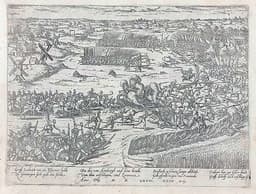
Adolf of Nassau
Emperor · Medieval
40.0Total
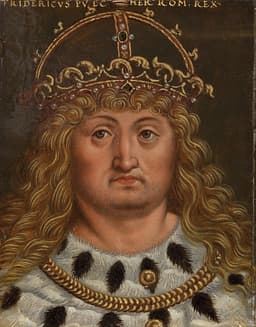
Frederick the Fair
Emperor · Medieval
36.3Total
Basic Information
Born
1255
1289
Died
1298
1330
Era
Medieval
Medieval
Nationality
Holy Roman Empire
Holy Roman Empire
Occupation
Emperor
Emperor
Civilization
Western
Western
Score Comparison
Military (10%)
50.0
21.2
Political (20%)
30.7
32.1
Influence (20%)
47.9
45.5
Legacy (20%)
37.5
35.8
Leadership (15%)
31.2
33.6
Strategy (15%)
43.7
39.6
TOTAL
40.0
36.3
Adolf of Nassau — Complete Timeline
1292 AD
Elected King of GermanyPolitical Action◆ Major
Adolf of Nassau was elected King of Germany by the prince-electors, succeeding Rudolf of Habsburg. His election was supported by the Archbishop of Mainz and other electors who sought to limit Habsburg influence.
ElectionGerman KingdomNassau
Impact: regional
1294 AD
Purchased the Landgraviate of ThuringiaPolitical Action
Adolf of Nassau purchased the Landgraviate of Thuringia from the Wettin dynasty. This acquisition expanded his territorial base but was criticized by the prince-electors for using imperial funds without their consent.
Territorial AcquisitionThuringiaControversy
Impact: regional
1298 AD
Killed at the Battle of GöllheimWar◆ Major
Adolf of Nassau was killed in battle against Albert I of Habsburg at G
BattleDeathHabsburg
Impact: regionaltragic
Deposed by the Prince-ElectorsPolitical Action◆ Major
Adolf of Nassau was deposed by the prince-electors, who accused him of misgovernance and violating imperial laws. This deposition was unprecedented and led to the election of Albert I of Habsburg as his successor.
DepositionGerman KingdomHabsburg
Impact: regionaldestructive
Frederick the Fair — Complete Timeline
1314 AD
Elected Anti-King of GermanyPolitical Action◆ Major
Frederick the Fair was elected anti-king of Germany by a faction of prince-electors, opposing Louis IV of Bavaria. This election was part of a double election that led to a civil war between the Habsburg and Wittelsbach dynasties.
ElectionHabsburgDouble Election
Impact: regional
1322 AD
Defeated and Captured at the Battle of MühldorfWar◆ Major
Frederick the Fair was defeated and captured by Louis IV of Bavaria at the Battle of M
BattleDefeatHabsburg
Impact: regionaltragic
1325 AD
Released from CaptivityPolitical Action
Frederick the Fair was released from captivity after agreeing to recognize Louis IV as king. However, he later renounced this agreement, leading to continued tensions between the Habsburgs and Wittelsbachs.
ReleaseHabsburgAgreement
Impact: regional
1330 AD
Died in GutensteinOther◆ Major
Frederick the Fair died in Gutenstein, Austria, without ever fully securing the German throne. His death ended his claim and allowed Louis IV to rule unchallenged, though the Habsburg dynasty continued to hold power in Austria.
DeathHabsburgEnd of Claim
Impact: regional
Expert Analysis
Origins
Adolf of Nassau was born around 1255 into the House of Nassau, a comital family in the Holy Roman Empire. His early life was shaped by the politics of the Rhineland, and he inherited the County of Nassau in 1276. He lacked a strong territorial base compared to other princes. Frederick the Fair, born around 1289, was a member of the House of Habsburg, son of King Albert I of Germany. He grew up in the Austrian duchies and was steeped in Habsburg ambitions. His background gave him access to significant resources in Austria and Styria.
Rise to Power
Adolf of Nassau was elected King of Germany in 1292 after the death of Rudolf of Habsburg. The prince-electors, wary of Habsburg power, chose Adolf as a compromise candidate. He secured the support of the Archbishop of Mainz and other electors. His reign began with promises to restore order. Frederick the Fair was elected anti-king in 1314 by a faction of electors opposing Louis IV of Bavaria. This occurred after the death of Henry VII, leading to a double election. Frederick's Habsburg connections and control of Austria gave him a base, but he lacked universal recognition.
Leadership & Governance
Adolf of Nassau attempted to expand his territorial power by purchasing the Landgraviate of Thuringia in 1294 from the Wettin dynasty. This move angered the princes and was seen as overreach. He also intervened in conflicts in the Low Countries. His governance was marked by favoritism toward his own family and allies. Frederick the Fair, after his election, struggled to assert authority. He focused on military campaigns against Louis IV but failed to build a stable administration. His rule was largely confined to his Habsburg domains.
Triumph & Tragedy
Adolf's greatest success was his election as king, a remarkable rise for a count. However, his deposition in 1298 by the prince-electors was a major failure. He was accused of violating imperial laws and misgovernance. He died at the Battle of Göllheim against Albert I of Habsburg. Frederick's triumph was his election as anti-king, but his defeat and capture at the Battle of Mühldorf in 1322 was his tragedy. He spent years imprisoned. He was released after recognizing Louis IV but later renounced the agreement.
Character & Destiny
Adolf was ambitious but politically inept. His purchase of Thuringia alienated the electors. His military score of 50.0 reflects his battlefield death, while his political score of 30.7 shows his inability to maintain support. Frederick, with a political score of 32.1, was similarly flawed. His stubbornness led to his capture. Both men were victims of the shifting power dynamics in the Holy Roman Empire.
Legacy
Adolf of Nassau is remembered as a failed king whose deposition set a precedent for elective monarchy. His line continued in the House of Nassau, but he left no lasting reforms. Frederick the Fair is a footnote in Habsburg history. He scored 35.8 in legacy, slightly below Adolf's 37.5. Their reigns highlighted the fragility of royal power in the medieval empire.
Conclusion
Adolf of Nassau had a greater impact than Frederick the Fair, as evidenced by his higher total score of 40.0 versus 36.3. Adolf's death in battle and his deposition were more consequential, shaping the political landscape. Frederick's capture and imprisonment ended his challenge without lasting effect. While neither was a great ruler, Adolf's brief reign and violent end left a clearer mark on German history.
Rankings
🥇
Adolf of NassauLeader
Mil: 50.0Pol: 30.7Inf: 47.9
40.0
🥈
Frederick the Fair
Mil: 21.2Pol: 32.1Inf: 45.5
36.3
+3.7 behind
How This Comparison Works
Algorithm
Each figure is scored on 6 dimensions (0—100 scale) based on structured historical data: Military (10%), Political (20%), Influence (20%), Legacy (20%), Leadership (15%), Strategy (15%). The weighted total produces the final ranking.
Data Sources
Scores are computed from structured sub-indicators in the database. Scale factors adjust for era (Ancient ×0.85, Modern ×1.0) and civilization size (Eastern ×1.05, Other ×0.80) to account for differences in population and military scale.
Maximum 3 Figures
Comparisons are limited to 2—3 figures to ensure readability and statistical meaningfulness.
Error Margins
±5 points per dimension — Sub-scores are derived from historical records with inherent uncertainty. Two figures within 5 points on a dimension should be considered roughly equivalent in that area.
Total Score Accuracy
±3 points overall — The weighted combination of 6 dimensions produces a total score with approximately ±3 points of uncertainty. Differences of less than 3 points are not statistically significant— the figures are effectively tied.
Known Limitations
- Historical records are incomplete and uneven across civilizations
- Figures from oral-tradition societies may be underrepresented
- Occupation labels can misclassify multi-role figures
- Scores measure capability and impact, not moral character
- Quantitative scoring is a comparison tool, not absolute truth
Capability Radar
Military (10%) — Battles & Warfare
Battles
30
15
Win Rate
20
10
Expansion
15
5
Political (20%) — Governance & Reform
Reform
10
5
Diplomacy
15
15
Economy
10
10
Influence (20%) — Cultural & Global Reach
Cultural
10
5
Global
5
5
Legacy (20%) — Historical Impact
Historical
15
10
Longevity
10
5
Leadership (15%) — Power & Stability
Tenure
25
20
Stability
10
10
Strategy (15%) — Tactics & Innovation
Strategy
20
10
Tactics
25
10
Reform
10
5
Similar Comparisons
Comments & Discussion
No comments yet. Be the first to share your thoughts!