Loading...
Adolf Frederick vs King Faisal of Saudi Arabia
King Faisal of Saudi Arabia leads by 19.2 pts · 2 figures compared
…
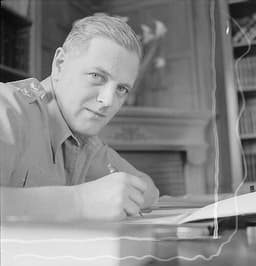
Adolf Frederick
Emperor · Modern
39.4Total

King Faisal of Saudi Arabia
Emperor · Modern
58.6Total
Basic Information
Born
1710
1906
Died
1771
1975
Era
Modern
Modern
Nationality
Sweden
Saudi Arabia
Occupation
Emperor
Emperor
Civilization
Western
Middle Eastern
Score Comparison
Military (10%)
48.8
14.9
Political (20%)
30.7
70.3
Influence (20%)
45.5
72.0
Legacy (20%)
34.2
54.0
Leadership (15%)
31.2
80.0
Strategy (15%)
53.1
30.3
TOTAL
39.4
58.6
Adolf Frederick — Complete Timeline
1751 AD
Coronation of Adolf FrederickPolitical Action◆ Major
Adolf Frederick was crowned King of Sweden after the death of Frederick I. His coronation was conditional on the 1720 constitution, which left him with little real power, as the Riksdag dominated governance.
CoronationConstitutionAge of Liberty
Impact: national
1756 AD
December Crisis (1756)Political Action
Adolf Frederick attempted to increase royal power by dismissing the Hat party government, but the Riksdag forced him to back down. The crisis highlighted the weakness of the monarchy during the Age of Liberty.
CrisisConstitutional Conflict
Impact: national
1771 AD
Death from OvereatingOther
Adolf Frederick died in Stockholm after consuming a large meal of lobster, caviar, sauerkraut, and champagne, followed by 14 servings of his favorite dessert. His death was attributed to digestive issues, symbolizing his weak and indulgent rule.
DeathOvereating
Impact: nationaltragic
King Faisal of Saudi Arabia — Complete Timeline
1960 AD
Modernization of Saudi educationReform◆ Major
King Faisal expanded education for both boys and girls, building schools and universities. He also sent students abroad for higher education, modernizing the Saudi workforce while maintaining conservative Islamic values.
EducationModernizationSaudi Arabia
Impact: nationalconstructive
1962 AD
Abolition of slavery in Saudi ArabiaReform◆ Major
King Faisal issued a decree abolishing slavery in Saudi Arabia. The move was part of his modernization efforts and was influenced by international pressure, though enforcement was gradual and faced resistance from traditional elites.
Human RightsReformSlavery
Impact: nationalconstructive
1973 AD
1973 oil embargoPolitical Action
King Faisal led OPEC's oil embargo against the US and other allies of Israel during the Yom Kippur War. The embargo caused a global energy crisis, quadrupling oil prices and demonstrating the political power of oil-producing nations.
OilOPECArab-Israeli Conflict
Impact: global
1975 AD
Assassination of King FaisalPolitical Action◆ Major
King Faisal was assassinated by his nephew, Prince Faisal bin Musaid, at a royal audience. The assassin was later executed. Faisal's death shocked the world and led to the succession of his brother, King Khalid.
AssassinationRoyal FamilySuccession
Impact: regionaltragic
Expert Analysis
Origins
Adolf Frederick (1710–1771) was born into the House of Holstein-Gottorp in Germany, a minor princely family. His father was Christian Augustus, Prince of Eutin, and his mother was Albertina Frederica of Baden-Durlach. He was raised in the Lutheran faith and received a typical noble education, focusing on languages, history, and courtly manners. In 1743, he was elected Crown Prince of Sweden by the Riksdag, as a compromise candidate after the Russo-Swedish war. His claim was weak, and he was essentially a puppet of the pro-Russian faction.
King Faisal (1906–1975) was born in Riyadh, the third son of Abdulaziz ibn Saud, the founder of modern Saudi Arabia. He was raised in the strict Wahhabi tradition and received religious and military training from his father. Faisal accompanied his father on military campaigns, gaining firsthand experience in statecraft. He was known for his piety and intelligence, and his mother was Tarfa bint Abdullah Al Sheikh, from the influential Al Sheikh family.
Rise to Power
Adolf Frederick's rise was entirely dependent on external powers. In 1743, the Swedish Riksdag, under pressure from Russia, chose him as heir to the throne. He became king in 1751 upon the death of Frederick I, but the 1720 constitution had stripped the monarchy of almost all power, leaving him as a figurehead. His reign was marked by constant conflict with the Hat party, which controlled the Riksdag. In 1756, he attempted a coup, the December Crisis, to restore royal authority, but the Riksdag forced him to back down, executing his supporters.
King Faisal rose through merit and family position. In 1926, at age 20, he was appointed Viceroy of Hejaz, governing the newly conquered region. In 1932, he became Minister of Foreign Affairs, representing Saudi Arabia internationally. He played a key role in the 1945 founding of the United Nations. In 1953, he was named Crown Prince and Prime Minister, but conflict with his brother King Saud led to a power struggle. In 1964, with support from the religious establishment, Faisal forced Saud to abdicate and became king.
Leadership & Governance
Adolf Frederick's leadership score of 31.2 reflects his inability to govern effectively. He was a constitutional puppet, with the Riksdag controlling all decisions. His only attempt to assert power, the December Crisis, failed quickly. He focused on cultural patronage, supporting the arts and sciences, but had no real political influence. His governance was passive, and he accepted his limited role.
King Faisal, with a leadership score of 80.0, was a transformative ruler. He centralized power, reduced the influence of the royal family, and implemented modern state structures. He abolished slavery in 1962, a major social reform. He expanded education, opening schools for girls despite conservative opposition. He also developed infrastructure, building roads, airports, and hospitals. His foreign policy was assertive: he used oil as a weapon, leading the 1973 embargo that quadrupled oil prices and shifted global power.
Triumph & Tragedy
Adolf Frederick's greatest triumph was his patronage of the arts, particularly the construction of the Royal Swedish Opera. However, his reign was largely a failure: he could not restore royal power, and his political score of 30.7 reflects his impotence. His most famous tragedy was his death: in 1771, after consuming a meal of lobster, caviar, sauerkraut, champagne, and 14 servings of his favorite dessert, he suffered a stroke and died. This event symbolizes his lack of self-control and the triviality of his rule.
King Faisal's triumphs include the 1973 oil embargo, which demonstrated Saudi Arabia's geopolitical influence and earned him respect in the Muslim world. He also modernized Saudi society, with education and abolition of slavery being lasting achievements. His tragedy was his assassination in 1975 by his nephew, Prince Faisal bin Musaid, who was executed. The assassination shocked the world and highlighted internal family tensions. Faisal's death also slowed some reforms.
Character & Destiny
Adolf Frederick was described as kind, cultured, but weak-willed. He lacked ambition or ruthlessness, preferring comfort and indulgence. His character led to a destiny of irrelevance: he was a king without power, remembered mainly for his gluttonous death. Historians score his influence at 45.5, but this is largely due to his symbolic role as a figurehead.
King Faisal was austere, pious, and determined. He was a skilled diplomat and a decisive leader. His character shaped his destiny: his religious sincerity legitimized his reforms, while his strategic thinking allowed him to use oil as a weapon. His assassination was a tragic result of family feuds, but his legacy as a modernizer endures.
Legacy
Adolf Frederick's legacy is minimal. He is remembered as a footnote—a weak king who died from overeating. His political score of 30.7 and legacy score of 34.2 reflect his lack of impact. Sweden's move toward parliamentary democracy continued after him, and he did little to alter that course.
King Faisal's legacy is profound. His political score of 70.3, influence score of 72.0, and legacy score of 54.0 indicate his lasting impact. He transformed Saudi Arabia into a modern state, set the foundation for its educational system, and used oil to project global power. The 1973 embargo reshaped international relations and energy policy. He is revered in Saudi Arabia as the "Father of Modernization."
Conclusion
King Faisal had a far greater impact than Adolf Frederick. With a total score of 58.6 compared to Adolf Frederick's 39.4, the gap of 19.2 points reflects substantive differences in leadership, influence, and legacy. Adolf Frederick was a powerless figurehead whose only notable act was an overindulgent meal. King Faisal, however, was a decisive leader who modernized a nation, abolished slavery, expanded education, and wielded oil as a weapon of geopolitical influence. While both were kings, Faisal's actions changed the course of history; Adolf Frederick's did not.
Rankings
🥇
King Faisal of Saudi ArabiaLeader
Mil: 14.9Pol: 70.3Inf: 72.0
58.6
🥈
Adolf Frederick
Mil: 48.8Pol: 30.7Inf: 45.5
39.4
+19.2 behind
How This Comparison Works
Algorithm
Each figure is scored on 6 dimensions (0—100 scale) based on structured historical data: Military (10%), Political (20%), Influence (20%), Legacy (20%), Leadership (15%), Strategy (15%). The weighted total produces the final ranking.
Data Sources
Scores are computed from structured sub-indicators in the database. Scale factors adjust for era (Ancient ×0.85, Modern ×1.0) and civilization size (Eastern ×1.05, Other ×0.80) to account for differences in population and military scale.
Maximum 3 Figures
Comparisons are limited to 2—3 figures to ensure readability and statistical meaningfulness.
Error Margins
±5 points per dimension — Sub-scores are derived from historical records with inherent uncertainty. Two figures within 5 points on a dimension should be considered roughly equivalent in that area.
Total Score Accuracy
±3 points overall — The weighted combination of 6 dimensions produces a total score with approximately ±3 points of uncertainty. Differences of less than 3 points are not statistically significant— the figures are effectively tied.
Known Limitations
- Historical records are incomplete and uneven across civilizations
- Figures from oral-tradition societies may be underrepresented
- Occupation labels can misclassify multi-role figures
- Scores measure capability and impact, not moral character
- Quantitative scoring is a comparison tool, not absolute truth
Capability Radar
Military (10%) — Battles & Warfare
Battles
22
10
Win Rate
27
10
Expansion
28
10
Political (20%) — Governance & Reform
Reform
5
75
Diplomacy
10
85
Economy
5
80
Influence (20%) — Cultural & Global Reach
Cultural
5
60
Global
5
75
Legacy (20%) — Historical Impact
Historical
10
70
Longevity
5
55
Leadership (15%) — Power & Stability
Tenure
5
70
Stability
10
65
Strategy (15%) — Tactics & Innovation
Strategy
36
15
Tactics
35
10
Reform
38
30
Similar Comparisons
Comments & Discussion
No comments yet. Be the first to share your thoughts!