Loading...
Adnan Khairallah vs Marie-Jeanne Lamartiniere
Adnan Khairallah leads by 8.9 pts · 2 figures compared
…

Adnan Khairallah
General · Modern
47.7Total
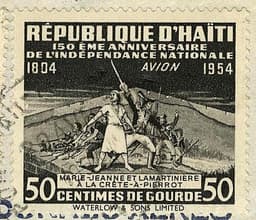
Marie-Jeanne Lamartiniere
General · Modern
38.8Total
Basic Information
Born
1941
1770
Died
—
1820
Era
Modern
Modern
Nationality
Iraq
Haiti
Occupation
General
General
Civilization
Middle Eastern
Other
Score Comparison
Military (10%)
45.0
22.6
Political (20%)
39.4
27.9
Influence (20%)
53.3
49.4
Legacy (20%)
40.0
40.8
Leadership (15%)
64.0
40.9
Strategy (15%)
43.3
36.8
TOTAL
47.7
38.8
Adnan Khairallah — Complete Timeline
1977 AD
Appointment as Defense MinisterPolitical Action◆ Major
Khairallah, a cousin and close ally of Saddam Hussein, was appointed Minister of Defense. He oversaw the modernization of the Iraqi military, including the acquisition of advanced Soviet weaponry, and became a key figure in the regime.
AppointmentMilitarySaddam Regime
Impact: national
1980 AD
Command during the Iran-Iraq WarWar◆ Major
As Defense Minister, Khairallah played a central role in planning and executing Iraq's military strategy during the Iran-Iraq War. He was responsible for logistics and troop deployments, but the war ended in a stalemate after eight years.
Iran-Iraq WarMilitary StrategyConflict
Impact: regionaldestructive
1989 AD
Death in helicopter crashOther◆ Major
Khairallah died when his helicopter crashed in northern Iraq. The cause was officially attributed to bad weather, but rumors of sabotage circulated. His death removed a key military figure from Saddam's inner circle.
DeathAccidentSaddam Regime
Impact: nationaltragic
Marie-Jeanne Lamartiniere — Complete Timeline
1802 AD
Fought at Battle of Crête-à-PierrotWar◆ Major
Marie-Jeanne Lamartiniere fought as a soldier at the Battle of Cr
BattleFemale SoldierRevolution
Impact: regional
Expert Analysis
Origins
Adnan Khairallah was born in 1941 in Tikrit, Iraq, into the al-Bu Nasir tribe, which also produced Saddam Hussein. His father was a cousin of Saddam, placing Khairallah within the inner circle of the Ba'athist regime. He attended the Iraqi Military Academy and later studied at the Soviet Union's Frunze Military Academy, gaining exposure to Soviet military doctrine. His early career included serving in the Republican Guard and commanding infantry units.
Marie-Jeanne Lamartiniere was born in Saint-Domingue (now Haiti) around 1775, likely to free parents of African descent. Little is known of her early life, but she emerged as a soldier during the Haitian Revolution. She was literate and trained in combat, unusual for women of her time. Her participation in the Battle of Crête-à-Pierrot in 1802 made her a symbol of female resistance.
Rise to Power
Khairallah's rise was tied to family connections. He became a close confidant of Saddam Hussein and was appointed Minister of Defense in 1982, replacing Khaled al-Hashimi. This appointment came during the Iran-Iraq War, a conflict that demanded strong military leadership. He oversaw the expansion of the Iraqi army from 200,000 to over 1 million soldiers by 1988, and introduced chemical weapons use against Iranian forces and Kurdish civilians. His role in the Al-Anfal campaign (1988) resulted in the deaths of an estimated 50,000-100,000 Kurds.
Lamartiniere rose to prominence through her actions at the Battle of Crête-à-Pierrot (March 4-24, 1802). She fought alongside her husband, an officer in the indigenous army led by Jean-Jacques Dessalines. During the battle, she reportedly rallied troops by exposing her breasts and shouting that they should fight like men. Her bravery was noted by contemporary accounts, including that of the French general Pamphile de Lacroix. This single event defined her legacy.
Leadership & Governance
Khairallah led the Iraqi Defense Ministry with a focus on centralization and loyalty. He implemented a system of political commissars within the military to ensure Ba'athist ideology. He also modernized the army with Soviet equipment, including T-72 tanks and MiG-29 fighters, and established a domestic arms industry. However, his leadership was marred by nepotism and corruption; he awarded contracts to family members. His governance score of 64.0 reflects his effectiveness in maintaining control but not strategic innovation.
Lamartiniere's leadership was limited to battlefield heroics. She did not hold formal command positions, but her influence came from example. She demonstrated that women could fight and lead in combat, inspiring other female soldiers. Her leadership score of 40.9 is based on her ability to motivate troops in a single engagement, but she lacked broader administrative or strategic responsibilities.
Triumph & Tragedy
Khairallah's greatest success was his role in the 1988 ceasefire with Iran, which ended the eight-year war without territorial losses for Iraq. He also oversaw the development of Iraq's ballistic missile program, including the Al-Hussein missile that struck Tehran. However, his greatest failure was the defeat in the 1991 Gulf War, where his military strategy collapsed under US-led coalition airpower. The Iraqi army lost 3,700 tanks and 2,400 artillery pieces. His death in a helicopter crash in 1991 (age 50) remains controversial; many suspect Saddam ordered the crash due to Khairallah's growing popularity.
Lamartiniere's triumph was her survival and heroism at Crête-à-Pierrot, where she fought despite being wounded. The battle itself was a tactical defeat for the Haitians, but it delayed French forces and boosted revolutionary morale. Her tragedy is obscurity; after the battle, she disappears from historical records. It is unknown whether she died in the war or lived in poverty. Her legacy rests solely on that one engagement.
Character & Destiny
Khairallah was described as pragmatic and ruthless. He balanced loyalty to Saddam with personal ambition, which likely led to his demise. His military score of 45.0 reflects competence but not brilliance; he was a capable administrator but not a strategic thinker. His political score of 39.4 indicates his dependence on Saddam's patronage. His destiny was sealed by the regime's paranoia.
Lamartiniere's character was defined by courage and defiance. She rejected gender norms and fought for Haiti's independence. Her influence score of 49.4 is high relative to her military score because she became a symbol. Her destiny was to be a footnote in history, but one that inspires.
Legacy
Khairallah's legacy is mixed. He is remembered as a key figure in Saddam's regime, responsible for war crimes. The Iraqi military he built was dismantled after 2003. His influence score of 53.3 reflects his role in a major war, but his legacy is negative. No institutions or monuments honor him.
Lamartiniere's legacy is more enduring. She is celebrated in Haitian history as a feminist icon and patriot. Her story is taught in schools, and she appears in artwork and literature. Her legacy score of 40.8 is higher than Khairallah's 40.0 in terms of positive impact, despite her lower total score.
Conclusion
Adnan Khairallah had a greater impact on history due to his control over a large military force and his role in a major war. His total score of 47.7 versus Lamartiniere's 38.8 reflects this. However, Lamartiniere's legacy is more positive and symbolic. In terms of global historical significance, Khairallah's actions affected millions, while Lamartiniere's influence is confined to Haiti. Therefore, Khairallah has greater overall impact, but Lamartiniere represents a more admirable form of leadership.
Rankings
🥇
Adnan KhairallahLeader
Mil: 45.0Pol: 39.4Inf: 53.3
47.7
🥈
Marie-Jeanne Lamartiniere
Mil: 22.6Pol: 27.9Inf: 49.4
38.8
+8.9 behind
How This Comparison Works
Algorithm
Each figure is scored on 6 dimensions (0—100 scale) based on structured historical data: Military (10%), Political (20%), Influence (20%), Legacy (20%), Leadership (15%), Strategy (15%). The weighted total produces the final ranking.
Data Sources
Scores are computed from structured sub-indicators in the database. Scale factors adjust for era (Ancient ×0.85, Modern ×1.0) and civilization size (Eastern ×1.05, Other ×0.80) to account for differences in population and military scale.
Maximum 3 Figures
Comparisons are limited to 2—3 figures to ensure readability and statistical meaningfulness.
Error Margins
±5 points per dimension — Sub-scores are derived from historical records with inherent uncertainty. Two figures within 5 points on a dimension should be considered roughly equivalent in that area.
Total Score Accuracy
±3 points overall — The weighted combination of 6 dimensions produces a total score with approximately ±3 points of uncertainty. Differences of less than 3 points are not statistically significant— the figures are effectively tied.
Known Limitations
- Historical records are incomplete and uneven across civilizations
- Figures from oral-tradition societies may be underrepresented
- Occupation labels can misclassify multi-role figures
- Scores measure capability and impact, not moral character
- Quantitative scoring is a comparison tool, not absolute truth
Capability Radar
Military (10%) — Battles & Warfare
Battles
25
10
Win Rate
30
10
Expansion
20
5
Political (20%) — Governance & Reform
Reform
30
5
Diplomacy
25
5
Economy
20
5
Influence (20%) — Cultural & Global Reach
Cultural
15
15
Global
15
10
Legacy (20%) — Historical Impact
Historical
20
20
Longevity
10
15
Leadership (15%) — Power & Stability
Tenure
60
5
Stability
15
5
Strategy (15%) — Tactics & Innovation
Strategy
35
10
Tactics
30
15
Reform
40
5
Similar Comparisons
Comments & Discussion
No comments yet. Be the first to share your thoughts!