Loading...
This comparison has not been analyzed yet.
One-time AI generation (~1 minute). Scores and timeline are already available below.
Adad-apla-iddina vs Yudhishthira
Yudhishthira leads by 13.0 pts · 2 figures compared
…
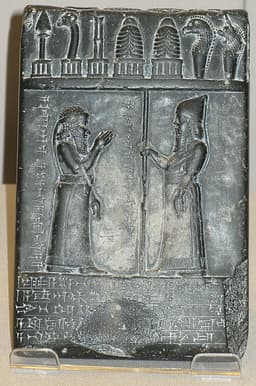
Adad-apla-iddina
Emperor · Ancient
38.5Total

Yudhishthira
Emperor · Ancient
51.5Total
Basic Information
Born
-1067
-1000
Died
-1046
-950
Era
Ancient
Ancient
Nationality
Babylon
Vedic India
Occupation
Emperor
Emperor
Civilization
Middle Eastern
Indian
Score Comparison
Military (10%)
10.2
30.0
Political (20%)
37.9
68.0
Influence (20%)
45.5
72.0
Legacy (20%)
36.7
40.0
Leadership (15%)
45.0
40.0
Strategy (15%)
45.0
43.3
TOTAL
38.5
51.5
Adad-apla-iddina — Complete Timeline
1060 BC
Temple Restoration ProgramReform◆ Major
Adad-apla-iddina undertook a program to restore and rebuild temples across Babylonia, including the Esagila in Babylon and the Ezida in Borsippa. These efforts aimed to revive religious practices and stabilize the kingdom after the disruptions of the Bronze Age collapse.
Temple RestorationReligious RevivalBabylonia
Impact: nationalconstructive
Yudhishthira — Complete Timeline
975 BC
Won the Dice Game Against the KauravasPolitical Action
Yudhishthira, challenged by his cousin Duryodhana, played a rigged dice game. He lost his kingdom, his brothers, his wife Draupadi, and his own freedom, leading to the Pandavas' 13-year exile.
Dice GameExileMahabharata
Impact: nationaltragic
960 BC
Led the Pandavas to Victory at KurukshetraWar◆ Major
Yudhishthira, as the eldest Pandava, commanded the Pandava army in the 18-day Kurukshetra War. Despite moral dilemmas, he led his side to victory, killing the Kaurava army and reclaiming the throne of Hastinapura.
WarVictoryMahabharata
Impact: regional
958 BC
Performed the Ashvamedha YajnaCultural◆ Major
After the war, Yudhishthira performed the Ashvamedha (horse sacrifice) to establish his sovereignty. The ritual horse roamed freely across kingdoms, and those who opposed were conquered, solidifying his rule as emperor.
Vedic RitualImperial ExpansionMahabharata
Impact: nationalconstructive
This comparison has not been analyzed yet.
One-time AI generation (~1 minute). Scores and timeline are already available below.
Rankings
🥇
YudhishthiraLeader
Mil: 30.0Pol: 68.0Inf: 72.0
51.5
🥈
Adad-apla-iddina
Mil: 10.2Pol: 37.9Inf: 45.5
38.5
+13.0 behind
How This Comparison Works
Algorithm
Each figure is scored on 6 dimensions (0—100 scale) based on structured historical data: Military (10%), Political (20%), Influence (20%), Legacy (20%), Leadership (15%), Strategy (15%). The weighted total produces the final ranking.
Data Sources
Scores are computed from structured sub-indicators in the database. Scale factors adjust for era (Ancient ×0.85, Modern ×1.0) and civilization size (Eastern ×1.05, Other ×0.80) to account for differences in population and military scale.
Maximum 3 Figures
Comparisons are limited to 2—3 figures to ensure readability and statistical meaningfulness.
Error Margins
±5 points per dimension — Sub-scores are derived from historical records with inherent uncertainty. Two figures within 5 points on a dimension should be considered roughly equivalent in that area.
Total Score Accuracy
±3 points overall — The weighted combination of 6 dimensions produces a total score with approximately ±3 points of uncertainty. Differences of less than 3 points are not statistically significant— the figures are effectively tied.
Known Limitations
- Historical records are incomplete and uneven across civilizations
- Figures from oral-tradition societies may be underrepresented
- Occupation labels can misclassify multi-role figures
- Scores measure capability and impact, not moral character
- Quantitative scoring is a comparison tool, not absolute truth
Capability Radar
Military (10%) — Battles & Warfare
Battles
5
45
Win Rate
5
40
Expansion
5
35
Political (20%) — Governance & Reform
Reform
40
55
Diplomacy
30
65
Economy
30
50
Influence (20%) — Cultural & Global Reach
Cultural
20
80
Global
10
75
Legacy (20%) — Historical Impact
Historical
20
85
Longevity
20
90
Leadership (15%) — Power & Stability
Tenure
30
60
Stability
25
55
Strategy (15%) — Tactics & Innovation
Strategy
5
40
Tactics
5
35
Reform
5
30
Similar Comparisons
Comments & Discussion
No comments yet. Be the first to share your thoughts!