Loading...
Adad-apla-iddina vs Julius Caesar
Julius Caesar leads by 44.3 pts · 2 figures compared
…
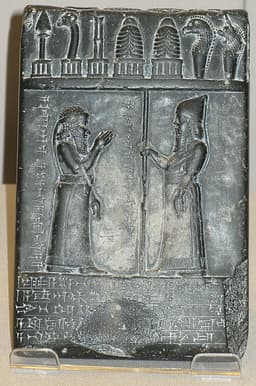
Adad-apla-iddina
Emperor · Ancient
38.5Total

Julius Caesar
General · Ancient
82.8Total
Basic Information
Born
-1067
-100
Died
-1046
-44
Era
Ancient
Ancient
Nationality
Babylon
Roman Republic
Occupation
Emperor
General
Civilization
Middle Eastern
Western
Score Comparison
Military (10%)
10.2
88.0
Political (20%)
37.9
78.0
Influence (20%)
45.5
85.0
Legacy (20%)
36.7
82.0
Leadership (15%)
45.0
80.0
Strategy (15%)
45.0
85.0
TOTAL
38.5
82.8
Adad-apla-iddina — Complete Timeline
1060 BC
Temple Restoration ProgramReform◆ Major
Adad-apla-iddina undertook a program to restore and rebuild temples across Babylonia, including the Esagila in Babylon and the Ezida in Borsippa. These efforts aimed to revive religious practices and stabilize the kingdom after the disruptions of the Bronze Age collapse.
Temple RestorationReligious RevivalBabylonia
Impact: nationalconstructive
Julius Caesar — Complete Timeline
58 BC
Gallic WarsWar◆ Major
Caesar, as proconsul of Gaul, launched a series of campaigns that conquered all of Gaul (modern France, Belgium, and parts of Switzerland). He fought numerous battles, including against the Helvetii, the Belgae, and the Gallic chieftain Vercingetorix. The wars brought immense wealth and a loyal army to Caesar.
Gallic WarsConquestRoman Expansion
Impact: regional
49 BC
Crossing the RubiconPolitical Action◆ Major
Caesar led Legio XIII across the Rubicon River into Italy, defying the Roman Senate's order to disband his army. This act triggered a civil war against Pompey and the Optimates, ultimately leading to Caesar's dictatorship and the end of the Roman Republic.
Roman Civil WarEnd of RepublicPower Struggle
Impact: global
48 BC
Battle of PharsalusWar◆ Major
Caesar's outnumbered army defeated the larger forces of Pompey the Great at Pharsalus in Greece. Caesar's tactical use of a reserve line to counter Pompey's cavalry charge proved decisive. Pompey fled to Egypt, where he was assassinated, leaving Caesar as the undisputed master of the Roman world.
Roman Civil WarBattleDecisive Victory
Impact: regional
44 BC
Appointment as Dictator for LifePolitical Action◆ Major
The Roman Senate appointed Caesar dictator perpetuo (dictator for life), granting him unprecedented personal power. This move concentrated military, legislative, and judicial authority in one person, effectively ending the Roman Republic's traditional system of checks and balances and alarming many senators.
DictatorshipEnd of RepublicPower Consolidation
Impact: regionaldestructive
Assassination on the Ides of MarchPolitical Action◆ Major
A group of Roman senators, led by Marcus Junius Brutus and Gaius Cassius Longinus, stabbed Caesar to death at a meeting of the Senate in the Theatre of Pompey. The assassination was intended to restore the Republic, but instead triggered another civil war that led to the rise of the Roman Empire.
AssassinationRoman PoliticsEnd of Republic
Impact: globaldestructive
Expert Analysis
adad-apla-iddina-vs-julius-caesar
# The Conqueror and the Builder
On the Ides of March in 44 BCE, a Roman dictator fell beneath twenty-three dagger strokes, his blood pooling at the feet of a statue of his rival Pompey. Julius Caesar’s assassination marked the end of the Roman Republic and the beginning of an imperial age that would shape the West for millennia. Twenty-two centuries earlier, in the twilight of the Bronze Age, another ruler faced a quieter end. Adad-apla-iddina, king of Babylon, died around 1046 BCE, leaving behind not a dramatic assassination but a legacy of mortar and stone. Between these two figures—separated by a millennium, by geography, and by the chasm of history’s judgment—lies a profound contrast in what it means to lead, to conquer, and to be remembered.
Origins
Caesar was born into the chaos of the late Roman Republic, a world of civil wars, senatorial corruption, and the dying gasps of aristocratic rule. His family, the Julii, claimed descent from the goddess Venus, but they were not among Rome’s wealthiest or most powerful. Young Caesar learned early that in Rome, glory came not from birth alone but from audacity, intelligence, and the willingness to break rules. He grew up watching Marius and Sulla tear the Republic apart, and he absorbed the lesson that power belonged to those who seized it.
Adad-apla-iddina emerged from a very different world. He ruled Babylon during the so-called “Dark Age” of the ancient Near East, a period of collapse following the Bronze Age. The great empires of Egypt, Hatti, and Assyria had crumbled. Babylon itself was a shadow of its former glory under Hammurabi. Where Caesar inherited a civilization at its peak of military and political sophistication, Adad-apla-iddina inherited ruins—both literal and metaphorical. His task was not conquest but survival, not expansion but restoration.
Rise to Power
Caesar’s path was a masterclass in political calculation. He climbed the Roman ladder—quaestor, aedile, praetor—but his true ascent began with the First Triumvirate in 60 BCE, a secret alliance with Pompey and Crassus. The Gallic Wars that followed (58–50 BCE) were not just military campaigns but a calculated bid for personal glory, wealth, and an army loyal to him alone. When the Senate ordered him to disband his legions, Caesar crossed the Rubicon River in 49 BCE, a declaration of civil war. Within four years, he was dictator for life.
Adad-apla-iddina’s rise is less dramatic but no less significant. He took the throne around 1067 BCE, inheriting a kingdom battered by Aramean migrations and economic collapse. There were no triumphal processions or dramatic rivers to cross—only the slow, grinding work of rebuilding a civilization. His path was not one of conquest but of preservation. While Caesar gambled everything on a single, decisive act, Adad-apla-iddina’s rule was a marathon of patience.
Leadership & Governance
Caesar governed with the ruthless efficiency of a general turned statesman. He reformed the calendar, granted citizenship to provincials, initiated public works, and centralized power in his own hands. His military genius was undeniable: at Alesia (52 BCE), he defeated a Gallic coalition through siegecraft and tactical brilliance; at Pharsalus (48 BCE), he crushed Pompey’s larger army through speed and deception. Yet his political wisdom was flawed. He pardoned his enemies, but he also accumulated honors—dictator for life, consul for ten years—that screamed “king” to a republic that had hated kings for five centuries.
Adad-apla-iddina ruled through restoration. His temple restoration program, around 1060 BCE, focused on rebuilding the Esagila, the great temple of Marduk in Babylon, and other sanctuaries across the land. This was not merely piety; it was statecraft. In a world where gods and kings were intertwined, rebuilding temples meant restoring order, legitimacy, and hope. He was a builder, not a conqueror. His military scores are low (39.0), his political scores modest (42.8). He did not lead armies to glory; he led laborers to rebuild.
Triumph & Tragedy
Caesar’s greatest triumph was the conquest of Gaul, a feat that brought Rome an entire province and made him the richest man in the Republic. His greatest tragedy was failing to understand that the Republic’s traditions were not just customs but a living faith. When he accepted the title “dictator for life,” he signed his death warrant. The Ides of March was not the act of a few conspirators; it was the Republic’s final, violent reflex.
Adad-apla-iddina’s triumphs were quieter. The restored temples stood as symbols of continuity in an age of collapse. His tragedy is that we know so little of him. History has remembered the conqueror who died bloodily; it has nearly forgotten the builder who died peacefully. His total score of 48.3 reflects not failure but obscurity—a ruler who kept the lights on during a dark age, only to have the lights flicker again after his death.
Character & Destiny
Caesar was driven by an insatiable hunger for glory—*ambitio* in the Roman sense, the desire to be first, to be unmatched. He was charming, generous, and ruthless. “I came, I saw, I conquered,” he wrote of a minor victory, and the phrase captures his essence: action, observation, domination. His personality shaped his destiny. He could not stop climbing, even when the peak was a cliff.
Adad-apla-iddina’s character is harder to read, but the pattern of his reign suggests a man of patience and piety. He did not seek to expand or conquer; he sought to mend. In an era of collapse, he chose conservation over ambition. His destiny was to be a caretaker, not a founder—a role that history often overlooks.
Legacy
Caesar’s legacy is immense. The Roman Empire, the Latin language, the Julian calendar, the very concept of a “dictator” in Western political thought—all bear his mark. Shakespeare made him immortal; every leader who crosses a metaphorical Rubicon invokes his ghost. His scores—Military 88.0, Political 78.0, Influence 85.0, Legacy 82.0—reflect a figure who reshaped the world.
Adad-apla-iddina’s legacy is fragile. His temple restorations were later undone by invaders and time. He is a footnote in most histories of Babylon, a name in king lists and cuneiform tablets. Yet in his own time, he was the man who kept Babylon alive when the world was ending. His legacy is not in what he built but in what he preserved—a spark of civilization that would one day reignite under Nebuchadnezzar.
Conclusion
We remember Caesar because he changed the world in a flash of steel and ambition. We nearly forgot Adad-apla-iddina because he held the world steady in silence. Both were leaders. Both faced their eras with the tools they had. One crossed a river and became a legend; the other rebuilt a temple and became a ghost. History has its favorites, but the builders deserve their own kind of remembrance—not for the blood they spilled, but for the walls they held up against the dark.
Rankings
🥇
Julius CaesarLeader
Mil: 88.0Pol: 78.0Inf: 85.0
82.8
🥈
Adad-apla-iddina
Mil: 10.2Pol: 37.9Inf: 45.5
38.5
+44.3 behind
How This Comparison Works
Algorithm
Each figure is scored on 6 dimensions (0—100 scale) based on structured historical data: Military (10%), Political (20%), Influence (20%), Legacy (20%), Leadership (15%), Strategy (15%). The weighted total produces the final ranking.
Data Sources
Scores are computed from structured sub-indicators in the database. Scale factors adjust for era (Ancient ×0.85, Modern ×1.0) and civilization size (Eastern ×1.05, Other ×0.80) to account for differences in population and military scale.
Maximum 3 Figures
Comparisons are limited to 2—3 figures to ensure readability and statistical meaningfulness.
Error Margins
±5 points per dimension — Sub-scores are derived from historical records with inherent uncertainty. Two figures within 5 points on a dimension should be considered roughly equivalent in that area.
Total Score Accuracy
±3 points overall — The weighted combination of 6 dimensions produces a total score with approximately ±3 points of uncertainty. Differences of less than 3 points are not statistically significant— the figures are effectively tied.
Known Limitations
- Historical records are incomplete and uneven across civilizations
- Figures from oral-tradition societies may be underrepresented
- Occupation labels can misclassify multi-role figures
- Scores measure capability and impact, not moral character
- Quantitative scoring is a comparison tool, not absolute truth
Capability Radar
Military (10%) — Battles & Warfare
Battles
5
95
Win Rate
5
92
Expansion
5
97
Political (20%) — Governance & Reform
Reform
40
90
Diplomacy
30
85
Economy
30
82
Influence (20%) — Cultural & Global Reach
Cultural
20
88
Global
10
94
Legacy (20%) — Historical Impact
Historical
20
95
Longevity
20
96
Leadership (15%) — Power & Stability
Tenure
30
75
Stability
25
60
Strategy (15%) — Tactics & Innovation
Strategy
5
94
Tactics
5
96
Reform
5
88
Similar Comparisons
Comments & Discussion
Julius Caesar6/17/2026
Caesar was a tactical genius who conquered Gaul, crossed the Rubicon, and set Rome on fire. Adad-apla-iddina? He rebuilt a temple wall in Babylon during a dark age. One changed history’s course with a single river crossing, the other just kept bricks from falling. Hard to compare a comet to a pebble.
反骨史官6/17/2026
拿罗马的征服者跟巴比伦的修补匠比?你们是不是对“征服”有什么误解。恺撒把高卢杀得血流成河,阿达德-阿普拉-伊迪纳只知道修修补补。别说他死于刺杀了,他根本就是被历史遗忘的。不是我偏激,这就是青铜时代晚期的一介庸王。
HistorySkeptic296/17/2026
The whole comparison feels like a modern narrative forced onto ancient rulers. Caesar’s legacy is inflated by Roman propaganda and Shakespeare—the man was a war criminal by today’s standards, and his assassination literally caused a century of civil war. Meanwhile, Adad-apla-iddina’s temple projects in a chaotic era suggest a ruler focused on stability, not self-glorification. Maybe the quiet builder is the true winner.
典章侦察员6/17/2026
说到具体事实,阿达德-阿普拉-伊迪纳在位期间,巴比伦正深陷阿拉米人的入侵浪潮,而他的主要“功绩”——修复埃萨吉拉神庙——更像是在防守中勉强维持秩序。反观恺撒,他的高卢战争夺得了80座城池、300个部落归降。一个是重建围墙,一个是重塑地图。能比?我不信。