Loading...
This comparison has not been analyzed yet.
One-time AI generation (~1 minute). Scores and timeline are already available below.
Achyuta Deva Raya vs King Abdullah II
King Abdullah II leads by 7.7 pts · 2 figures compared
…

Achyuta Deva Raya
Emperor · Modern
46.0Total
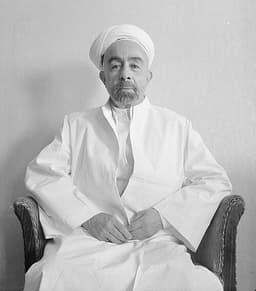
King Abdullah II
Emperor · Modern
53.7Total
Basic Information
Born
1529
1962
Died
1542
—
Era
Modern
Modern
Nationality
India
Jordan
Occupation
Emperor
Emperor
Civilization
Indian
Middle Eastern
Score Comparison
Military (10%)
35.0
20.0
Political (20%)
45.1
72.0
Influence (20%)
48.6
59.0
Legacy (20%)
37.5
42.5
Leadership (15%)
65.7
80.0
Strategy (15%)
43.7
35.7
TOTAL
46.0
53.7
Achyuta Deva Raya — Complete Timeline
1529 AD
Accession to the ThronePolitical Action◆ Major
Achyuta Deva Raya succeeded his brother Krishnadevaraya as emperor of Vijayanagara. His accession was contested by some nobles, leading to internal instability that weakened the empire's central authority.
SuccessionPoliticalInstability
Impact: national
1531 AD
War with the Bahmani SultanateWar◆ Major
Achyuta Deva Raya launched a campaign against the Bahmani Sultanate, but was defeated at the Battle of Raichur. The loss resulted in the cession of the Raichur Doab to the Bahmanis, reversing earlier Vijayanagara gains.
WarDefeatTerritorial Loss
Impact: regionaldestructive
1535 AD
Construction of the Achyutaraya TempleCultural
Achyuta Deva Raya commissioned the Achyutaraya Temple in Hampi, dedicated to Lord Vishnu. The temple is a notable example of Vijayanagara architecture, featuring elaborate pillars and a large courtyard.
ArchitectureTempleHinduism
constructive
1538 AD
Suppression of the Revolt of the NayakasWar
Achyuta Deva Raya faced a major rebellion from the Nayakas of the southern provinces. He successfully suppressed the revolt, but the conflict drained imperial resources and weakened the empire's military strength.
RebellionInternal ConflictNayakas
Impact: nationaldestructive
King Abdullah II — Complete Timeline
1999 AD
Ascension to the ThronePolitical Action◆ Major
Abdullah II became King of Jordan upon the death of his father King Hussein. He inherited a stable monarchy and continued his father's policies of moderation and economic reform.
SuccessionMonarchy
Impact: national
2000 AD
Launch of Economic Reform ProgramReform◆ Major
Abdullah II initiated a series of economic reforms including privatization, trade liberalization, and promotion of foreign investment. These policies aimed to modernize Jordan's economy and attract international capital.
Economic ReformPrivatizationDevelopment
Impact: nationalconstructive
2011 AD
Response to Arab Spring ProtestsPolitical Action◆ Major
Abdullah II responded to widespread protests by dismissing the government, enacting constitutional reforms, and promising political liberalization. He avoided the violent crackdowns seen in other Arab states.
Arab SpringPolitical ReformProtests
Impact: nationalconstructive
2014 AD
Role in Anti-ISIS CoalitionWar◆ Major
Jordan joined the US-led coalition against the Islamic State (ISIS) in Syria and Iraq. Jordanian airstrikes targeted ISIS positions, and the country hosted coalition forces and Syrian refugees.
CounterterrorismISISMilitary Coalition
Impact: regional
2021 AD
Failed Coup Attempt by Prince HamzahPolitical Action◆ Major
Abdullah II placed his half-brother Prince Hamzah under house arrest, accusing him of involvement in a foreign-backed plot to destabilize the monarchy. The incident highlighted internal royal family tensions.
Coup AttemptRoyal FamilyPolitical Crisis
Impact: nationaldestructive
This comparison has not been analyzed yet.
One-time AI generation (~1 minute). Scores and timeline are already available below.
Rankings
🥇
King Abdullah IILeader
Mil: 20.0Pol: 72.0Inf: 59.0
53.7
🥈
Achyuta Deva Raya
Mil: 35.0Pol: 45.1Inf: 48.6
46.0
+7.7 behind
How This Comparison Works
Algorithm
Each figure is scored on 6 dimensions (0—100 scale) based on structured historical data: Military (10%), Political (20%), Influence (20%), Legacy (20%), Leadership (15%), Strategy (15%). The weighted total produces the final ranking.
Data Sources
Scores are computed from structured sub-indicators in the database. Scale factors adjust for era (Ancient ×0.85, Modern ×1.0) and civilization size (Eastern ×1.05, Other ×0.80) to account for differences in population and military scale.
Maximum 3 Figures
Comparisons are limited to 2—3 figures to ensure readability and statistical meaningfulness.
Error Margins
±5 points per dimension — Sub-scores are derived from historical records with inherent uncertainty. Two figures within 5 points on a dimension should be considered roughly equivalent in that area.
Total Score Accuracy
±3 points overall — The weighted combination of 6 dimensions produces a total score with approximately ±3 points of uncertainty. Differences of less than 3 points are not statistically significant— the figures are effectively tied.
Known Limitations
- Historical records are incomplete and uneven across civilizations
- Figures from oral-tradition societies may be underrepresented
- Occupation labels can misclassify multi-role figures
- Scores measure capability and impact, not moral character
- Quantitative scoring is a comparison tool, not absolute truth
Capability Radar
Military (10%) — Battles & Warfare
Battles
30
5
Win Rate
30
5
Expansion
20
5
Political (20%) — Governance & Reform
Reform
30
60
Diplomacy
35
75
Economy
30
55
Influence (20%) — Cultural & Global Reach
Cultural
20
40
Global
10
55
Legacy (20%) — Historical Impact
Historical
20
35
Longevity
15
30
Leadership (15%) — Power & Stability
Tenure
40
70
Stability
25
65
Strategy (15%) — Tactics & Innovation
Strategy
25
15
Tactics
25
10
Reform
20
20
Similar Comparisons
Comments & Discussion
No comments yet. Be the first to share your thoughts!