Loading...
Charles Alexander of Saxe-Weimar vs King Abdullah II
King Abdullah II leads by 12.0 pts · 2 figures compared
…

Charles Alexander of Saxe-Weimar
Emperor · Modern
41.7Total
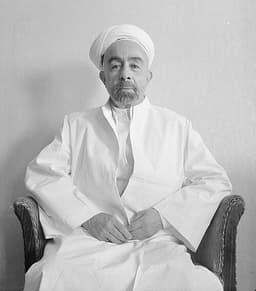
King Abdullah II
Emperor · Modern
53.7Total
Basic Information
Born
1818
1962
Died
1901
—
Era
Modern
Modern
Nationality
Saxe-Weimar
Jordan
Occupation
Emperor
Emperor
Civilization
Western
Middle Eastern
Score Comparison
Military (10%)
10.2
20.0
Political (20%)
32.2
72.0
Influence (20%)
47.1
59.0
Legacy (20%)
35.0
42.5
Leadership (15%)
62.2
80.0
Strategy (15%)
60.0
35.7
TOTAL
41.7
53.7
Charles Alexander of Saxe-Weimar — Complete Timeline
1850 AD
Patronage of Franz Liszt and Richard WagnerCultural◆ Major
Charles Alexander supported the composers Franz Liszt and Richard Wagner, hosting them in Weimar. He promoted the New German School of music, making Weimar a center for avant-garde musical innovation.
Music PatronageLisztWagnerNew German School
Impact: globalconstructive
1853 AD
Succeeded as Grand Duke of Saxe-Weimar-EisenachPolitical Action◆ Major
Charles Alexander inherited the grand duchy upon his father Charles Frederick's death. He ruled during a period of German unification and industrialization, navigating the duchy through the Austro-Prussian War and the founding of the German Empire.
SuccessionGerman Unification
Impact: national
1866 AD
Supported the German Confederation in the Austro-Prussian WarWar◆ Major
Charles Alexander sided with Austria in the Austro-Prussian War. After Prussia's victory, Saxe-Weimar was forced to join the North German Confederation under Prussian hegemony, losing some autonomy.
Austro-Prussian WarNorth German ConfederationPrussia
Impact: regional
1871 AD
Joined the German EmpirePolitical Action◆ Major
Charles Alexander integrated Saxe-Weimar-Eisenach into the newly proclaimed German Empire under Kaiser Wilhelm I. The grand duchy became a constituent state of the empire, with reduced sovereignty but continued internal autonomy.
German EmpireUnificationFederal State
Impact: national
King Abdullah II — Complete Timeline
1999 AD
Ascension to the ThronePolitical Action◆ Major
Abdullah II became King of Jordan upon the death of his father King Hussein. He inherited a stable monarchy and continued his father's policies of moderation and economic reform.
SuccessionMonarchy
Impact: national
2000 AD
Launch of Economic Reform ProgramReform◆ Major
Abdullah II initiated a series of economic reforms including privatization, trade liberalization, and promotion of foreign investment. These policies aimed to modernize Jordan's economy and attract international capital.
Economic ReformPrivatizationDevelopment
Impact: nationalconstructive
2011 AD
Response to Arab Spring ProtestsPolitical Action◆ Major
Abdullah II responded to widespread protests by dismissing the government, enacting constitutional reforms, and promising political liberalization. He avoided the violent crackdowns seen in other Arab states.
Arab SpringPolitical ReformProtests
Impact: nationalconstructive
2014 AD
Role in Anti-ISIS CoalitionWar◆ Major
Jordan joined the US-led coalition against the Islamic State (ISIS) in Syria and Iraq. Jordanian airstrikes targeted ISIS positions, and the country hosted coalition forces and Syrian refugees.
CounterterrorismISISMilitary Coalition
Impact: regional
2021 AD
Failed Coup Attempt by Prince HamzahPolitical Action◆ Major
Abdullah II placed his half-brother Prince Hamzah under house arrest, accusing him of involvement in a foreign-backed plot to destabilize the monarchy. The incident highlighted internal royal family tensions.
Coup AttemptRoyal FamilyPolitical Crisis
Impact: nationaldestructive
Expert Analysis
Origins
Charles Alexander of Saxe-Weimar was born in 1818, the son of Grand Duke Charles Frederick and Grand Duchess Maria Pavlovna, a Russian princess. He was educated in a traditional princely manner, with exposure to the arts and sciences. He succeeded his father as Grand Duke of Saxe-Weimar-Eisenach in 1853, inheriting a small but culturally significant German state.
King Abdullah II of Jordan was born in 1962 to King Hussein and Princess Muna. He was educated in the United Kingdom and the United States, attending Sandhurst military academy and later Oxford. He served in the Jordanian military, rising to command special forces. He became king in 1999 upon his father's death, inheriting a stable but economically challenged kingdom.
Rise to Power
Charles Alexander's rise was hereditary; he became grand duke at age 35. His reign coincided with the unification of Germany. He initially supported the German Confederation against Prussia, but after Prussia's victory in the Austro-Prussian War (1866), he was forced to join the North German Confederation. In 1871, Saxe-Weimar became a constituent state of the German Empire. His power was thus subsumed into a larger national framework.
Abdullah II was not initially the crown prince; his uncle Hassan held that position. But King Hussein changed the succession shortly before his death, making Abdullah the heir. He ascended the throne in 1999, quickly establishing himself as a reform-minded monarch. He faced challenges from Islamist opposition and regional instability, but maintained his father's legacy of moderation.
Leadership & Governance
Charles Alexander ruled as a constitutional monarch in a minor German state. His governance was limited by the federal structure of the German Empire. He focused on cultural patronage, supporting composers like Franz Liszt and Richard Wagner, making Weimar a center of the New German School. Politically, he scored 32.2, indicating limited influence. His leadership score of 62.2 reflects his cultural initiatives rather than political power.
Abdullah II has been an active political leader, with a political score of 72.0. He launched economic reforms, including privatization and trade liberalization, which spurred growth but also increased inequality. During the Arab Spring, he dismissed governments and enacted constitutional reforms, preserving stability. His leadership score of 80.0 reflects his ability to navigate crises. He also led Jordan's involvement in the anti-ISIS coalition, scoring 20.0 in military.
Triumph & Tragedy
Charles Alexander's greatest triumph was his patronage of the arts, which enhanced Weimar's cultural prestige. However, his tragedy was the loss of sovereignty: his duchy became a minor part of a larger empire, and his political influence waned. The 1918 revolution ended his dynasty, and he died in 1901 before witnessing the fall.
Abdullah II's triumphs include economic modernization and maintaining stability amid regional turmoil. He successfully faced a coup attempt by his half-brother Prince Hamzah in 2021. His tragedy is the ongoing economic struggles and refugee crises; Jordan hosts millions of refugees, straining resources. His legacy score of 42.5 suggests moderate long-term impact.
Character & Destiny
Charles Alexander was a cultured aristocrat, more interested in music and literature than politics. His character led him to accept Prussian dominance, ensuring his duchy's survival but at the cost of independence. Historians view him as a competent but minor figure.
Abdullah II is pragmatic and cautious, using his military background to command respect. His decision-making balances reform with tradition. He has survived regional upheavals, but his destiny is tied to Jordan's precarious position. His strategy score of 35.7 indicates a reactive rather than proactive approach.
Legacy
Charles Alexander's legacy is cultural: Weimar's classical heritage flourished under his patronage, influencing German music. Politically, he is a footnote. His legacy score of 35.0 reflects limited enduring impact.
Abdullah II's legacy is still forming. He has modernized Jordan's economy and preserved its stability. He is seen as a moderate voice in the Middle East. His influence score of 59.0 suggests ongoing relevance. His legacy will depend on future developments.
Conclusion
King Abdullah II has had a greater impact than Charles Alexander. With a total score of 53.7 versus 41.7, Abdullah's political and leadership scores significantly exceed Charles Alexander's. While Charles Alexander fostered culture, Abdullah has shaped a nation's trajectory in a volatile region. Abdullah's ability to maintain stability, implement reforms, and navigate crises gives him a more substantial and lasting influence. Charles Alexander's reign was ultimately overshadowed by German unification and the fall of monarchies. Abdullah II remains a key figure in the Middle East, making his impact more significant and current.
Rankings
🥇
King Abdullah IILeader
Mil: 20.0Pol: 72.0Inf: 59.0
53.7
🥈
Charles Alexander of Saxe-Weimar
Mil: 10.2Pol: 32.2Inf: 47.1
41.7
+12.0 behind
How This Comparison Works
Algorithm
Each figure is scored on 6 dimensions (0—100 scale) based on structured historical data: Military (10%), Political (20%), Influence (20%), Legacy (20%), Leadership (15%), Strategy (15%). The weighted total produces the final ranking.
Data Sources
Scores are computed from structured sub-indicators in the database. Scale factors adjust for era (Ancient ×0.85, Modern ×1.0) and civilization size (Eastern ×1.05, Other ×0.80) to account for differences in population and military scale.
Maximum 3 Figures
Comparisons are limited to 2—3 figures to ensure readability and statistical meaningfulness.
Error Margins
±5 points per dimension — Sub-scores are derived from historical records with inherent uncertainty. Two figures within 5 points on a dimension should be considered roughly equivalent in that area.
Total Score Accuracy
±3 points overall — The weighted combination of 6 dimensions produces a total score with approximately ±3 points of uncertainty. Differences of less than 3 points are not statistically significant— the figures are effectively tied.
Known Limitations
- Historical records are incomplete and uneven across civilizations
- Figures from oral-tradition societies may be underrepresented
- Occupation labels can misclassify multi-role figures
- Scores measure capability and impact, not moral character
- Quantitative scoring is a comparison tool, not absolute truth
Capability Radar
Military (10%) — Battles & Warfare
Battles
39
5
Win Rate
40
5
Expansion
41
5
Political (20%) — Governance & Reform
Reform
20
60
Diplomacy
25
75
Economy
20
55
Influence (20%) — Cultural & Global Reach
Cultural
15
40
Global
5
55
Legacy (20%) — Historical Impact
Historical
10
35
Longevity
10
30
Leadership (15%) — Power & Stability
Tenure
30
70
Stability
30
65
Strategy (15%) — Tactics & Innovation
Strategy
48
15
Tactics
47
10
Reform
49
20
Similar Comparisons
Comments & Discussion
No comments yet. Be the first to share your thoughts!