Loading...
Abulfaz Elchibey vs Georges Clemenceau
Georges Clemenceau leads by 21.5 pts · 2 figures compared
…

Abulfaz Elchibey
Politician · Modern
42.3Total
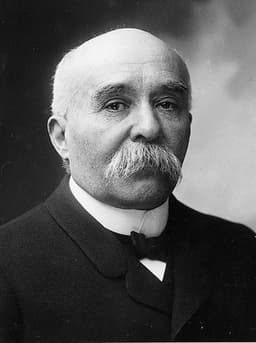
Georges Clemenceau
Politician · Modern
63.8Total
Basic Information
Born
1938
1841
Died
—
1929
Era
Modern
Modern
Nationality
Azerbaijan
France
Occupation
Politician
Politician
Civilization
Middle Eastern
Western
Score Comparison
Military (10%)
41.8
49.1
Political (20%)
33.6
70.3
Influence (20%)
51.8
65.0
Legacy (20%)
40.0
65.0
Leadership (15%)
41.5
78.0
Strategy (15%)
39.2
41.4
TOTAL
42.3
63.8
Abulfaz Elchibey — Complete Timeline
1992 AD
Election as President of AzerbaijanPolitical Action◆ Major
Abulfaz Elchibey was elected President of Azerbaijan in a democratic election, winning 59.4% of the vote. He was a nationalist leader of the Azerbaijani Popular Front and promised to pursue independence from Russian influence and resolve the Nagorno-Karabakh conflict.
ElectionNationalismAzerbaijan
Impact: nationalconstructive
Pro-Western Foreign Policy OrientationPolitical Action
Elchibey pursued a pro-Western foreign policy, seeking closer ties with Turkey and the United States while distancing Azerbaijan from Russia. He signed agreements on energy cooperation and military aid, but this policy alienated Moscow and contributed to internal instability.
Foreign PolicyTurkeyUnited States
Impact: national
1993 AD
Loss of Nagorno-Karabakh and Surrounding TerritoriesWar◆ Major
During Elchibey's presidency, Armenian forces captured the city of Agdam and other territories surrounding Nagorno-Karabakh. These military defeats weakened his government and contributed to his overthrow, as he was unable to protect Azerbaijani territorial integrity.
Nagorno-KarabakhTerritorial LossWar
Impact: regionaltragic
Overthrow in a Military CoupPolitical Action◆ Major
Elchibey was overthrown in a military coup led by Colonel Surat Huseynov, who marched on Baku with his forces. The coup was triggered by military defeats in Nagorno-Karabakh and political instability, forcing Elchibey to flee to his home region of Nakhchivan.
CoupOverthrowAzerbaijan
Impact: nationaltragic
Georges Clemenceau — Complete Timeline
1917 AD
Became Prime Minister of France for the second timePolitical Action◆ Major
Clemenceau was appointed premier during a critical phase of World War I, after the failure of the Nivelle Offensive and mutinies in the French army. He formed a war government and vowed to pursue the war to victory, restoring morale and discipline.
World War ILeadershipWar Government
Impact: global
Suppressed the French army mutinies of 1917Political Action◆ Major
Clemenceau took a hard line against mutineers, ordering arrests and courts-martial. He also improved soldiers' conditions and leave. His actions restored order in the French army, allowing it to continue fighting effectively for the remainder of the war.
World War IMutinyDiscipline
Impact: nationaldestructive
1919 AD
Played a leading role in the Paris Peace ConferencePolitical Action◆ Major
Clemenceau chaired the Paris Peace Conference and was a key figure in drafting the Treaty of Versailles. He insisted on harsh terms for Germany, including reparations, territorial losses, and military restrictions, to ensure French security.
World War IPeace TreatyVersailles
Impact: global
1920 AD
Resigned as Prime MinisterPolitical Action
Clemenceau lost the presidential election to Paul Deschanel and subsequently resigned as prime minister. His departure marked the end of his wartime leadership. He retired from politics, having achieved his goal of victory and a punitive peace.
ResignationPoliticsPost-War
Impact: national
Expert Analysis
Origins
Abulfaz Elchibey was born in 1938 in the village of Kalaki, Nakhchivan, Azerbaijan, then part of the Soviet Union. He studied Arabic and Persian at Azerbaijan State University and later worked as a historian and translator. His early career was marked by dissident activity: he was arrested in 1975 for distributing nationalist literature and spent time in Soviet prisons. His background as a Soviet-era dissident shaped his anti-communist and pan-Turkic ideology.
Georges Clemenceau was born in 1841 in Mouilleron-en-Pareds, France, into a family of doctors. He studied medicine in Paris but was drawn to politics. His early career included a stint in the United States as a journalist and teacher, and he served as mayor of Montmartre during the Paris Commune. Clemenceau's early radical republicanism and his role in the Dreyfus Affair (defending Émile Zola) established him as a fierce defender of secularism and justice.
Rise to Power
Elchibey rose to prominence during the late Soviet period as a leader of the Azerbaijani Popular Front, a nationalist movement. In 1990, he was elected to the Supreme Soviet of Azerbaijan. His moment came in 1992 when he won the presidential election with 59.4% of the vote, becoming Azerbaijan's first democratically elected president. His rise was fueled by nationalist fervor and the desire for independence from Russia.
Clemenceau's rise was more gradual. He first became Prime Minister in 1906, but his tenure was brief and marked by social unrest. His second rise came in 1917, during World War I, when France was reeling from mutinies and military defeats. Appointed Premier in November 1917, he quickly asserted control, earning the nickname "The Tiger" for his aggressive leadership. His rise was a response to crisis, and he capitalized on his reputation as a no-nonsense leader.
Leadership & Governance
Elchibey's governance was characterized by nationalist and pro-Western policies. He sought to distance Azerbaijan from Russia, strengthening ties with Turkey and the United States. He signed agreements with Western oil companies, but his military leadership was weak. He failed to halt Armenian advances in Nagorno-Karabakh, leading to the loss of Agdam and other territories. His political score of 33.6 reflects his inability to maintain power or build effective institutions.
Clemenceau's leadership was authoritarian but effective. He suppressed the 1917 French army mutinies with a mix of harsh discipline (courts-martial for ringleaders) and reforms (improved rations and leave). He centralized decision-making, often bypassing parliament. His political score of 70.3 indicates his mastery of parliamentary maneuvering and his ability to rally the nation. He also played a key role in the Paris Peace Conference, pushing for harsh terms against Germany, including war reparations and territorial losses.
Triumph & Tragedy
Elchibey's greatest triumph was his democratic election, a rare event in the post-Soviet space. He also established a pro-Western orientation that later presidents continued. However, his tragedy was his overthrow in a military coup in 1993, triggered by military defeats. He fled to his native Nakhchivan and lived in obscurity until his death in 2000. His legacy score of 40.0 reflects his short, failed presidency.
Clemenceau's triumph was leading France to victory in World War I. He restored morale and discipline after the mutinies, and his diplomacy at Versailles shaped the post-war world. However, his tragedy was the eventual failure of the Versailles Treaty to secure lasting peace. He resigned after losing the 1920 presidential election, and his harsh terms were criticized as contributing to World War II. His overall score of 63.8 reflects his significant but flawed legacy.
Character & Destiny
Elchibey was an idealist, driven by nationalist passion but lacking pragmatism. He underestimated the military threat from Armenia and overestimated his ability to secure Western support. His leadership score of 41.5 reflects his inability to adapt to hard realities. His destiny was to be a martyr for Azerbaijani nationalism, a symbol of a lost opportunity.
Clemenceau was a realist, known for his wit, stubbornness, and cynicism. He famously said, "War is a series of catastrophes that results in a victory." His leadership score of 78.0 reflects his decisive action during crisis. His destiny was to be a war leader, but his peacemaking was marred by his vengeful approach. He died in 1929, bitter about his political defeat.
Legacy
Elchibey's legacy is mixed. He is remembered as a founding father of independent Azerbaijan, but his tenure was a failure. His pro-Western policies influenced later presidents like Heydar Aliyev, who adopted a more balanced approach. He scored 40.0 in legacy, indicating limited lasting impact.
Clemenceau's legacy is more enduring. He is celebrated in France as a war hero, and the Clemenceau aircraft carrier is named after him. His role in the Treaty of Versailles remains controversial but influential. He scored 65.0 in legacy, reflecting his significant impact on 20th-century history.
Conclusion
Clemenceau clearly had greater impact. His leadership during World War I and his role in shaping the post-war order changed the course of history. Elchibey, while symbolizing Azerbaijani nationalism, failed to achieve his goals and was overthrown. Clemenceau's total score of 63.8 far exceeds Elchibey's 42.3, and his political and leadership scores (70.3 and 78.0) dwarf Elchibey's (33.6 and 41.5). Clemenceau's legacy is a lesson in the power of decisive leadership in crisis, while Elchibey's is a cautionary tale of idealism without military or political strength.
Rankings
🥇
Georges ClemenceauLeader
Mil: 49.1Pol: 70.3Inf: 65.0
63.8
🥈
Abulfaz Elchibey
Mil: 41.8Pol: 33.6Inf: 51.8
42.3
+21.5 behind
How This Comparison Works
Algorithm
Each figure is scored on 6 dimensions (0—100 scale) based on structured historical data: Military (10%), Political (20%), Influence (20%), Legacy (20%), Leadership (15%), Strategy (15%). The weighted total produces the final ranking.
Data Sources
Scores are computed from structured sub-indicators in the database. Scale factors adjust for era (Ancient ×0.85, Modern ×1.0) and civilization size (Eastern ×1.05, Other ×0.80) to account for differences in population and military scale.
Maximum 3 Figures
Comparisons are limited to 2—3 figures to ensure readability and statistical meaningfulness.
Error Margins
±5 points per dimension — Sub-scores are derived from historical records with inherent uncertainty. Two figures within 5 points on a dimension should be considered roughly equivalent in that area.
Total Score Accuracy
±3 points overall — The weighted combination of 6 dimensions produces a total score with approximately ±3 points of uncertainty. Differences of less than 3 points are not statistically significant— the figures are effectively tied.
Known Limitations
- Historical records are incomplete and uneven across civilizations
- Figures from oral-tradition societies may be underrepresented
- Occupation labels can misclassify multi-role figures
- Scores measure capability and impact, not moral character
- Quantitative scoring is a comparison tool, not absolute truth
Capability Radar
Military (10%) — Battles & Warfare
Battles
22
30
Win Rate
23
32
Expansion
29
34
Political (20%) — Governance & Reform
Reform
30
80
Diplomacy
25
90
Economy
15
70
Influence (20%) — Cultural & Global Reach
Cultural
30
60
Global
20
80
Legacy (20%) — Historical Impact
Historical
25
85
Longevity
15
70
Leadership (15%) — Power & Stability
Tenure
20
85
Stability
10
75
Strategy (15%) — Tactics & Innovation
Strategy
33
35
Tactics
35
38
Reform
37
46
Similar Comparisons
Comments & Discussion
No comments yet. Be the first to share your thoughts!