Loading...
This comparison has not been analyzed yet.
One-time AI generation (~1 minute). Scores and timeline are already available below.
Abubakar Tafawa Balewa vs Xiong Xiling
Abubakar Tafawa Balewa leads by 1.7 pts · 2 figures compared
…
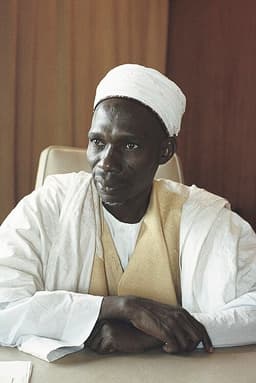
Abubakar Tafawa Balewa
Politician · Modern
53.3Total

Xiong Xiling
Politician · Modern
51.6Total
Basic Information
Born
1912
1870
Died
1966
1937
Era
Modern
Modern
Nationality
Nigeria
China
Occupation
Politician
Politician
Civilization
Other
Eastern
Score Comparison
Military (10%)
44.2
11.3
Political (20%)
62.7
62.7
Influence (20%)
59.0
55.0
Legacy (20%)
49.2
54.0
Leadership (15%)
53.2
68.0
Strategy (15%)
44.9
36.1
TOTAL
53.3
51.6
Abubakar Tafawa Balewa — Complete Timeline
1957 AD
Appointment as Prime Minister of NigeriaPolitical Action
Abubakar Tafawa Balewa was appointed as the first Prime Minister of Nigeria in 1957, leading a coalition government. He oversaw the final stages of Nigeria's transition to independence, which was achieved in 1960. His leadership was marked by efforts to maintain unity among the country's diverse regions.
IndependenceGovernmentNigeria
Impact: nationalconstructive
1960 AD
Signing of the Nigerian Independence ConstitutionPolitical Action◆ Major
Balewa, as Prime Minister, signed the independence constitution on October 1, 1960, formally ending British colonial rule. He became the head of government of the newly sovereign Federation of Nigeria, a position he held until his death.
IndependenceConstitutionNigeria
Impact: nationalconstructive
1966 AD
Assassination in the first military coupPolitical Action
Prime Minister Balewa was abducted and killed by mutinous soldiers during Nigeria's first military coup on January 15, 1966. His body was found days later. The coup ended the First Republic and plunged Nigeria into a series of military regimes and the Biafran War.
CoupAssassinationNigeria
Impact: nationaltragic
Xiong Xiling — Complete Timeline
1904 AD
Founded the Chinese Red Cross SocietyCultural◆ Major
Xiong Xiling co-founded the Chinese Red Cross Society, providing medical relief during the Russo-Japanese War and subsequent conflicts. He served as its first president, expanding its humanitarian work.
Red CrossHumanitarianPhilanthropy
Impact: nationalconstructive
1913 AD
Served as Premier of the Republic of ChinaPolitical Action◆ Major
Xiong Xiling served as Premier under President Yuan Shikai. He attempted to implement fiscal reforms and reduce government spending, but faced opposition from warlords and political factions.
PremiershipFiscal ReformYuan Shikai
Impact: nationalconstructive
1914 AD
Resigned from Politics to Focus on CharityPolitical Action
Xiong Xiling resigned as Premier after Yuan Shikai dissolved parliament. He withdrew from politics and dedicated the rest of his life to philanthropic work, including disaster relief and education.
ResignationPhilanthropyRetirement
Impact: nationalconstructive
1920 AD
Established the Beijing Orphanage and Education FundCultural
Xiong Xiling used his personal wealth to establish an orphanage and education fund in Beijing. He provided shelter and schooling for thousands of children, focusing on vocational training.
PhilanthropyOrphanageEducation
Impact: regionalconstructive
This comparison has not been analyzed yet.
One-time AI generation (~1 minute). Scores and timeline are already available below.
Rankings
🥇
Abubakar Tafawa BalewaLeader
Mil: 44.2Pol: 62.7Inf: 59.0
53.3
🥈
Xiong Xiling
Mil: 11.3Pol: 62.7Inf: 55.0
51.6
+1.7 behind
How This Comparison Works
Algorithm
Each figure is scored on 6 dimensions (0—100 scale) based on structured historical data: Military (10%), Political (20%), Influence (20%), Legacy (20%), Leadership (15%), Strategy (15%). The weighted total produces the final ranking.
Data Sources
Scores are computed from structured sub-indicators in the database. Scale factors adjust for era (Ancient ×0.85, Modern ×1.0) and civilization size (Eastern ×1.05, Other ×0.80) to account for differences in population and military scale.
Maximum 3 Figures
Comparisons are limited to 2—3 figures to ensure readability and statistical meaningfulness.
Error Margins
±5 points per dimension — Sub-scores are derived from historical records with inherent uncertainty. Two figures within 5 points on a dimension should be considered roughly equivalent in that area.
Total Score Accuracy
±3 points overall — The weighted combination of 6 dimensions produces a total score with approximately ±3 points of uncertainty. Differences of less than 3 points are not statistically significant— the figures are effectively tied.
Known Limitations
- Historical records are incomplete and uneven across civilizations
- Figures from oral-tradition societies may be underrepresented
- Occupation labels can misclassify multi-role figures
- Scores measure capability and impact, not moral character
- Quantitative scoring is a comparison tool, not absolute truth
Capability Radar
Military (10%) — Battles & Warfare
Battles
22
13
Win Rate
26
20
Expansion
27
23
Political (20%) — Governance & Reform
Reform
55
55
Diplomacy
65
65
Economy
50
50
Influence (20%) — Cultural & Global Reach
Cultural
45
55
Global
50
60
Legacy (20%) — Historical Impact
Historical
55
60
Longevity
40
55
Leadership (15%) — Power & Stability
Tenure
60
60
Stability
40
45
Strategy (15%) — Tactics & Innovation
Strategy
32
24
Tactics
31
25
Reform
36
27
Similar Comparisons
Comments & Discussion
No comments yet. Be the first to share your thoughts!