Loading...
This comparison has not been analyzed yet.
One-time AI generation (~1 minute). Scores and timeline are already available below.
Abubakar Tafawa Balewa vs Francois-Michel Le Tellier de Louvois
Francois-Michel Le Tellier de Louvois leads by 7.2 pts · 2 figures compared
…
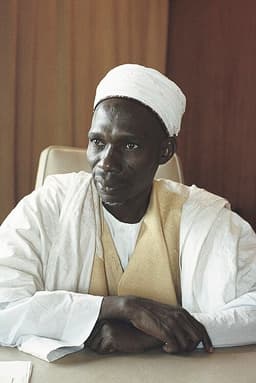
Abubakar Tafawa Balewa
Politician · Modern
53.3Total
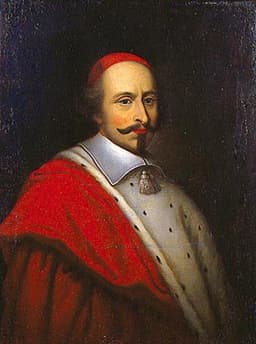
Francois-Michel Le Tellier de Louvois
Politician · Modern
60.5Total
Basic Information
Born
1912
1641
Died
1966
1691
Era
Modern
Modern
Nationality
Nigeria
France
Occupation
Politician
Politician
Civilization
Other
Western
Score Comparison
Military (10%)
44.2
47.5
Political (20%)
62.7
65.0
Influence (20%)
59.0
55.0
Legacy (20%)
49.2
55.0
Leadership (15%)
53.2
80.0
Strategy (15%)
44.9
65.4
TOTAL
53.3
60.5
Abubakar Tafawa Balewa — Complete Timeline
1957 AD
Appointment as Prime Minister of NigeriaPolitical Action
Abubakar Tafawa Balewa was appointed as the first Prime Minister of Nigeria in 1957, leading a coalition government. He oversaw the final stages of Nigeria's transition to independence, which was achieved in 1960. His leadership was marked by efforts to maintain unity among the country's diverse regions.
IndependenceGovernmentNigeria
Impact: nationalconstructive
1960 AD
Signing of the Nigerian Independence ConstitutionPolitical Action◆ Major
Balewa, as Prime Minister, signed the independence constitution on October 1, 1960, formally ending British colonial rule. He became the head of government of the newly sovereign Federation of Nigeria, a position he held until his death.
IndependenceConstitutionNigeria
Impact: nationalconstructive
1966 AD
Assassination in the first military coupPolitical Action
Prime Minister Balewa was abducted and killed by mutinous soldiers during Nigeria's first military coup on January 15, 1966. His body was found days later. The coup ended the First Republic and plunged Nigeria into a series of military regimes and the Biafran War.
CoupAssassinationNigeria
Impact: nationaltragic
Francois-Michel Le Tellier de Louvois — Complete Timeline
1666 AD
Appointed Secretary of State for WarPolitical Action◆ Major
Louvois was appointed Secretary of State for War under Louis XIV. He became the king's principal military administrator, overseeing the army's organization, logistics, and discipline for over two decades.
French ArmyLouis XIVMilitary Administration
Impact: national
1668 AD
Reformed the French ArmyReform◆ Major
Louvois implemented major army reforms, including standardizing uniforms, improving supply systems, and establishing military hospitals. He also introduced a system of military intendants to ensure discipline and loyalty.
Military ReformFrench ArmyLouis XIV
Impact: nationalconstructive
1670 AD
Established the Hôtel des InvalidesReform
Louvois oversaw the creation of the H
Military WelfareSocial ReformFrench Army
Impact: nationalconstructive
1689 AD
Organized the Devastation of the PalatinateWar◆ Major
Louvois ordered the systematic destruction of the Palatinate region in Germany during the Nine Years' War. French troops burned towns, villages, and crops to deny resources to enemy forces, causing widespread suffering.
Nine Years' WarScorched EarthWar Crimes
Impact: regionaldestructive
This comparison has not been analyzed yet.
One-time AI generation (~1 minute). Scores and timeline are already available below.
Rankings
🥇
Francois-Michel Le Tellier de LouvoisLeader
Mil: 47.5Pol: 65.0Inf: 55.0
60.5
🥈
Abubakar Tafawa Balewa
Mil: 44.2Pol: 62.7Inf: 59.0
53.3
+7.2 behind
How This Comparison Works
Algorithm
Each figure is scored on 6 dimensions (0—100 scale) based on structured historical data: Military (10%), Political (20%), Influence (20%), Legacy (20%), Leadership (15%), Strategy (15%). The weighted total produces the final ranking.
Data Sources
Scores are computed from structured sub-indicators in the database. Scale factors adjust for era (Ancient ×0.85, Modern ×1.0) and civilization size (Eastern ×1.05, Other ×0.80) to account for differences in population and military scale.
Maximum 3 Figures
Comparisons are limited to 2—3 figures to ensure readability and statistical meaningfulness.
Error Margins
±5 points per dimension — Sub-scores are derived from historical records with inherent uncertainty. Two figures within 5 points on a dimension should be considered roughly equivalent in that area.
Total Score Accuracy
±3 points overall — The weighted combination of 6 dimensions produces a total score with approximately ±3 points of uncertainty. Differences of less than 3 points are not statistically significant— the figures are effectively tied.
Known Limitations
- Historical records are incomplete and uneven across civilizations
- Figures from oral-tradition societies may be underrepresented
- Occupation labels can misclassify multi-role figures
- Scores measure capability and impact, not moral character
- Quantitative scoring is a comparison tool, not absolute truth
Capability Radar
Military (10%) — Battles & Warfare
Battles
22
40
Win Rate
26
45
Expansion
27
70
Political (20%) — Governance & Reform
Reform
55
90
Diplomacy
65
60
Economy
50
55
Influence (20%) — Cultural & Global Reach
Cultural
45
55
Global
50
60
Legacy (20%) — Historical Impact
Historical
55
75
Longevity
40
70
Leadership (15%) — Power & Stability
Tenure
60
85
Stability
40
70
Strategy (15%) — Tactics & Innovation
Strategy
32
60
Tactics
31
55
Reform
36
95
Similar Comparisons
Comments & Discussion
No comments yet. Be the first to share your thoughts!