Loading...
This comparison has not been analyzed yet.
One-time AI generation (~1 minute). Scores and timeline are already available below.
Abubakar Tafawa Balewa vs Grantley Herbert Adams
Grantley Herbert Adams leads by 2.8 pts · 2 figures compared
…
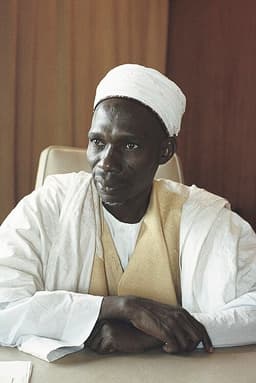
Abubakar Tafawa Balewa
Politician · Modern
53.3Total

Grantley Herbert Adams
Politician · Modern
56.1Total
Basic Information
Born
1912
1898
Died
1966
1971
Era
Modern
Modern
Nationality
Nigeria
Barbados
Occupation
Politician
Politician
Civilization
Other
Other
Score Comparison
Military (10%)
44.2
36.5
Political (20%)
62.7
65.0
Influence (20%)
59.0
58.0
Legacy (20%)
49.2
49.2
Leadership (15%)
53.2
79.8
Strategy (15%)
44.9
39.6
TOTAL
53.3
56.1
Abubakar Tafawa Balewa — Complete Timeline
1957 AD
Appointment as Prime Minister of NigeriaPolitical Action
Abubakar Tafawa Balewa was appointed as the first Prime Minister of Nigeria in 1957, leading a coalition government. He oversaw the final stages of Nigeria's transition to independence, which was achieved in 1960. His leadership was marked by efforts to maintain unity among the country's diverse regions.
IndependenceGovernmentNigeria
Impact: nationalconstructive
1960 AD
Signing of the Nigerian Independence ConstitutionPolitical Action◆ Major
Balewa, as Prime Minister, signed the independence constitution on October 1, 1960, formally ending British colonial rule. He became the head of government of the newly sovereign Federation of Nigeria, a position he held until his death.
IndependenceConstitutionNigeria
Impact: nationalconstructive
1966 AD
Assassination in the first military coupPolitical Action
Prime Minister Balewa was abducted and killed by mutinous soldiers during Nigeria's first military coup on January 15, 1966. His body was found days later. The coup ended the First Republic and plunged Nigeria into a series of military regimes and the Biafran War.
CoupAssassinationNigeria
Impact: nationaltragic
Grantley Herbert Adams — Complete Timeline
1938 AD
Founded the Barbados Labour PartyPolitical Action◆ Major
Grantley Herbert Adams founded the Barbados Labour Party (BLP), advocating for workers' rights and social reform. The BLP became a major political force in Barbados and led the push for self-government.
Political PartyBLPLabor Movement
Impact: nationalconstructive
1954 AD
Became first Premier of BarbadosPolitical Action◆ Major
Adams became the first Premier of Barbados under the new ministerial system, leading the colony toward self-government. He focused on social welfare, education, and economic development.
PremierSelf-GovernmentBarbados
Impact: nationalconstructive
1958 AD
Became Prime Minister of the West Indies FederationPolitical Action◆ Major
Adams was elected the first and only Prime Minister of the West Indies Federation, a short-lived political union of Caribbean colonies. He led the federal government from 1958 to 1962.
West Indies FederationPrime MinisterCaribbean Unity
Impact: regionalconstructive
1962 AD
West Indies Federation dissolvedPolitical Action◆ Major
The West Indies Federation dissolved after Jamaica and Trinidad and Tobago withdrew. Adams's federal government collapsed, marking a failure of Caribbean political unity.
West Indies FederationDissolutionFailure
Impact: regionaltragic
1966 AD
Lost 1966 general electionPolitical Action
Adams's BLP lost the 1966 general election to the Democratic Labour Party (DLP) led by Errol Barrow. This defeat ended his political dominance in Barbados.
ElectionDefeatDLP
Impact: nationaltragic
This comparison has not been analyzed yet.
One-time AI generation (~1 minute). Scores and timeline are already available below.
Rankings
🥇
Grantley Herbert AdamsLeader
Mil: 36.5Pol: 65.0Inf: 58.0
56.1
🥈
Abubakar Tafawa Balewa
Mil: 44.2Pol: 62.7Inf: 59.0
53.3
+2.8 behind
How This Comparison Works
Algorithm
Each figure is scored on 6 dimensions (0—100 scale) based on structured historical data: Military (10%), Political (20%), Influence (20%), Legacy (20%), Leadership (15%), Strategy (15%). The weighted total produces the final ranking.
Data Sources
Scores are computed from structured sub-indicators in the database. Scale factors adjust for era (Ancient ×0.85, Modern ×1.0) and civilization size (Eastern ×1.05, Other ×0.80) to account for differences in population and military scale.
Maximum 3 Figures
Comparisons are limited to 2—3 figures to ensure readability and statistical meaningfulness.
Error Margins
±5 points per dimension — Sub-scores are derived from historical records with inherent uncertainty. Two figures within 5 points on a dimension should be considered roughly equivalent in that area.
Total Score Accuracy
±3 points overall — The weighted combination of 6 dimensions produces a total score with approximately ±3 points of uncertainty. Differences of less than 3 points are not statistically significant— the figures are effectively tied.
Known Limitations
- Historical records are incomplete and uneven across civilizations
- Figures from oral-tradition societies may be underrepresented
- Occupation labels can misclassify multi-role figures
- Scores measure capability and impact, not moral character
- Quantitative scoring is a comparison tool, not absolute truth
Capability Radar
Military (10%) — Battles & Warfare
Battles
22
21
Win Rate
26
23
Expansion
27
28
Political (20%) — Governance & Reform
Reform
55
70
Diplomacy
65
75
Economy
50
60
Influence (20%) — Cultural & Global Reach
Cultural
45
40
Global
50
40
Legacy (20%) — Historical Impact
Historical
55
50
Longevity
40
45
Leadership (15%) — Power & Stability
Tenure
60
65
Stability
40
65
Strategy (15%) — Tactics & Innovation
Strategy
32
30
Tactics
31
35
Reform
36
39
Similar Comparisons
Comments & Discussion
No comments yet. Be the first to share your thoughts!