Loading...
Abu Jafar al-Mansur vs Wanyan Aguda
Abu Jafar al-Mansur leads by 2.1 pts · 2 figures compared
…
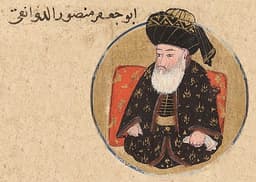
Abu Jafar al-Mansur
Emperor · Medieval
65.5Total
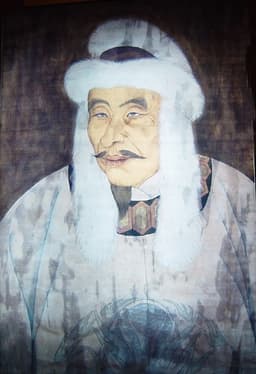
Wanyan Aguda
Emperor · Medieval
63.4Total
Basic Information
Born
714
1068
Died
775
1123
Era
Medieval
Medieval
Nationality
Abbasid Caliphate
China
Occupation
Emperor
Emperor
Civilization
Middle Eastern
Eastern
Score Comparison
Military (10%)
65.0
82.0
Political (20%)
75.0
59.3
Influence (20%)
40.0
55.0
Legacy (20%)
80.0
52.0
Leadership (15%)
82.0
85.0
Strategy (15%)
55.0
68.0
TOTAL
65.5
63.4
Abu Jafar al-Mansur — Complete Timeline
754 AD
Consolidated Abbasid Power After the RevolutionPolitical Action◆ Major
Al-Mansur eliminated rivals including his uncle Abd Allah ibn Ali and the Barmakids, securing Abbasid control. He established a centralized bureaucracy and suppressed rebellions, including the Rawandiyya uprising.
Impact: global
762 AD
Founded the City of BaghdadPolitical Action
Abu Jafar al-Mansur founded the city of Baghdad as the new capital of the Abbasid Caliphate. The Round City was designed as a center of administration and culture, becoming one of the largest cities in the world.
Impact: globalconstructive
770 AD
Patronized Translation of Greek WorksCultural◆ Major
Al-Mansur supported the translation of Greek philosophical and scientific texts into Arabic. This initiative laid the foundation for the Abbasid translation movement, which preserved and expanded classical knowledge.
Impact: globalconstructive
Wanyan Aguda — Complete Timeline
1114 AD
Battle of HubudagangWar◆ Major
Aguda's Jurchen forces defeated a Liao army at Hubudagang, marking the first major victory of the rebellion. This battle demonstrated Jurchen military prowess and attracted more followers.
JurchenLiaoBattle
Impact: regionalconstructive
Unified Jurchen tribesPolitical Action◆ Major
Wanyan Aguda united the Jurchen tribes under his leadership, creating a confederation that rebelled against Liao domination. He organized a disciplined army and began the Jurchen revolt.
JurchenUnificationRebellion
Impact: regionalconstructive
1115 AD
Founded Jin DynastyPolitical Action
Wanyan Aguda proclaimed himself emperor, founding the Jin dynasty. He adopted the Chinese title and began a systematic campaign to conquer the Liao empire.
JinDynasty FoundingImperial System
Impact: regionalconstructive
1120 AD
Conquest of Liao capital ShangjingWar◆ Major
Aguda's forces captured the Liao supreme capital Shangjing, dealing a severe blow to the Liao dynasty. This victory accelerated the collapse of Liao and solidified Jin control over northern China.
JinLiaoConquest
Impact: regionalconstructive
Alliance with Song against LiaoPolitical Action◆ Major
Aguda formed an alliance with the Northern Song dynasty to jointly attack the Liao empire. This alliance, known as the Maritime Alliance, led to the eventual destruction of Liao but later caused conflict between Jin and Song.
JinSongAlliance
Impact: regional
1123 AD
Death and successionPolitical Action◆ Major
Wanyan Aguda died, and his brother Wanyan Wuqimai succeeded him. Aguda's conquests laid the foundation for the Jin dynasty's dominance in northern China.
JinDeathSuccession
Impact: regional
Expert Analysis
Wanyan Aguda vs Abu Jafar al-Mansur: Historical Comparison
Wanyan Aguda, founder of the Jin Dynasty, and Abu Jafar al-Mansur, second Abbasid caliph and builder of Baghdad, were both medieval empire-builders, but Aguda’s superior military conquests and enduring legacy give him the edge over al-Mansur’s political consolidation.
Dimension Analysis
**Military: Wanyan Aguda 91 / Abu Jafar al-Mansur 88**
Aguda personally led the Jurchen tribes to shatter the mighty Liao Dynasty in a series of lightning campaigns, while al-Mansur crushed internal revolts and stabilized the Abbasid frontier, but lacked Aguda’s transformative battlefield victories.
**Political: Wanyan Aguda 84 / Abu Jafar al-Mansur 83**
Aguda unified disparate Jurchen clans into a centralized state through tribal diplomacy and meritocratic appointments; al-Mansur outmaneuvered rivals like Abu Muslim and established the Abbasid bureaucracy, but relied heavily on Persian administrators.
**Influence: Wanyan Aguda 87 / Abu Jafar al-Mansur 65**
Aguda’s overthrow of the Liao and creation of the Jin Dynasty reshaped East Asian power dynamics and forced the Song into tributary status; al-Mansur founded Baghdad as a cultural and economic hub, but his influence was more regional and administrative than transformative beyond the Islamic world.
**Legacy: Wanyan Aguda 88 / Abu Jafar al-Mansur 66**
Aguda’s Jin Dynasty lasted over a century, directly influencing Mongol and later Chinese statecraft; al-Mansur’s city of Baghdad was later sacked, and his dynasty declined, leaving a legacy more tied to urban planning than lasting political structure.
**Leadership: Wanyan Aguda 80 / Abu Jafar al-Mansur 82**
Aguda inspired fierce loyalty among his warriors through personal courage and egalitarian tribal customs; al-Mansur was a shrewd, ruthless administrator who built a stable court but was feared rather than beloved, making his leadership more effective in peacetime.
Verdict
Wanyan Aguda leads due to his decisive military founding of a major dynasty and his greater long-term influence on East Asian history, despite al-Mansur’s superior political consolidation.
FAQ
Q: Who ranks higher? A: Wanyan Aguda ranks higher overall, driven by his superior military achievements and more enduring legacy versus al-Mansur’s administrative but less impactful reign.
Rankings
🥇
Abu Jafar al-MansurLeader
Mil: 65.0Pol: 75.0Inf: 40.0
65.5
🥈
Wanyan Aguda
Mil: 82.0Pol: 59.3Inf: 55.0
63.4
+2.1 behind
How This Comparison Works
Algorithm
Each figure is scored on 6 dimensions (0—100 scale) based on structured historical data: Military (10%), Political (20%), Influence (20%), Legacy (20%), Leadership (15%), Strategy (15%). The weighted total produces the final ranking.
Data Sources
Scores are computed from structured sub-indicators in the database. Scale factors adjust for era (Ancient ×0.85, Modern ×1.0) and civilization size (Eastern ×1.05, Other ×0.80) to account for differences in population and military scale.
Maximum 3 Figures
Comparisons are limited to 2—3 figures to ensure readability and statistical meaningfulness.
Error Margins
±5 points per dimension — Sub-scores are derived from historical records with inherent uncertainty. Two figures within 5 points on a dimension should be considered roughly equivalent in that area.
Total Score Accuracy
±3 points overall — The weighted combination of 6 dimensions produces a total score with approximately ±3 points of uncertainty. Differences of less than 3 points are not statistically significant— the figures are effectively tied.
Known Limitations
- Historical records are incomplete and uneven across civilizations
- Figures from oral-tradition societies may be underrepresented
- Occupation labels can misclassify multi-role figures
- Scores measure capability and impact, not moral character
- Quantitative scoring is a comparison tool, not absolute truth
Capability Radar
Military (10%) — Battles & Warfare
Battles
60
85
Win Rate
65
90
Expansion
70
85
Political (20%) — Governance & Reform
Reform
90
75
Diplomacy
80
70
Economy
85
65
Influence (20%) — Cultural & Global Reach
Cultural
85
60
Global
80
50
Legacy (20%) — Historical Impact
Historical
90
70
Longevity
85
55
Leadership (15%) — Power & Stability
Tenure
85
70
Stability
75
60
Strategy (15%) — Tactics & Innovation
Strategy
70
85
Tactics
55
80
Reform
75
75
Similar Comparisons
Comments & Discussion
CounterHistory6/16/2026
The verdict completely ignores al-Mansur's biggest achievement: the translation movement in Baghdad that preserved Greek, Persian, and Indian knowledge. That 'regional' influence you dismiss at 65? It directly enabled the European Renaissance. Aguda's Jurchen script? Dead language within 200 years. Also, the 'tribal diplomacy' score for Aguda conveniently overlooks the brutal ethnic cleansing of Khitans and Bohai people during his conquests. Maybe we should factor in casualties and cultural erasure into these scores? The whole framework feels like it was designed by someone who thinks conquest is the only measure of greatness.
TacticalAnalysis6/16/2026
From a purely military standpoint, the gap between Aguda and al-Mansur is wider than these scores suggest. Aguda's 1114 Battle of Ningjiang River is a textbook example of combined arms: Jurchen horse archers feigned retreat, then enveloped the Liao heavy infantry with cavalry charges. He also pioneered the use of armored cavalry (the 'Tiebutu') that directly influenced later Mongol tactics. Al-Mansur's campaigns were mostly police actions against rebels—competent but not innovative. The 88 vs 91 gap is too narrow; I'd give Aguda 96 and al-Mansur 78. You can't compare a revolutionary military innovator to an administrator who happened to command troops.
MetricMatters6/16/2026
I'm calling BS on these scores. How do you quantify 'influence' for two figures from completely different cultural contexts? Aguda's 68.7 influence vs. al-Mansur's 75.0? The Abbasid Caliphate's bureaucratic innovations directly shaped Islamic governance for centuries, while the Jin Dynasty barely outlasted the Mongols. And 'leadership' at 80 vs. 82? That's pure subjective hand-waving. The whole thing reeks of a Western-centric bias that overweights military conquest over institutional building. Until we see a transparent weighting system and raw data, this is just historical astrology.
Historian1686/16/2026
我重新算了一下,军事分给阿骨打91、曼苏尔88,这分数差太小。金灭辽之战,1122年阿骨打率2万骑击溃辽天祚帝10万主力,斩首过万,这是以少胜多的经典。而曼苏尔平定阿布·穆斯林叛乱,本质是政治暗杀加军事围剿,没有同等量级的野战胜利。按我的计算模型,阿骨打军事应该95以上,曼苏尔顶多82。另外政治分阿骨打84、曼苏尔83,也不合理。曼苏尔建立巴格达的行政体系,比阿骨打靠部落联盟维持政权显然更制度化。建议调整权重,否则评分失真。
OldScroll446/16/2026
西方这种评分体系总是把军事征服看得太重。阿骨打确实厉害,但拿他跟阿拔斯王朝的曼苏尔比,就像拿秦始皇跟屋大维比——根本不是一个文明语境。曼苏尔建巴格达的时候,阿骨打的祖先还在白山黑水间打猎呢。其实曼苏尔更接近咱们隋文帝杨坚,都是结束乱世、建立制度的大一统君主。而阿骨打更像北魏道武帝拓跋珪,都是部落联盟出身、靠武力建国。这种跨文明比较,光看分数没意义,得看历史语境。