Loading...
This comparison has not been analyzed yet.
One-time AI generation (~1 minute). Scores and timeline are already available below.
Abelardo L. Rodriguez vs Baron Waqa
Abelardo L. Rodriguez leads by 7.8 pts · 2 figures compared
…
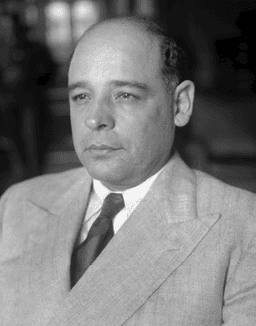
Abelardo L. Rodriguez
Politician · Modern
46.9Total

Baron Waqa
Politician · Modern
39.1Total
Basic Information
Born
1889
1959
Died
1967
—
Era
Modern
Modern
Nationality
Mexico
Nauru
Occupation
Politician
Politician
Civilization
Western
Other
Score Comparison
Military (10%)
36.6
16.7
Political (20%)
43.7
30.8
Influence (20%)
47.9
47.9
Legacy (20%)
38.3
36.7
Leadership (15%)
65.7
48.4
Strategy (15%)
52.8
43.5
TOTAL
46.9
39.1
Abelardo L. Rodriguez — Complete Timeline
1932 AD
Served as president of Mexico during the MaximatoPolitical Action◆ Major
Rodríguez became president after the resignation of Pascual Ortiz Rubio, serving from 1932 to 1934. He was the last president of the Maximato era, continuing policies set by Plutarco Elías Calles and overseeing economic recovery from the Great Depression.
PresidencyMaximatoEconomic recovery
Impact: national
1933 AD
Implemented labor and social reformsReform
Rodríguez's administration enacted labor laws that improved working conditions and expanded social security. These reforms were part of the broader post-revolutionary consolidation but were limited by the influence of Calles.
Labor reformSocial securityMaximato
Impact: nationalprogressive
Baron Waqa — Complete Timeline
2013 AD
Elected President of NauruPolitical Action◆ Major
Baron Waqa was elected President of Nauru, succeeding Sprent Dabwido. His election marked the beginning of a period of political stability.
ElectionPresidency
Impact: national
Expanded Australian Offshore Processing CenterPolitical Action◆ Major
Waqa's government agreed to expand the Australian offshore immigration detention center on Nauru. This decision was part of Australia's Pacific Solution policy and brought significant foreign aid to Nauru.
ImmigrationAustraliaHuman Rights
Impact: regional
2016 AD
Re-elected in 2016 General ElectionPolitical Action
Waqa was re-elected as President following the 2016 general election. His government continued its close relationship with Australia and maintained the detention center.
Re-electionContinuity
Impact: national
2019 AD
Defeated in 2019 General ElectionPolitical Action◆ Major
Waqa was defeated in the 2019 general election, losing his parliamentary seat. He was succeeded as President by Lionel Aingimea.
Election DefeatPolitical Transition
Impact: national
This comparison has not been analyzed yet.
One-time AI generation (~1 minute). Scores and timeline are already available below.
Rankings
🥇
Abelardo L. RodriguezLeader
Mil: 36.6Pol: 43.7Inf: 47.9
46.9
🥈
Baron Waqa
Mil: 16.7Pol: 30.8Inf: 47.9
39.1
+7.8 behind
How This Comparison Works
Algorithm
Each figure is scored on 6 dimensions (0—100 scale) based on structured historical data: Military (10%), Political (20%), Influence (20%), Legacy (20%), Leadership (15%), Strategy (15%). The weighted total produces the final ranking.
Data Sources
Scores are computed from structured sub-indicators in the database. Scale factors adjust for era (Ancient ×0.85, Modern ×1.0) and civilization size (Eastern ×1.05, Other ×0.80) to account for differences in population and military scale.
Maximum 3 Figures
Comparisons are limited to 2—3 figures to ensure readability and statistical meaningfulness.
Error Margins
±5 points per dimension — Sub-scores are derived from historical records with inherent uncertainty. Two figures within 5 points on a dimension should be considered roughly equivalent in that area.
Total Score Accuracy
±3 points overall — The weighted combination of 6 dimensions produces a total score with approximately ±3 points of uncertainty. Differences of less than 3 points are not statistically significant— the figures are effectively tied.
Known Limitations
- Historical records are incomplete and uneven across civilizations
- Figures from oral-tradition societies may be underrepresented
- Occupation labels can misclassify multi-role figures
- Scores measure capability and impact, not moral character
- Quantitative scoring is a comparison tool, not absolute truth
Capability Radar
Military (10%) — Battles & Warfare
Battles
5
19
Win Rate
5
24
Expansion
5
25
Political (20%) — Governance & Reform
Reform
35
20
Diplomacy
40
25
Economy
30
15
Influence (20%) — Cultural & Global Reach
Cultural
15
15
Global
10
10
Legacy (20%) — Historical Impact
Historical
20
10
Longevity
10
10
Leadership (15%) — Power & Stability
Tenure
40
30
Stability
25
10
Strategy (15%) — Tactics & Innovation
Strategy
5
31
Tactics
5
31
Reform
5
35
Similar Comparisons
Comments & Discussion
No comments yet. Be the first to share your thoughts!