Loading...
Analysis will be generated on first visit.
Scores and timeline are available below. The page will refresh automatically when ready.
Abdur Rahman Khan vs Napoleon Bonaparte
Napoleon Bonaparte leads by 12.4 pts · 2 figures compared
…

Abdur Rahman Khan
Emperor · Modern
70.0Total
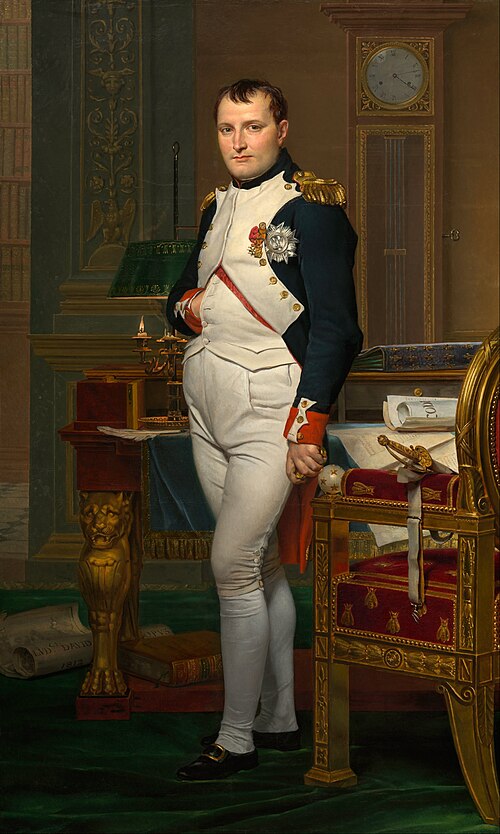
Napoleon Bonaparte
General · Modern
82.4Total
Basic Information
Born
1844
1769
Died
1901
1821
Era
Modern
Modern
Nationality
Afghanistan
France
Occupation
Emperor
General
Civilization
Middle Eastern
Western
Score Comparison
Military (10%)
57.2
94.0
Political (20%)
76.7
75.0
Influence (20%)
73.0
82.0
Legacy (20%)
68.7
78.0
Leadership (15%)
81.2
80.0
Strategy (15%)
56.4
93.0
TOTAL
70.0
82.4
Rankings
🥇
Napoleon BonaparteLeader
Mil: 94.0Pol: 75.0Inf: 82.0
82.4
🥈
Abdur Rahman Khan
Mil: 57.2Pol: 76.7Inf: 73.0
70.0
+12.4 behind
How This Comparison Works
Algorithm
Each figure is scored on 6 dimensions (0—100 scale) based on structured historical data: Military (10%), Political (20%), Influence (20%), Legacy (20%), Leadership (15%), Strategy (15%). The weighted total produces the final ranking.
Data Sources
Scores are computed from structured sub-indicators in the database. Scale factors adjust for era (Ancient ×0.85, Modern ×1.0) and civilization size (Eastern ×1.05, Other ×0.80) to account for differences in population and military scale.
Maximum 3 Figures
Comparisons are limited to 2—3 figures to ensure readability and statistical meaningfulness.
Error Margins
±5 points per dimension — Sub-scores are derived from historical records with inherent uncertainty. Two figures within 5 points on a dimension should be considered roughly equivalent in that area.
Total Score Accuracy
±3 points overall — The weighted combination of 6 dimensions produces a total score with approximately ±3 points of uncertainty. Differences of less than 3 points are not statistically significant— the figures are effectively tied.
Known Limitations
- Historical records are incomplete and uneven across civilizations
- Figures from oral-tradition societies may be underrepresented
- Occupation labels can misclassify multi-role figures
- Scores measure capability and impact, not moral character
- Quantitative scoring is a comparison tool, not absolute truth
Capability Radar
Military (10%) — Battles & Warfare
Battles
60
95
Win Rate
65
90
Expansion
60
95
Political (20%) — Governance & Reform
Reform
80
95
Diplomacy
70
80
Economy
65
85
Influence (20%) — Cultural & Global Reach
Cultural
50
85
Global
55
90
Legacy (20%) — Historical Impact
Historical
70
95
Longevity
65
90
Leadership (15%) — Power & Stability
Tenure
75
85
Stability
60
70
Strategy (15%) — Tactics & Innovation
Strategy
70
95
Tactics
55
98
Reform
75
92
Analysis will be generated on first visit.
Scores and timeline are available below. The page will refresh automatically when ready.
Abdur Rahman Khan — Complete Timeline
1880 AD
Consolidation of central authorityPolitical Action◆ Major
After becoming Emir, Abdur Rahman Khan launched a campaign to subdue rebellious tribes and provincial rulers. He used a combination of military force, deportations, and executions to break the power of local chieftains, creating a centralized state for the first time in Afghan history.
AfghanistanCentralizationState-Building
Impact: nationaldestructive
1885 AD
Introduction of administrative reformsReform
Abdur Rahman Khan implemented a series of administrative reforms, including the creation of a standing army, a centralized tax system, and a postal service. He also established state monopolies on trade and introduced a system of provincial governors directly appointed by the Emir.
AfghanistanAdministrationModernization
Impact: nationalconstructive
1892 AD
Suppression of the Hazara uprisingWar◆ Major
Abdur Rahman Khan ordered a brutal military campaign against the Hazara ethnic group in central Afghanistan, who had rebelled against his rule. The uprising was crushed with mass killings, enslavement, and displacement of Hazara populations, solidifying Pashtun dominance.
AfghanistanEthnic ConflictGenocide
Impact: nationaldestructive
1893 AD
Signing of the Durand Line AgreementPolitical Action
Abdur Rahman Khan signed an agreement with British Indian diplomat Sir Mortimer Durand, establishing the Durand Line as the border between Afghanistan and British India. This line divided Pashtun tribal areas and remains a source of conflict between Afghanistan and Pakistan.
AfghanistanBorderColonialism
Impact: regional
Similar Comparisons
Comments & Discussion
No comments yet. Be the first to share your thoughts!