Loading...
This comparison has not been analyzed yet.
One-time AI generation (~1 minute). Scores and timeline are already available below.
Abdel Aziz al-Rantisi vs Chan Santokhi
Chan Santokhi leads by 8.8 pts · 2 figures compared
…

Abdel Aziz al-Rantisi
Politician · Modern
40.2Total
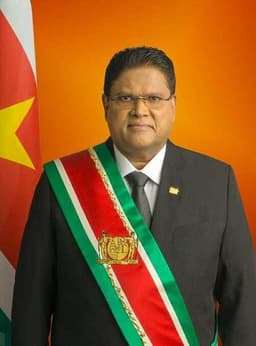
Chan Santokhi
Politician · Modern
49.0Total
Basic Information
Born
1947
1959
Died
—
—
Era
Modern
Modern
Nationality
Palestine
Suriname
Occupation
Politician
Politician
Civilization
Middle Eastern
Other
Score Comparison
Military (10%)
38.3
50.0
Political (20%)
26.4
45.0
Influence (20%)
50.2
50.2
Legacy (20%)
39.2
40.8
Leadership (15%)
31.2
68.0
Strategy (15%)
53.8
42.9
TOTAL
40.2
49.0
Abdel Aziz al-Rantisi — Complete Timeline
2004 AD
Assassination by Israeli StrikeWar
Rantisi was killed in an Israeli airstrike on April 17, 2004, just weeks after succeeding Yassin. The strike targeted his car in Gaza City, killing him and his bodyguard. His death marked a major blow to Hamas leadership.
AssassinationIsraelGaza
Impact: regionaltragic
Succeeded Ahmed Yassin as Hamas LeaderPolitical Action◆ Major
Rantisi became the leader of Hamas in Gaza immediately after Yassin's assassination in March 2004. He vowed to continue armed resistance against Israel, escalating rocket attacks from Gaza.
HamasLeadershipGaza
Impact: regional
Chan Santokhi — Complete Timeline
1991 AD
Appointed Police CommissionerPolitical Action
Santokhi was appointed Commissioner of the Suriname Police Force, a position he held until 2005. His tenure was noted for efforts to professionalize the force and combat crime, though it also coincided with periods of political tension.
PoliceLaw EnforcementCareer
Impact: national
2000 AD
Led investigation into December MurdersPolitical Action◆ Major
As Police Commissioner, Santokhi oversaw the investigation into the 1982 December Murders, in which 15 political opponents of the military regime were executed. This investigation eventually led to the trial and conviction of former President Desi Bouterse.
Human RightsJusticeDecember Murders
Impact: nationalconstructive
2005 AD
Elected to National AssemblyPolitical Action
Santokhi was elected to the National Assembly of Suriname as a member of the Progressive Reform Party (VHP). This marked his transition from police leadership to formal politics.
ParliamentPolitical CareerVHP
Impact: national
Appointed Minister of Justice and PolicePolitical Action
Santokhi served as Minister of Justice and Police under President Ronald Venetiaan. He continued efforts to reform the justice system and pursue accountability for past human rights abuses.
CabinetJustice ReformVenetiaan
Impact: nationalconstructive
2020 AD
Elected President of SurinamePolitical Action◆ Major
Chan Santokhi was elected President of Suriname by the National Assembly, succeeding Desi Bouterse. His election marked a shift in Suriname's political landscape after a period of economic difficulty and the previous administration's legal troubles.
ElectionPresidencySuriname
Impact: nationalconstructive
This comparison has not been analyzed yet.
One-time AI generation (~1 minute). Scores and timeline are already available below.
Rankings
🥇
Chan SantokhiLeader
Mil: 50.0Pol: 45.0Inf: 50.2
49.0
🥈
Abdel Aziz al-Rantisi
Mil: 38.3Pol: 26.4Inf: 50.2
40.2
+8.8 behind
How This Comparison Works
Algorithm
Each figure is scored on 6 dimensions (0—100 scale) based on structured historical data: Military (10%), Political (20%), Influence (20%), Legacy (20%), Leadership (15%), Strategy (15%). The weighted total produces the final ranking.
Data Sources
Scores are computed from structured sub-indicators in the database. Scale factors adjust for era (Ancient ×0.85, Modern ×1.0) and civilization size (Eastern ×1.05, Other ×0.80) to account for differences in population and military scale.
Maximum 3 Figures
Comparisons are limited to 2—3 figures to ensure readability and statistical meaningfulness.
Error Margins
±5 points per dimension — Sub-scores are derived from historical records with inherent uncertainty. Two figures within 5 points on a dimension should be considered roughly equivalent in that area.
Total Score Accuracy
±3 points overall — The weighted combination of 6 dimensions produces a total score with approximately ±3 points of uncertainty. Differences of less than 3 points are not statistically significant— the figures are effectively tied.
Known Limitations
- Historical records are incomplete and uneven across civilizations
- Figures from oral-tradition societies may be underrepresented
- Occupation labels can misclassify multi-role figures
- Scores measure capability and impact, not moral character
- Quantitative scoring is a comparison tool, not absolute truth
Capability Radar
Military (10%) — Battles & Warfare
Battles
5
23
Win Rate
5
27
Expansion
10
27
Political (20%) — Governance & Reform
Reform
15
60
Diplomacy
15
65
Economy
5
55
Influence (20%) — Cultural & Global Reach
Cultural
20
20
Global
20
20
Legacy (20%) — Historical Impact
Historical
20
25
Longevity
15
20
Leadership (15%) — Power & Stability
Tenure
10
55
Stability
5
50
Strategy (15%) — Tactics & Innovation
Strategy
10
28
Tactics
10
35
Reform
15
34
Similar Comparisons
Comments & Discussion
No comments yet. Be the first to share your thoughts!