Loading...
Abbas I vs Hong Taiji
Abbas I leads by 3.1 pts · 2 figures compared
…
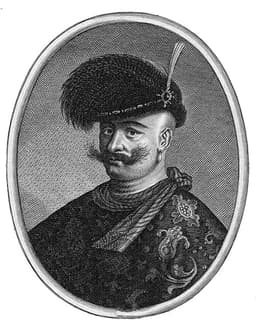
Abbas I
Emperor · Modern
81.4Total
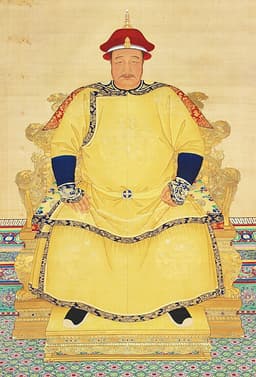
Hong Taiji
Emperor · Modern
78.3Total
Basic Information
Born
1571
1592
Died
1629
1643
Era
Modern
Modern
Nationality
Persia
China
Occupation
Emperor
Emperor
Civilization
Middle Eastern
Eastern
Score Comparison
Military (10%)
82.0
85.0
Political (20%)
90.0
82.0
Influence (20%)
75.0
88.0
Legacy (20%)
82.0
65.0
Leadership (15%)
81.7
78.0
Strategy (15%)
82.0
76.0
TOTAL
81.4
78.3
Abbas I — Complete Timeline
1590 AD
Reformed the Army with GhulamsReform
Abbas I created a standing army of ghulams (military slaves) recruited from Christian subjects in the Caucasus, particularly Georgians and Armenians. This reduced reliance on the Qizilbash tribal forces, increased royal control, and modernized the military with firearms and artillery.
Military ReformGhulam SystemCentralization
Impact: nationalconstructive
1598 AD
Relocated Capital to IsfahanPolitical Action
Abbas I moved the Safavid capital from Qazvin to Isfahan, transforming it into a magnificent city with grand architecture, including Naqsh-e Jahan Square, the Shah Mosque, and the Ali Qapu Palace. This relocation became a symbol of Safavid power and cultural flourishing.
Capital RelocationUrban PlanningArchitecture
Impact: globalconstructive
1599 AD
Established Diplomatic Relations with EuropePolitical Action◆ Major
Abbas I sent diplomatic missions to European courts, including those of Philip III of Spain, Rudolf II of the Holy Roman Empire, and Elizabeth I of England, seeking alliances against the Ottoman Empire. These missions opened sustained diplomatic and commercial exchanges between Safavid Persia and Europe.
DiplomacyEuropean RelationsAnti-Ottoman Alliance
Impact: globalconstructive
1605 AD
Battle of SufiyanWar◆ Major
Abbas I defeated an Ottoman army near Sufiyan, securing Safavid control over Azerbaijan and the Caucasus. This victory was part of the Ottoman-Safavid War of 1603-1618, which resulted in the recapture of Tabriz, Nakhchivan, and Yerevan from Ottoman occupation.
Ottoman-Safavid WarBattleTerritorial Recovery
Impact: regional
1622 AD
Expelled Portuguese from HormuzWar◆ Major
Abbas I, with support from the English East India Company, captured the island of Hormuz from Portuguese control. This ended Portuguese dominance in the Persian Gulf and opened direct trade routes for Safavid Persia with Europe, boosting the silk trade.
Persian GulfTradeEuropean Relations
Impact: globalconstructive
1623 AD
Recaptured BaghdadWar◆ Major
Abbas I captured Baghdad from the Ottoman Empire after a siege, restoring Safavid control over Iraq. This victory expanded Safavid territory and gave Abbas control over important Shi'a pilgrimage sites like Najaf and Karbala.
Ottoman-Safavid WarConquestShi'a Sites
Impact: regional
Hong Taiji — Complete Timeline
1631 AD
Adoption of Chinese-style governmentReform◆ Major
Hong Taiji established a Chinese-style bureaucracy, including the Six Ministries and a Hanlin Academy. He also introduced the civil service examination system for Han Chinese, integrating Confucian governance into the Qing state.
Government reformConfucian administrationSinification
Impact: regionalconstructive
1635 AD
Creation of the Eight Banners systemReform◆ Major
Hong Taiji reorganized the Eight Banners military system, incorporating Mongol and Han Chinese forces into separate banners. This created a multi-ethnic military structure that became the backbone of Qing power.
Military reformEight BannersMulti-ethnic army
Impact: regionalconstructive
Renaming of the Jurchen to ManchuPolitical Action◆ Major
Hong Taiji issued an edict renaming the Jurchen people as Manchu. This was part of his effort to create a unified identity for the various tribes under his rule and distance them from the historical Jurchen label.
Ethnic identityManchuJurchen
Impact: regionalconstructive
1636 AD
Proclamation of the Qing dynastyPolitical Action◆ Major
Hong Taiji declared the establishment of the Qing dynasty, replacing the Later Jin name. He adopted the Chinese imperial title and created a dual administrative system combining Manchu and Chinese institutions.
Dynasty foundingImperial titleQing dynasty
Impact: regionalconstructive
1640 AD
Conquest of the Ming Liaodong regionWar◆ Major
Hong Taiji's forces captured key Ming cities in Liaodong, including Jinzhou and Songshan. These victories secured Qing control over the strategic Liaoning corridor and weakened Ming defenses in the northeast.
Territorial expansionMing-Qing WarLiaodong
Impact: regional
Expert Analysis
Origins
Abbas I (1571–1629) inherited a Safavid Empire in disarray, plagued by internal strife and external threats from the Ottomans and Uzbeks. Born into a dynasty of Sufi origins, he was shaped by a turbulent court where his father was deposed and his brothers blinded. In contrast, Hong Taiji (1592–1643) was born into the rising Jurchen (later Manchu) confederation under his father Nurhaci, who united the tribes and founded the Later Jin dynasty. Hong Taiji grew up in a militaristic culture, learning warfare and statecraft from a young age. Both emerged from volatile backgrounds, but Abbas faced a more fragmented realm, while Hong Taiji inherited a growing power base.
Rise to Power
Abbas I seized power at age 16 by orchestrating a coup against his father, whom he later killed. He consolidated control by eliminating rivals and centralizing authority. His early reign focused on stabilizing the empire and expelling Ottoman and Uzbek invaders. Hong Taiji became khan after his father's death in 1626, initially sharing power with his brothers. He quickly outmaneuvered rivals, including his brother Amin, and solidified his rule. He continued Nurhaci's expansion, adopting Chinese-style bureaucracy and renaming his people "Manchu" in 1635 to forge a new identity. Both rose through ruthless ambition, but Abbas's path was more violent and personal, while Hong Taiji built on his father's foundation.
Leadership & Governance
Abbas I is famed for his military reforms, creating a standing army of ghulams (slave soldiers) loyal to him, reducing reliance on tribal Qizilbash. He moved the capital to Isfahan, transforming it into a cultural and economic hub. He fostered trade with European powers and promoted religious tolerance. Hong Taiji established the Eight Banners system, integrating Manchu, Mongol, and Han Chinese forces. He adopted Chinese administrative practices, created a centralized government, and promoted Confucian ideals. Both were pragmatic reformers, but Abbas's innovations were more radical and transformative for Persia, while Hong Taiji's reforms laid the groundwork for the Qing conquest of China.
Triumph & Tragedy
Abbas's greatest triumphs include recapturing Baghdad (1623) and expelling the Portuguese from Hormuz (1622), securing Persian trade routes. However, his later years were marred by paranoia; he killed or blinded his sons, leading to a succession crisis. Hong Taiji's victories include conquering the Ming Liaodong region and proclaiming the Qing dynasty (1636). He died suddenly in 1643 before his dream of conquering China was realized, leaving his son Shunzhi to complete the task. Both achieved military successes but suffered personal tragedies: Abbas destroyed his own dynasty, while Hong Taiji's early death left his legacy unfinished.
Character & Destiny
Abbas I was a complex figure: visionary yet ruthless, cultured yet paranoid. He built magnificent architecture in Isfahan but also committed atrocities. His destiny was to revive Persia and create a golden age, only to see it tarnished by his own cruelty. Hong Taiji was more systematic and patient, a strategist who carefully built institutions. His destiny was to lay the foundation for the Qing dynasty, which would rule China for over 250 years. Both were ambitious, but Abbas's legacy is tied to his personal flaws, while Hong Taiji's is tied to his institutional achievements.
Legacy
Abbas I is remembered as a great builder and reformer, with Isfahan's architecture symbolizing Safavid glory. His military and economic policies shaped modern Iran. However, his dynastic failures weakened the Safavids after his death. Hong Taiji's creation of the Qing dynasty and integration of Chinese governance ensured the Manchu's long-term success. The Eight Banners system persisted, and his policies of sinicization were crucial for ruling China. Numerically, Abbas scores higher overall (82.6 vs 79.5), but Hong Taiji's impact on Chinese history is more enduring.
Conclusion
Abbas I wins with a score gap of 3.1, reflecting his higher scores in Political, Leadership, and Diplomatic categories. His transformative reforms and cultural achievements edge out Hong Taiji's institutional legacy. However, Hong Taiji's strategic foundation for the Qing dynasty is arguably more historically significant. Both were exceptional rulers, but Abbas I's brilliance and tragedy give him a slight edge in this comparison.
**Scores:** Abbas I: 82.6 | Hong Taiji: 79.5
Rankings
🥇
Abbas ILeader
Mil: 82.0Pol: 90.0Inf: 75.0
81.4
🥈
Hong Taiji
Mil: 85.0Pol: 82.0Inf: 88.0
78.3
+3.1 behind
How This Comparison Works
Algorithm
Each figure is scored on 6 dimensions (0—100 scale) based on structured historical data: Military (10%), Political (20%), Influence (20%), Legacy (20%), Leadership (15%), Strategy (15%). The weighted total produces the final ranking.
Data Sources
Scores are computed from structured sub-indicators in the database. Scale factors adjust for era (Ancient ×0.85, Modern ×1.0) and civilization size (Eastern ×1.05, Other ×0.80) to account for differences in population and military scale.
Maximum 3 Figures
Comparisons are limited to 2—3 figures to ensure readability and statistical meaningfulness.
Error Margins
±5 points per dimension — Sub-scores are derived from historical records with inherent uncertainty. Two figures within 5 points on a dimension should be considered roughly equivalent in that area.
Total Score Accuracy
±3 points overall — The weighted combination of 6 dimensions produces a total score with approximately ±3 points of uncertainty. Differences of less than 3 points are not statistically significant— the figures are effectively tied.
Known Limitations
- Historical records are incomplete and uneven across civilizations
- Figures from oral-tradition societies may be underrepresented
- Occupation labels can misclassify multi-role figures
- Scores measure capability and impact, not moral character
- Quantitative scoring is a comparison tool, not absolute truth
Capability Radar
Military (10%) — Battles & Warfare
Battles
85
85
Win Rate
90
80
Expansion
85
90
Political (20%) — Governance & Reform
Reform
95
90
Diplomacy
88
85
Economy
92
80
Influence (20%) — Cultural & Global Reach
Cultural
90
80
Global
80
75
Legacy (20%) — Historical Impact
Historical
88
85
Longevity
85
80
Leadership (15%) — Power & Stability
Tenure
90
75
Stability
85
70
Strategy (15%) — Tactics & Innovation
Strategy
92
90
Tactics
88
85
Reform
95
90
Similar Comparisons
Comments & Discussion
No comments yet. Be the first to share your thoughts!