Loading...
This comparison has not been analyzed yet.
One-time AI generation (~1 minute). Scores and timeline are already available below.
A.N.R. Robinson vs Salvador Sanchez Ceren
A.N.R. Robinson leads by 6.7 pts · 2 figures compared
…
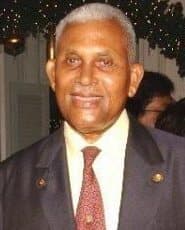
A.N.R. Robinson
Politician · Modern
57.3Total

Salvador Sanchez Ceren
Politician · Modern
50.6Total
Basic Information
Born
1926
1944
Died
—
—
Era
Modern
Modern
Nationality
Trinidad
El Salvador
Occupation
Politician
Politician
Civilization
Western
Western
Score Comparison
Military (10%)
50.0
50.0
Political (20%)
60.0
48.0
Influence (20%)
59.0
49.4
Legacy (20%)
54.0
40.0
Leadership (15%)
72.0
74.0
Strategy (15%)
43.0
50.0
TOTAL
57.3
50.6
A.N.R. Robinson — Complete Timeline
1986 AD
Became Prime Minister of Trinidad and TobagoPolitical Action◆ Major
Robinson led the National Alliance for Reconstruction (NAR) to a landslide victory in the 1986 general election, ending 30 years of PNM rule. He became Prime Minister, promising economic reform and national unity.
Election VictoryChange of GovernmentNAR
Impact: nationalconstructive
1989 AD
Proposed the International Criminal CourtPolitical Action
As Prime Minister of Trinidad and Tobago, Robinson proposed the creation of a permanent International Criminal Court to the UN General Assembly. His initiative, driven by the need to prosecute drug traffickers, led to the Rome Statute and the ICC's establishment in 2002.
International LawICCJusticeUN
Impact: globalconstructive
1990 AD
Survived the 1990 Jamaat al Muslimeen Coup AttemptPolitical Action◆ Major
Robinson was taken hostage by the Jamaat al Muslimeen during a coup attempt. He was held for six days and was shot in the leg. The crisis ended with a negotiated surrender, but Robinson's government was severely weakened.
Coup AttemptHostage CrisisPolitical Violence
Impact: nationaltragic
1997 AD
Served as President of Trinidad and TobagoPolitical Action
After his term as Prime Minister, Robinson was elected President of Trinidad and Tobago, serving from 1997 to 2003. The presidency is a largely ceremonial role, but Robinson used it to advocate for regional integration and international justice.
PresidencyCeremonial RoleRegionalism
Impact: nationalconstructive
Salvador Sanchez Ceren — Complete Timeline
1980 AD
Joined the FMLN Guerrilla MovementWar◆ Major
Salvador Sanchez Ceren joined the Farabundo Marti National Liberation Front (FMLN) as a guerrilla commander during the Salvadoran Civil War. He rose to become a top military leader, known for his role in the urban and rural insurgency.
GuerrillaFMLNCivil War
Impact: national
1992 AD
Signed the Chapultepec Peace AccordsPolitical Action◆ Major
As a senior FMLN commander, Sanchez Ceren was one of the signatories of the Chapultepec Peace Accords, which ended the civil war. He then transitioned to politics, becoming a leader of the FMLN party.
Peace AccordsFMLNDemobilization
Impact: nationalconstructive
2014 AD
Elected President of El SalvadorPolitical Action◆ Major
Sanchez Ceren won the presidential election as the FMLN candidate, defeating Norman Quijano of ARENA. He became the second consecutive leftist president, continuing the policies of his predecessor Mauricio Funes.
ElectionPresidentFMLN
Impact: nationalconstructive
Implemented Gang Truce and Security PoliciesPolitical Action◆ Major
Sanchez Ceren's government pursued a controversial gang truce with the MS-13 and Barrio 18 gangs, which temporarily reduced homicides. However, the truce collapsed, and violence surged again, leading to criticism of his security strategy.
Gang TruceSecurityViolence
Impact: nationaldestructive
2015 AD
Expanded Social Programs and InfrastructureReform
Sanchez Ceren continued social programs from the Funes era, including community health clinics, school feeding programs, and rural electrification. He also invested in infrastructure projects like roads and bridges.
Social ProgramsInfrastructureDevelopment
Impact: nationalconstructive
This comparison has not been analyzed yet.
One-time AI generation (~1 minute). Scores and timeline are already available below.
Rankings
🥇
A.N.R. RobinsonLeader
Mil: 50.0Pol: 60.0Inf: 59.0
57.3
🥈
Salvador Sanchez Ceren
Mil: 50.0Pol: 48.0Inf: 49.4
50.6
+6.7 behind
How This Comparison Works
Algorithm
Each figure is scored on 6 dimensions (0—100 scale) based on structured historical data: Military (10%), Political (20%), Influence (20%), Legacy (20%), Leadership (15%), Strategy (15%). The weighted total produces the final ranking.
Data Sources
Scores are computed from structured sub-indicators in the database. Scale factors adjust for era (Ancient ×0.85, Modern ×1.0) and civilization size (Eastern ×1.05, Other ×0.80) to account for differences in population and military scale.
Maximum 3 Figures
Comparisons are limited to 2—3 figures to ensure readability and statistical meaningfulness.
Error Margins
±5 points per dimension — Sub-scores are derived from historical records with inherent uncertainty. Two figures within 5 points on a dimension should be considered roughly equivalent in that area.
Total Score Accuracy
±3 points overall — The weighted combination of 6 dimensions produces a total score with approximately ±3 points of uncertainty. Differences of less than 3 points are not statistically significant— the figures are effectively tied.
Known Limitations
- Historical records are incomplete and uneven across civilizations
- Figures from oral-tradition societies may be underrepresented
- Occupation labels can misclassify multi-role figures
- Scores measure capability and impact, not moral character
- Quantitative scoring is a comparison tool, not absolute truth
Capability Radar
Military (10%) — Battles & Warfare
Battles
29
20
Win Rate
30
25
Expansion
35
10
Political (20%) — Governance & Reform
Reform
70
40
Diplomacy
75
45
Economy
50
35
Influence (20%) — Cultural & Global Reach
Cultural
30
20
Global
65
15
Legacy (20%) — Historical Impact
Historical
60
25
Longevity
55
15
Leadership (15%) — Power & Stability
Tenure
65
55
Stability
55
30
Strategy (15%) — Tactics & Innovation
Strategy
40
25
Tactics
39
30
Reform
45
15
Similar Comparisons
Comments & Discussion
No comments yet. Be the first to share your thoughts!