Loading...
Analysis will be generated on first visit.
Scores and timeline are available below. The page will refresh automatically when ready.
Prince Eugene of Savoy vs Qin Shi Huang
Qin Shi Huang leads by 5.0 pts · 2 figures compared
…

Prince Eugene of Savoy
General · Modern
78.5Total
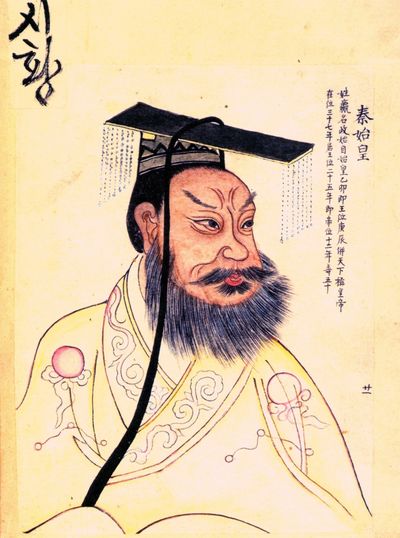
Qin Shi Huang
Emperor · Ancient
83.5Total
Basic Information
Born
1663
-259
Died
1736
-210
Era
Modern
Ancient
Nationality
Austria
China
Occupation
General
Emperor
Civilization
Western
Eastern
Score Comparison
Military (10%)
88.1
80.0
Political (20%)
80.0
88.0
Influence (20%)
76.3
82.0
Legacy (20%)
65.0
85.0
Leadership (15%)
82.5
88.0
Strategy (15%)
87.0
75.0
TOTAL
78.5
83.5
Rankings
🥇
Qin Shi HuangLeader
Mil: 80.0Pol: 88.0Inf: 82.0
83.5
🥈
Prince Eugene of Savoy
Mil: 88.1Pol: 80.0Inf: 76.3
78.5
+5.0 behind
How This Comparison Works
Algorithm
Each figure is scored on 6 dimensions (0—100 scale) based on structured historical data: Military (10%), Political (20%), Influence (20%), Legacy (20%), Leadership (15%), Strategy (15%). The weighted total produces the final ranking.
Data Sources
Scores are computed from structured sub-indicators in the database. Scale factors adjust for era (Ancient ×0.85, Modern ×1.0) and civilization size (Eastern ×1.05, Other ×0.80) to account for differences in population and military scale.
Maximum 3 Figures
Comparisons are limited to 2—3 figures to ensure readability and statistical meaningfulness.
Error Margins
±5 points per dimension — Sub-scores are derived from historical records with inherent uncertainty. Two figures within 5 points on a dimension should be considered roughly equivalent in that area.
Total Score Accuracy
±3 points overall — The weighted combination of 6 dimensions produces a total score with approximately ±3 points of uncertainty. Differences of less than 3 points are not statistically significant— the figures are effectively tied.
Known Limitations
- Historical records are incomplete and uneven across civilizations
- Figures from oral-tradition societies may be underrepresented
- Occupation labels can misclassify multi-role figures
- Scores measure capability and impact, not moral character
- Quantitative scoring is a comparison tool, not absolute truth
Capability Radar
Military (10%) — Battles & Warfare
Battles
95
85
Win Rate
92
90
Expansion
88
90
Political (20%) — Governance & Reform
Reform
70
95
Diplomacy
82
75
Economy
65
90
Influence (20%) — Cultural & Global Reach
Cultural
70
95
Global
72
85
Legacy (20%) — Historical Impact
Historical
85
95
Longevity
75
95
Leadership (15%) — Power & Stability
Tenure
75
70
Stability
78
65
Strategy (15%) — Tactics & Innovation
Strategy
94
85
Tactics
93
80
Reform
80
95
Analysis will be generated on first visit.
Scores and timeline are available below. The page will refresh automatically when ready.
Prince Eugene of Savoy — Complete Timeline
1697 AD
Battle of ZentaWar
Prince Eugene commanded the Imperial army at the Battle of Zenta. His forces surprised and destroyed the Ottoman army crossing the Tisza River. The victory ended the Ottoman threat to Hungary and led to the Treaty of Karlowitz.
Great Turkish WarBattleOttoman Empire
Impact: regional
1704 AD
Battle of BlenheimWar
Prince Eugene commanded the Imperial contingent at the Battle of Blenheim alongside Marlborough. His forces held the left flank against the French. The victory saved Vienna and was a turning point in the War of the Spanish Succession.
War of Spanish SuccessionBattleGrand Alliance
Impact: global
1706 AD
Battle of TurinWar◆ Major
Prince Eugene led the Imperial army to relieve the French siege of Turin. His forces defeated the French army, securing the Duchy of Savoy. The victory was a major turning point in the Italian theater of the war.
War of Spanish SuccessionBattleItaly
Impact: regional
1709 AD
Battle of MalplaquetWar◆ Major
Prince Eugene co-commanded with Marlborough at the Battle of Malplaquet. The allied victory was costly, with heavy casualties. Eugene's tactical skill was evident, but the battle's high losses led to criticism of the allied strategy.
War of Spanish SuccessionBattleHigh Casualties
Impact: regionaltragic
1717 AD
Siege of BelgradeWar◆ Major
Prince Eugene commanded the Imperial army in the Siege of Belgrade. His forces captured the fortress from the Ottomans after a decisive battle. The victory led to the Treaty of Passarowitz, expanding Habsburg territory in the Balkans.
Austro-Turkish WarSiegeBalkans
Impact: regional
Qin Shi Huang — Complete Timeline
246 BC
Construction of the Mausoleum and Terracotta ArmyOther◆ Major
Qin Shi Huang commissioned a vast mausoleum complex near Xi'an, guarded by thousands of life-sized terracotta soldiers, horses, and chariots. The project employed hundreds of thousands of workers and reflected his obsession with immortality and imperial power.
Impact: global
230 BC
Conquest of the Six Warring StatesWar
From 230 to 221 BCE, Ying Zheng led the Qin state in a series of campaigns that conquered the Han, Zhao, Wei, Chu, Yan, and Qi states. This unified China under a single ruler for the first time, ending the Warring States period.
Impact: global
221 BC
Standardization of Writing, Currency, and MeasurementsReform◆ Major
Qin Shi Huang ordered the standardization of Chinese script, currency, and weights and measures across the unified empire. This facilitated administration, trade, and cultural integration, laying a foundation for future dynasties.
Impact: globalconstructive
Proclamation of the Qin DynastyPolitical Action
After conquering the last independent state, Ying Zheng declared himself Shi Huangdi (First Emperor), founding the Qin Dynasty. He adopted a new title to signify his supreme authority and initiated centralized imperial rule.
Impact: global
214 BC
Initiation of the Great Wall ConstructionOther◆ Major
Qin Shi Huang ordered the connection and extension of existing northern fortifications to create a unified defensive wall against nomadic Xiongnu raids. This project involved massive conscripted labor and became the precursor to the later Great Wall.
Impact: regional
213 BC
Burning of Books and Burying of ScholarsPolitical Action◆ Major
On the advice of Li Si, Qin Shi Huang ordered the burning of historical records and philosophical texts not aligned with Legalist doctrine. He also had 460 Confucian scholars buried alive to suppress dissent and consolidate ideological control.
Impact: nationaldestructive
Similar Comparisons
Comments & Discussion
DANUBE_CANNON6/17/2026
Prince Eugene exemplifies how a commander without a throne can still forge an empire. Unlike Qin Shi Huang, who ruled by blood and fear, Eugene earned loyalty through competence. He never lost a major battle, and at Zenta in 1697 he destroyed the Ottoman army so completely that the peace lasted decades. That's leadership through results, not terror.
TERRACOTTA_SKEPTIC6/17/2026
The terracotta army is impressive, sure, but let's be honest—Qin Shi Huang's greatest achievement was paranoia sculpted into clay. While Eugene was outmaneuvering the Ottomans with actual battlefield strategy, the First Emperor was building an underground fantasy army to fight ghosts. That's not greatness; that's narcissism with a construction budget.
魏武遗风6/17/2026
拿尤金跟始皇比?尤金再能打,也不过是哈布斯堡家的高级打工仔。始皇扫六合、书同文、车同轨,改写了整个文明的底层代码。尤金打了三十年仗,国土没扩大一寸,而始皇一句话就让天下人用同一种文字。格局差太远了。
历史计量员6/17/2026
比战绩要看数据。尤金指挥的彼得瓦拉丁战役,以4万对15万,歼敌3万自身只损失5千,交换比漂亮得很。始皇的统一战争呢?长平一战坑杀40万降卒,杀俘不叫战术,叫屠杀。数据说话:尤金才是真正的战神,不是靠人数堆出来的。
CLASSICS_CRITIC6/17/2026
The comparison misses a crucial point: Eugene built lasting alliances that transformed Europe's political order, while Qin's empire collapsed within four years of his death. Eugene's coalition warfare at Blenheim (1704) reshaped the balance of power for a century. Qin's "unification" was a brittle, coercive patch job. Building something that lasts requires more than absolute power—it requires trust.