Loading...
Analysis will be generated on first visit.
Scores and timeline are available below. The page will refresh automatically when ready.
Napoleon Bonaparte vs Ptolemy IX Soter II
Napoleon Bonaparte leads by 26.9 pts · 2 figures compared
…
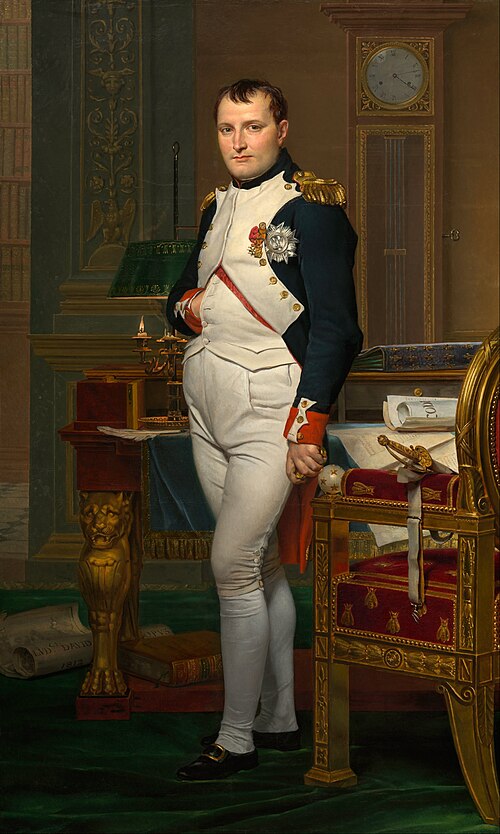
Napoleon Bonaparte
General · Modern
82.4Total
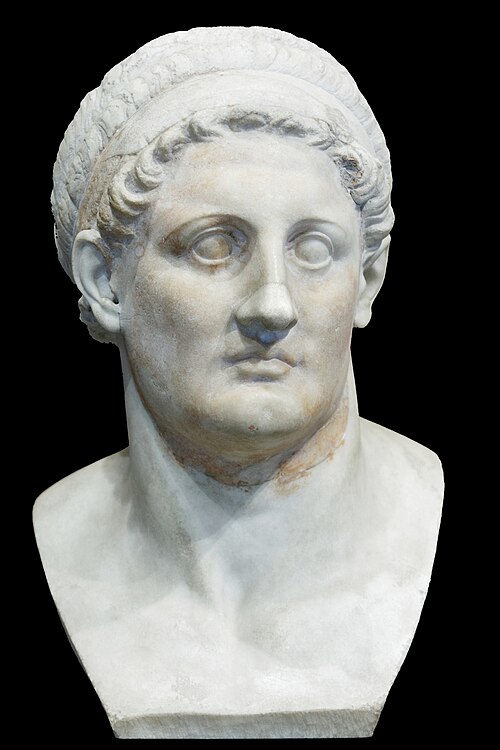
Ptolemy IX Soter II
Emperor · Ancient
55.5Total
Basic Information
Born
1769
-142
Died
1821
-80
Era
Modern
Ancient
Nationality
France
Ptolemaic Kingdom
Occupation
General
Emperor
Civilization
Western
Middle Eastern
Score Comparison
Military (10%)
94.0
37.5
Political (20%)
75.0
53.6
Influence (20%)
82.0
61.8
Legacy (20%)
78.0
52.0
Leadership (15%)
80.0
72.6
Strategy (15%)
93.0
49.0
TOTAL
82.4
55.5
Rankings
🥇
Napoleon BonaparteLeader
Mil: 94.0Pol: 75.0Inf: 82.0
82.4
🥈
Ptolemy IX Soter II
Mil: 37.5Pol: 53.6Inf: 61.8
55.5
+26.9 behind
How This Comparison Works
Algorithm
Each figure is scored on 6 dimensions (0—100 scale) based on structured historical data: Military (10%), Political (20%), Influence (20%), Legacy (20%), Leadership (15%), Strategy (15%). The weighted total produces the final ranking.
Data Sources
Scores are computed from structured sub-indicators in the database. Scale factors adjust for era (Ancient ×0.85, Modern ×1.0) and civilization size (Eastern ×1.05, Other ×0.80) to account for differences in population and military scale.
Maximum 3 Figures
Comparisons are limited to 2—3 figures to ensure readability and statistical meaningfulness.
Error Margins
±5 points per dimension — Sub-scores are derived from historical records with inherent uncertainty. Two figures within 5 points on a dimension should be considered roughly equivalent in that area.
Total Score Accuracy
±3 points overall — The weighted combination of 6 dimensions produces a total score with approximately ±3 points of uncertainty. Differences of less than 3 points are not statistically significant— the figures are effectively tied.
Known Limitations
- Historical records are incomplete and uneven across civilizations
- Figures from oral-tradition societies may be underrepresented
- Occupation labels can misclassify multi-role figures
- Scores measure capability and impact, not moral character
- Quantitative scoring is a comparison tool, not absolute truth
Capability Radar
Military (10%) — Battles & Warfare
Battles
95
30
Win Rate
90
35
Expansion
95
10
Political (20%) — Governance & Reform
Reform
95
15
Diplomacy
80
30
Economy
85
20
Influence (20%) — Cultural & Global Reach
Cultural
85
20
Global
90
15
Legacy (20%) — Historical Impact
Historical
95
25
Longevity
90
20
Leadership (15%) — Power & Stability
Tenure
85
40
Stability
70
15
Strategy (15%) — Tactics & Innovation
Strategy
95
25
Tactics
98
30
Reform
92
10
Analysis will be generated on first visit.
Scores and timeline are available below. The page will refresh automatically when ready.
Napoleon Bonaparte — Complete Timeline
1799 AD
Coup of 18 BrumaireOther◆ Major
Napoleon Bonaparte, with support from his brother Lucien and key political figures, overthrew the Directory in a bloodless coup. He established the Consulate with himself as First Consul, effectively becoming the ruler of France. This event ended the French Revolution's most unstable period.
French RevolutionCoupRise to Power
Impact: regional
1804 AD
Promulgation of the Napoleonic CodeOther◆ Major
Napoleon enacted the Civil Code of the French, known as the Napoleonic Code, a comprehensive set of laws that replaced the fragmented feudal legal systems. The code established legal equality, protected property rights, and secularized law. It became the basis for legal systems in many European and world countries.
Legal ReformNapoleonic CodeCivil Law
Impact: globalconstructive
1805 AD
Battle of AusterlitzWar◆ Major
Napoleon's Grande Arm
Napoleonic WarsBattleDecisive Victory
Impact: global
1812 AD
Invasion of RussiaWar◆ Major
Napoleon led the Grande Arm
Napoleonic WarsInvasionDisaster
Impact: globaldestructive
1815 AD
Battle of WaterlooWar◆ Major
Napoleon's French army was defeated by the combined forces of the Duke of Wellington's Anglo-Allied army and Gebhard Leberecht von Bl
Napoleonic WarsBattleFinal Defeat
Impact: globaldestructive
Ptolemy IX Soter II — Complete Timeline
116 BC
First Reign as King of EgyptPolitical Action◆ Major
Ptolemy IX ascended to the throne after the death of Ptolemy VIII, ruling jointly with his mother Cleopatra III. His reign was marked by conflict with his mother, who favored his brother Ptolemy X.
AccessionCo-RulershipDynastic Conflict
Impact: national
107 BC
Expulsion by Cleopatra IIIPolitical Action◆ Major
Cleopatra III forced Ptolemy IX to flee Egypt, replacing him with his brother Ptolemy X. Ptolemy IX went to Cyprus, where he ruled as a client king, but continued to plot his return.
ExileDynastic IntrigueCyprus
Impact: nationaldestructive
88 BC
Second Reign as King of EgyptPolitical Action◆ Major
After Ptolemy X's death, Ptolemy IX returned to Egypt and reclaimed the throne. His second reign was short, lasting only until his death in 80 BC, but he managed to restore some stability.
RestorationSecond ReignStability
Impact: nationalconstructive
Similar Comparisons
Comments & Discussion
Napoleon'sLancer6/17/2026
Comparing Napoleon to Ptolemy IX is like comparing a thunderstorm to a drizzle. Sure Ptolemy had dynastic struggles, but his "achievements" were basically fratricidal squabbles over a decaying inheritance. Napoleon rewrote the military playbook—his 1796 Italian campaign alone outshines anything Ptolemy ever did. The Egyptian king couldn't even hold onto Cyprus. Funny, both ended up losing big, but only one changed Europe's map forever. The other? Just another Greek puppet in Alexandria's sand tr
数字考古学家6/17/2026
数据不会撒谎:拿破仑在位15年留下68场战役记录,而托勒密九世上台却连稳定一年的税收数据都没保住。这位埃及国王的“统治”更像一场家族真人秀——他母亲Cleopatra III才是真正掌勺的大厨,儿子不过是个端盘子的。别拿王冠说事,看GDP曲线就知道谁在历史舞台C位,谁只是道具。