Loading...
Analysis will be generated on first visit.
Scores and timeline are available below. The page will refresh automatically when ready.
Lajos Kossuth vs Qin Shi Huang
Qin Shi Huang leads by 17.5 pts · 2 figures compared
…

Lajos Kossuth
Revolutionary · Modern
66.0Total
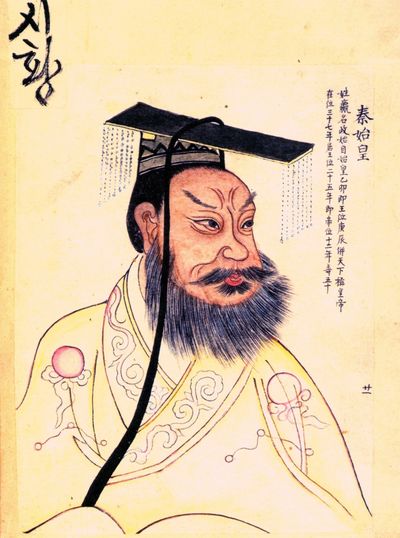
Qin Shi Huang
Emperor · Ancient
83.5Total
Basic Information
Born
1802
-259
Died
1894
-210
Era
Modern
Ancient
Nationality
Hungary
China
Occupation
Revolutionary
Emperor
Civilization
Western
Eastern
Score Comparison
Military (10%)
42.0
80.0
Political (20%)
77.1
88.0
Influence (20%)
72.8
82.0
Legacy (20%)
67.7
85.0
Leadership (15%)
72.0
88.0
Strategy (15%)
50.2
75.0
TOTAL
66.0
83.5
Rankings
🥇
Qin Shi HuangLeader
Mil: 80.0Pol: 88.0Inf: 82.0
83.5
🥈
Lajos Kossuth
Mil: 42.0Pol: 77.1Inf: 72.8
66.0
+17.5 behind
How This Comparison Works
Algorithm
Each figure is scored on 6 dimensions (0—100 scale) based on structured historical data: Military (10%), Political (20%), Influence (20%), Legacy (20%), Leadership (15%), Strategy (15%). The weighted total produces the final ranking.
Data Sources
Scores are computed from structured sub-indicators in the database. Scale factors adjust for era (Ancient ×0.85, Modern ×1.0) and civilization size (Eastern ×1.05, Other ×0.80) to account for differences in population and military scale.
Maximum 3 Figures
Comparisons are limited to 2—3 figures to ensure readability and statistical meaningfulness.
Error Margins
±5 points per dimension — Sub-scores are derived from historical records with inherent uncertainty. Two figures within 5 points on a dimension should be considered roughly equivalent in that area.
Total Score Accuracy
±3 points overall — The weighted combination of 6 dimensions produces a total score with approximately ±3 points of uncertainty. Differences of less than 3 points are not statistically significant— the figures are effectively tied.
Known Limitations
- Historical records are incomplete and uneven across civilizations
- Figures from oral-tradition societies may be underrepresented
- Occupation labels can misclassify multi-role figures
- Scores measure capability and impact, not moral character
- Quantitative scoring is a comparison tool, not absolute truth
Capability Radar
Military (10%) — Battles & Warfare
Battles
30
85
Win Rate
25
90
Expansion
20
90
Political (20%) — Governance & Reform
Reform
70
95
Diplomacy
60
75
Economy
40
90
Influence (20%) — Cultural & Global Reach
Cultural
65
95
Global
55
85
Legacy (20%) — Historical Impact
Historical
70
95
Longevity
55
95
Leadership (15%) — Power & Stability
Tenure
45
70
Stability
20
65
Strategy (15%) — Tactics & Innovation
Strategy
40
85
Tactics
35
80
Reform
55
95
Analysis will be generated on first visit.
Scores and timeline are available below. The page will refresh automatically when ready.
Lajos Kossuth — Complete Timeline
1848 AD
Hungarian Revolution of 1848Political Action◆ Major
Lajos Kossuth emerged as a leader of the Hungarian Revolution against Habsburg rule. He gave a famous speech demanding constitutional reforms and national independence.
RevolutionIndependenceHabsburg
Impact: regional
1849 AD
Defeat and ExileWar◆ Major
The Hungarian revolutionary army was defeated by the combined forces of Austria and Russia. Kossuth fled into exile, first to the Ottoman Empire and later to the United States and Europe.
DefeatExile
Impact: regionaltragic
Declaration of Hungarian IndependencePolitical Action◆ Major
Lajos Kossuth declared Hungary's independence from the Habsburg Empire and was appointed Governor-President. The declaration was a key moment in the revolution.
IndependenceDeclaration
Impact: regionalconstructive
1851 AD
Exile in the United StatesPolitical Action
Lajos Kossuth toured the United States, giving speeches to raise support for Hungarian independence. He was received as a hero by many Americans but failed to secure official intervention.
ExileDiplomacyUnited States
Impact: global
Qin Shi Huang — Complete Timeline
246 BC
Construction of the Mausoleum and Terracotta ArmyOther◆ Major
Qin Shi Huang commissioned a vast mausoleum complex near Xi'an, guarded by thousands of life-sized terracotta soldiers, horses, and chariots. The project employed hundreds of thousands of workers and reflected his obsession with immortality and imperial power.
Impact: global
230 BC
Conquest of the Six Warring StatesWar
From 230 to 221 BCE, Ying Zheng led the Qin state in a series of campaigns that conquered the Han, Zhao, Wei, Chu, Yan, and Qi states. This unified China under a single ruler for the first time, ending the Warring States period.
Impact: global
221 BC
Standardization of Writing, Currency, and MeasurementsReform◆ Major
Qin Shi Huang ordered the standardization of Chinese script, currency, and weights and measures across the unified empire. This facilitated administration, trade, and cultural integration, laying a foundation for future dynasties.
Impact: globalconstructive
Proclamation of the Qin DynastyPolitical Action
After conquering the last independent state, Ying Zheng declared himself Shi Huangdi (First Emperor), founding the Qin Dynasty. He adopted a new title to signify his supreme authority and initiated centralized imperial rule.
Impact: global
214 BC
Initiation of the Great Wall ConstructionOther◆ Major
Qin Shi Huang ordered the connection and extension of existing northern fortifications to create a unified defensive wall against nomadic Xiongnu raids. This project involved massive conscripted labor and became the precursor to the later Great Wall.
Impact: regional
213 BC
Burning of Books and Burying of ScholarsPolitical Action◆ Major
On the advice of Li Si, Qin Shi Huang ordered the burning of historical records and philosophical texts not aligned with Legalist doctrine. He also had 460 Confucian scholars buried alive to suppress dissent and consolidate ideological control.
Impact: nationaldestructive
Similar Comparisons
Comments & Discussion
QIN'S SHADOW6/17/2026
The comparison is sound but misses the foundational difference: Kossuth's liberalism versus Qin Shi Huang's legalism. The First Emperor didn't just unify China; he destroyed its intellectual diversity in 213 BC by burning all philosophical texts except those on farming, medicine, and divination. Kossuth, by contrast, fought for freedom of the press and assembly. One created a state that suppressed thought; the other imagined a nation that liberated it. That's not a divergence of method—it's a ch
铁血旁观者6/17/2026
别拿匈牙利律师跟始皇帝比!秦始皇在公元前221年统一文字、度量衡、车轨,这才叫真正的统一。科苏特呢?1849年匈牙利独立才撑了几个月就被俄奥联军碾碎了。统一不是喊口号,是建立官僚体系、修筑驰道、铸造秦半两钱。始皇帝做了,科苏特连做梦都梦不到这种执行力。政治家看结果,不看理想。
CLASSICS GRINDER6/17/2026
This comparison illuminates how different conceptualizations of "empire" operated across civilizations. Qin Shi Huang derived legitimacy from the Mandate of Heaven and the Legalist doctrine of total state control, while Kossuth invoked Romantic nationalism and constitutional rights. The Chinese model treats unity as a cosmic duty, the Hungarian one as a political contract. That's why the First Emperor could dictate 50,000 kilometers of roads and a bronze carriage for his tomb, while Kossuth had
汉匈混血6/17/2026
数据说话:秦始皇在位37年,打赢了6场灭国战争,建立了一套能管理2000万人的郡县制。科苏特在1848年革命中当了一年摄政,连匈牙利内部的贵族特权都没摆平。核心不是谁更伟大,而是起点完全不同。始皇帝继承了一台商鞅锻造的战争机器,科苏特面对的是一盘散沙、被奥地利压迫了400年的匈牙利封建领主。评论说得对:路径不同,但都至死方休。
CURATOR OF RUINS6/17/2026
The comparison is most poignant when you consider what each built that lasted. Qin Shi Huang created a bureaucratic and infrastructural template that China follows to this day. His terracotta warriors guard a tomb that still draws millions. Kossuth's legacy is more fragile: a statue in Budapest, a plaque in Turin, his name on currency that lost value. Yet I'd rather live in Kossuth's world—one where a pamphleteer could become a national liberator—than in a realm where 700,000 conscripts built a