Loading...
Analysis will be generated on first visit.
Scores and timeline are available below. The page will refresh automatically when ready.
Gjorge Ivanov vs Julius Caesar
Julius Caesar leads by 25.1 pts · 2 figures compared
…

Gjorge Ivanov
Politician · Modern
58.2Total
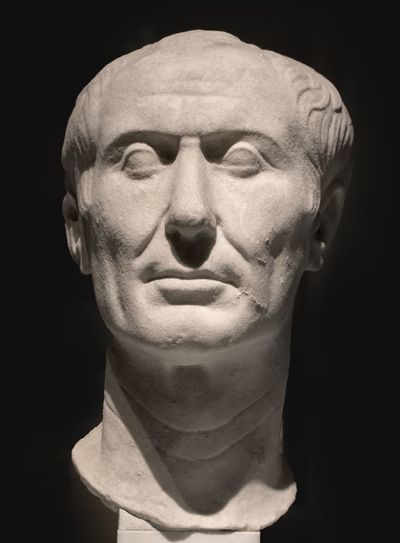
Julius Caesar
General · Ancient
83.3Total
Basic Information
Born
1960
-100
Died
—
-44
Era
Modern
Ancient
Nationality
North Macedonia
Roman Republic
Occupation
Politician
General
Civilization
Western
Western
Score Comparison
Military (10%)
37.5
88.0
Political (20%)
63.8
78.0
Influence (20%)
69.3
85.0
Legacy (20%)
54.7
82.0
Leadership (15%)
77.1
82.0
Strategy (15%)
35.3
88.0
TOTAL
58.2
83.3
Rankings
🥇
Julius CaesarLeader
Mil: 88.0Pol: 78.0Inf: 85.0
83.3
🥈
Gjorge Ivanov
Mil: 37.5Pol: 63.8Inf: 69.3
58.2
+25.1 behind
How This Comparison Works
Algorithm
Each figure is scored on 6 dimensions (0—100 scale) based on structured historical data: Military (10%), Political (20%), Influence (20%), Legacy (20%), Leadership (15%), Strategy (15%). The weighted total produces the final ranking.
Data Sources
Scores are computed from structured sub-indicators in the database. Scale factors adjust for era (Ancient ×0.85, Modern ×1.0) and civilization size (Eastern ×1.05, Other ×0.80) to account for differences in population and military scale.
Maximum 3 Figures
Comparisons are limited to 2—3 figures to ensure readability and statistical meaningfulness.
Error Margins
±5 points per dimension — Sub-scores are derived from historical records with inherent uncertainty. Two figures within 5 points on a dimension should be considered roughly equivalent in that area.
Total Score Accuracy
±3 points overall — The weighted combination of 6 dimensions produces a total score with approximately ±3 points of uncertainty. Differences of less than 3 points are not statistically significant— the figures are effectively tied.
Known Limitations
- Historical records are incomplete and uneven across civilizations
- Figures from oral-tradition societies may be underrepresented
- Occupation labels can misclassify multi-role figures
- Scores measure capability and impact, not moral character
- Quantitative scoring is a comparison tool, not absolute truth
Capability Radar
Military (10%) — Battles & Warfare
Battles
27
95
Win Rate
29
92
Expansion
35
97
Political (20%) — Governance & Reform
Reform
30
90
Diplomacy
40
85
Economy
35
82
Influence (20%) — Cultural & Global Reach
Cultural
20
88
Global
20
94
Legacy (20%) — Historical Impact
Historical
25
95
Longevity
15
96
Leadership (15%) — Power & Stability
Tenure
50
75
Stability
25
60
Strategy (15%) — Tactics & Innovation
Strategy
37
94
Tactics
41
96
Reform
44
88
Analysis will be generated on first visit.
Scores and timeline are available below. The page will refresh automatically when ready.
Gjorge Ivanov — Complete Timeline
2009 AD
Elected President of MacedoniaPolitical Action◆ Major
Ivanov won the presidential election as the candidate of VMRO-DPMNE, succeeding Branko Crvenkovski. His presidency was largely ceremonial but he wielded influence over foreign policy.
ElectionPresidencyMacedonia
Impact: nationalconstructive
2016 AD
Pardoned politicians in the wiretapping scandalPolitical Action◆ Major
Ivanov issued pardons to politicians implicated in the wiretapping scandal, including Nikola Gruevski, sparking massive protests. He later revoked the pardons under pressure from the EU and the opposition.
ScandalPardonProtests
Impact: nationaldestructive
2018 AD
Refused to sign the Prespa AgreementPolitical Action◆ Major
Ivanov refused to sign the Prespa Agreement, arguing it violated the constitution and national identity. He instead referred it to the Constitutional Court, delaying ratification but ultimately failing to block it.
Name DisputePrespa AgreementConstitutional Crisis
Impact: nationaldestructive
2019 AD
Ended his presidencyPolitical Action
Ivanov's term ended in 2019, and he was succeeded by Stevo Pendarovski. His presidency was marked by controversy over the name change and the wiretapping scandal.
PresidencyEnd of TermPolitics
Impact: national
Similar Comparisons
Comments & Discussion
RUBICON\_REX6/17/2026
Caesar crossed a river; Ivanov couldn't cross a name change. One remade Europe, the other couldn't remake a bureaucracy. This comparison is like contrasting a lion with a housecat. Caesar's audacity at the Rubicon was a calculated gamble that birthed an empire. Ivanov's refusal was just stubbornness without a strategy. History remembers those who act, not those who stand still.
渡河之羊6/17/2026
拿一位古罗马的征服者与一位现代巴尔干小国的总统做对比,这本身就是对历史的亵渎。恺撒跨越卢比孔河,是在与庞培和元老院决裂,是改变整个西方文明进程的豪赌。而伊万诺夫拒绝普雷斯帕协议,不过是在国家发展道路上设置了一个小小的障碍。这两者之间的差异,就像把大象和蚂蚁放在同一个天平上。
DATA\_DIVIDER6/17/2026
Let's be real: comparing a Roman general who sparked a civil war to a Macedonian president facing a name-change referendum is like comparing apples and nuclear reactors. The contexts are completely different, the stakes are incomparable. Caesar gambled for personal power and empire. Ivanov gambled for... national pride and possibly his political career? The analysis is interesting, but the scale mismatch is laughable.
历史学者老张6/17/2026
从政治智慧角度看,恺撒的选择是深思熟虑后的果断出击,他清楚自己的实力和目标。而伊万诺夫的选择更像是一种缺乏远见的固执。公元前49年的罗马与2018年的北马其顿,虽然都是历史的十字路口,但前者是创造历史,后者则更像是被历史裹挟。两千年过去了,人类领袖的格局却似乎在缩小。