Loading...
Analysis will be generated on first visit.
Scores and timeline are available below. The page will refresh automatically when ready.
George Curzon vs Napoleon Bonaparte
Napoleon Bonaparte leads by 15.3 pts · 2 figures compared
…

George Curzon
Politician · Modern
67.1Total
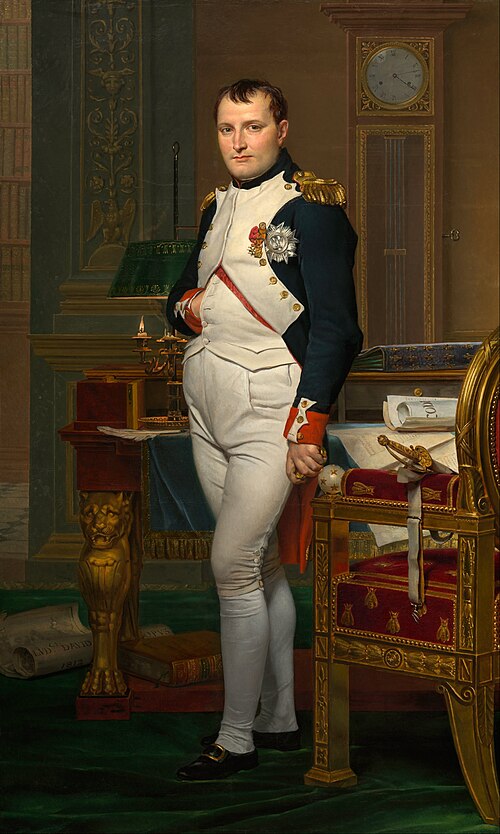
Napoleon Bonaparte
General · Modern
82.4Total
Basic Information
Born
1859
1769
Died
1925
1821
Era
Modern
Modern
Nationality
Great Britain
France
Occupation
Politician
General
Civilization
Western
Western
Score Comparison
Military (10%)
33.8
94.0
Political (20%)
69.4
75.0
Influence (20%)
72.5
82.0
Legacy (20%)
67.7
78.0
Leadership (15%)
79.2
80.0
Strategy (15%)
66.3
93.0
TOTAL
67.1
82.4
Rankings
🥇
Napoleon BonaparteLeader
Mil: 94.0Pol: 75.0Inf: 82.0
82.4
🥈
George Curzon
Mil: 33.8Pol: 69.4Inf: 72.5
67.1
+15.3 behind
How This Comparison Works
Algorithm
Each figure is scored on 6 dimensions (0—100 scale) based on structured historical data: Military (10%), Political (20%), Influence (20%), Legacy (20%), Leadership (15%), Strategy (15%). The weighted total produces the final ranking.
Data Sources
Scores are computed from structured sub-indicators in the database. Scale factors adjust for era (Ancient ×0.85, Modern ×1.0) and civilization size (Eastern ×1.05, Other ×0.80) to account for differences in population and military scale.
Maximum 3 Figures
Comparisons are limited to 2—3 figures to ensure readability and statistical meaningfulness.
Error Margins
±5 points per dimension — Sub-scores are derived from historical records with inherent uncertainty. Two figures within 5 points on a dimension should be considered roughly equivalent in that area.
Total Score Accuracy
±3 points overall — The weighted combination of 6 dimensions produces a total score with approximately ±3 points of uncertainty. Differences of less than 3 points are not statistically significant— the figures are effectively tied.
Known Limitations
- Historical records are incomplete and uneven across civilizations
- Figures from oral-tradition societies may be underrepresented
- Occupation labels can misclassify multi-role figures
- Scores measure capability and impact, not moral character
- Quantitative scoring is a comparison tool, not absolute truth
Capability Radar
Military (10%) — Battles & Warfare
Battles
0
95
Win Rate
0
90
Expansion
15
95
Political (20%) — Governance & Reform
Reform
75
95
Diplomacy
65
80
Economy
60
85
Influence (20%) — Cultural & Global Reach
Cultural
40
85
Global
50
90
Legacy (20%) — Historical Impact
Historical
55
95
Longevity
40
90
Leadership (15%) — Power & Stability
Tenure
70
85
Stability
55
70
Strategy (15%) — Tactics & Innovation
Strategy
0
95
Tactics
0
98
Reform
10
92
Analysis will be generated on first visit.
Scores and timeline are available below. The page will refresh automatically when ready.
George Curzon — Complete Timeline
1899 AD
Appointed Viceroy of IndiaPolitical Action◆ Major
George Curzon was appointed Viceroy of India. His tenure was marked by administrative reforms, including the partition of Bengal, and a focus on British imperial interests.
British IndiaViceroy
Impact: regional
1905 AD
Partition of BengalPolitical Action
Curzon ordered the partition of Bengal into two provinces, ostensibly for administrative efficiency. The move was widely seen as a divide-and-rule tactic, sparking widespread protests and the Swadeshi movement.
PartitionBengalSwadeshi
Impact: regionaldestructive
Resignation as ViceroyPolitical Action◆ Major
Curzon resigned as Viceroy after a policy dispute with the British government over the appointment of a military commander. His resignation marked the end of his active role in Indian affairs.
ResignationBritish India
Impact: regional
1919 AD
Appointed Foreign SecretaryPolitical Action◆ Major
Curzon was appointed British Foreign Secretary. He played a key role in post-World War I diplomacy, including the negotiation of the Treaty of Lausanne and the establishment of the League of Nations mandates.
Foreign SecretaryTreaty of Lausanne
Impact: global
Similar Comparisons
Comments & Discussion
Napoleon's War Genius6/17/2026
Comparing Curzon to Napoleon is like comparing a clerk to a conqueror. Napoleon redefined warfare with lightning campaigns like Austerlitz, shattering coalitions and redrawing borders. Curzon drew lines on maps and quarreled with generals over Indian army postings. Napoleon's ambition reshaped Europe for decades; Curzon's greatest crisis was losing a bureaucratic fight over a treaty with Tibet. This is not a comparison—it's a category error.
帝国之影6/17/2026
拿破仑与寇松?一个是帝国建筑师,一个是帝国装修工。拿破仑用军靴踏平欧洲,用《拿破仑法典》重塑法律体系;寇松呢?他最大的成就是拆分孟加拉?一个搞分裂的殖民官僚,也配和改变世界格局的男人并列?拿破仑即使战败也留下永恒遗产,寇松的遗产不过是印度档案馆里落灰的文件。
Tilsit's Echo6/17/2026
Let's be honest: Napoleon forged his empire through blood and brilliance, winning 60+ battles and crowning himself emperor. Curzon inherited his empire through birthright, ruling over territory he never conquered. Napoleon's power was personal—armies followed him. Curzon's power was borrowed—he was a prime minister's appointee tossed aside when inconvenient. One changed history through will; the other administered history through privilege. That's the chasm.
史料考古家6/17/2026
数据不会说谎:拿破仑指挥过600场战役规模的军事行动,寇松指挥过什么?一个殖民地茶叶种植园的税务稽查?两人同样怀揣改造世界的野心——但拿破仑真正改造了欧洲政治版图与法律体系,寇松连印度副王的位子都没坐热就被调回伦敦。权力场上的差距,就像地中海与茶杯水之间的差距。
Corsican vs Cabinet6/17/2026
Every history buff knows Napoleon's fatal flaw was hubris—the invasion of Russia. But at least he had the audacity to try. Curzon's flaw was petulance: resigning because he couldn't appoint his favorite general. One man's ambition crashed against the frozen Russian winter; the other's shattered against a memo from Whitehall. Napoleon's fall created epic poetry; Curzon's created awkward dinner party conversation. Scale matters, even in failure.