Loading...
Analysis will be generated on first visit.
Scores and timeline are available below. The page will refresh automatically when ready.
Fu Youde vs Qin Shi Huang
Qin Shi Huang leads by 8.7 pts · 2 figures compared
…

Fu Youde
General · Medieval
74.8Total
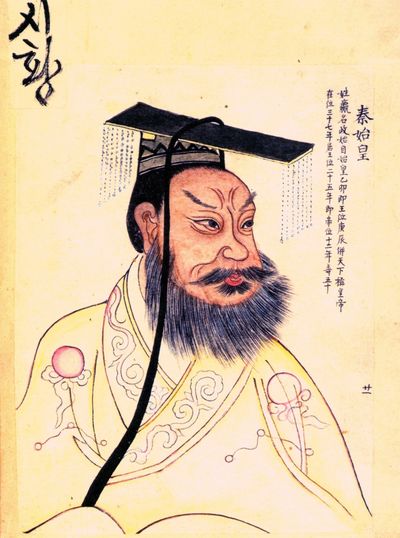
Qin Shi Huang
Emperor · Ancient
83.5Total
Basic Information
Born
1327
-259
Died
1394
-210
Era
Medieval
Ancient
Nationality
China
China
Occupation
General
Emperor
Civilization
Eastern
Eastern
Score Comparison
Military (10%)
86.4
80.0
Political (20%)
73.4
88.0
Influence (20%)
71.6
82.0
Legacy (20%)
63.3
85.0
Leadership (15%)
84.7
88.0
Strategy (15%)
78.6
75.0
TOTAL
74.8
83.5
Rankings
🥇
Qin Shi HuangLeader
Mil: 80.0Pol: 88.0Inf: 82.0
83.5
🥈
Fu Youde
Mil: 86.4Pol: 73.4Inf: 71.6
74.8
+8.7 behind
How This Comparison Works
Algorithm
Each figure is scored on 6 dimensions (0—100 scale) based on structured historical data: Military (10%), Political (20%), Influence (20%), Legacy (20%), Leadership (15%), Strategy (15%). The weighted total produces the final ranking.
Data Sources
Scores are computed from structured sub-indicators in the database. Scale factors adjust for era (Ancient ×0.85, Modern ×1.0) and civilization size (Eastern ×1.05, Other ×0.80) to account for differences in population and military scale.
Maximum 3 Figures
Comparisons are limited to 2—3 figures to ensure readability and statistical meaningfulness.
Error Margins
±5 points per dimension — Sub-scores are derived from historical records with inherent uncertainty. Two figures within 5 points on a dimension should be considered roughly equivalent in that area.
Total Score Accuracy
±3 points overall — The weighted combination of 6 dimensions produces a total score with approximately ±3 points of uncertainty. Differences of less than 3 points are not statistically significant— the figures are effectively tied.
Known Limitations
- Historical records are incomplete and uneven across civilizations
- Figures from oral-tradition societies may be underrepresented
- Occupation labels can misclassify multi-role figures
- Scores measure capability and impact, not moral character
- Quantitative scoring is a comparison tool, not absolute truth
Capability Radar
Military (10%) — Battles & Warfare
Battles
85
85
Win Rate
90
90
Expansion
85
90
Political (20%) — Governance & Reform
Reform
50
95
Diplomacy
65
75
Economy
55
90
Influence (20%) — Cultural & Global Reach
Cultural
45
95
Global
40
85
Legacy (20%) — Historical Impact
Historical
60
95
Longevity
50
95
Leadership (15%) — Power & Stability
Tenure
70
70
Stability
60
65
Strategy (15%) — Tactics & Innovation
Strategy
85
85
Tactics
80
80
Reform
60
95
Analysis will be generated on first visit.
Scores and timeline are available below. The page will refresh automatically when ready.
Fu Youde — Complete Timeline
1371 AD
Conquest of SichuanWar◆ Major
Fu Youde commanded a Ming army that invaded Sichuan from the north, capturing the kingdom of Ming Yuzhen. His campaign was crucial in bringing the southwestern region under Ming control.
ConquestSichuanMing unification
Impact: national
1381 AD
Conquest of YunnanWar
Fu Youde was the supreme commander of the Ming expedition that conquered Yunnan. He led a multi-pronged invasion that defeated the Mongol loyalist forces and secured the province for the Ming.
ConquestYunnanMing expansion
Impact: regional
1394 AD
Execution by the Hongwu EmperorPolitical Action◆ Major
Fu Youde was executed along with his entire family on orders of the Hongwu Emperor, who accused him of plotting rebellion. This was part of the emperor's purge of military leaders after the death of his heir.
ExecutionPurgeHongwu Emperor
Impact: nationaltragic
Qin Shi Huang — Complete Timeline
246 BC
Construction of the Mausoleum and Terracotta ArmyOther◆ Major
Qin Shi Huang commissioned a vast mausoleum complex near Xi'an, guarded by thousands of life-sized terracotta soldiers, horses, and chariots. The project employed hundreds of thousands of workers and reflected his obsession with immortality and imperial power.
Impact: global
230 BC
Conquest of the Six Warring StatesWar
From 230 to 221 BCE, Ying Zheng led the Qin state in a series of campaigns that conquered the Han, Zhao, Wei, Chu, Yan, and Qi states. This unified China under a single ruler for the first time, ending the Warring States period.
Impact: global
221 BC
Standardization of Writing, Currency, and MeasurementsReform◆ Major
Qin Shi Huang ordered the standardization of Chinese script, currency, and weights and measures across the unified empire. This facilitated administration, trade, and cultural integration, laying a foundation for future dynasties.
Impact: globalconstructive
Proclamation of the Qin DynastyPolitical Action
After conquering the last independent state, Ying Zheng declared himself Shi Huangdi (First Emperor), founding the Qin Dynasty. He adopted a new title to signify his supreme authority and initiated centralized imperial rule.
Impact: global
214 BC
Initiation of the Great Wall ConstructionOther◆ Major
Qin Shi Huang ordered the connection and extension of existing northern fortifications to create a unified defensive wall against nomadic Xiongnu raids. This project involved massive conscripted labor and became the precursor to the later Great Wall.
Impact: regional
213 BC
Burning of Books and Burying of ScholarsPolitical Action◆ Major
On the advice of Li Si, Qin Shi Huang ordered the burning of historical records and philosophical texts not aligned with Legalist doctrine. He also had 460 Confucian scholars buried alive to suppress dissent and consolidate ideological control.
Impact: nationaldestructive
Similar Comparisons
Comments & Discussion
秦昭襄王铁粉6/17/2026
拿嬴政跟傅友德比?简直是侮辱秦始皇。傅友德不过是个打工仔,老板要你死你就得死。秦始皇开创的是两千年的帝国制度,统一文字度量衡,修长城定疆域,傅友德除了给朱元璋打工还会什么?他的死只证明一点:明朝的皇帝比秦朝的更残暴。傅友德能跟秦始皇比?先统一天下再说吧。
General's Ghost6/17/2026
This comparison fundamentally misses the point. Fu Youde wasn't a failed emperor; he was a successful general who outlived his usefulness. Qin Shi Huang died naturally (though hidden), while Fu Youde's execution was a political purge. The real story is how imperial power treats its servants. Qin used Legalism to build an empire; Ming used paranoia to maintain one. Fu Youde's fate tells us more about Ming dynasty than his personal merits. Different standards entirely.
历史数据控6/17/2026
数据不会说谎:秦始皇在位37年,统一六国,北伐匈奴南征百越,修建了约5000公里的驰道。傅友德呢?他确实平定云南四川福建,但全是在朱元璋指挥下。更关键的是,始皇死时秦朝还在鼎盛期,傅友德死时明朝早就坐稳天下。两人的死亡性质完全不同——一个是自然死亡被掩盖成政治丑闻,一个是赤裸裸的政治清洗。根本不是一个量级的历史人物。
Revisionist's Scalpel6/17/2026
You're all missing the real scandal: both men were victims of their own success. Qin Shi Huang centralized too much power—his empire collapsed within four years of his death. Fu Youde conquered too well—Zhu Yuanzhang eliminated him for fear of another Chen Youliang. The narrative paints Qin Shi Huang as tragic genius and Fu Youde as cautionary tale, but both were just cogs in the machinery of imperial paranoia. History loves its winners' stories.