Loading...
Analysis will be generated on first visit.
Scores and timeline are available below. The page will refresh automatically when ready.
Emperor Wu of Han vs Qin Shi Huang
Qin Shi Huang leads by 6.7 pts · 2 figures compared
…
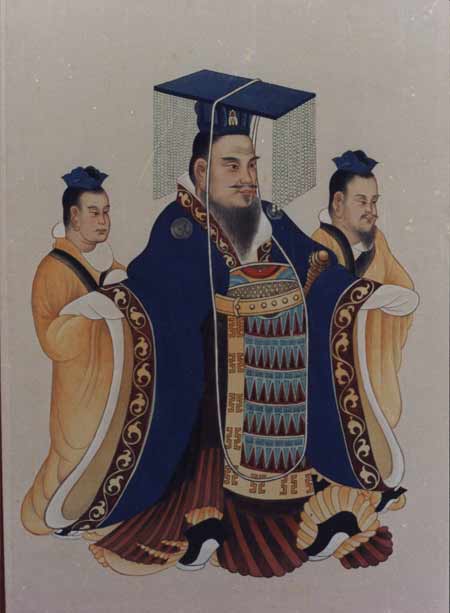
Emperor Wu of Han
Emperor · Ancient
76.8Total
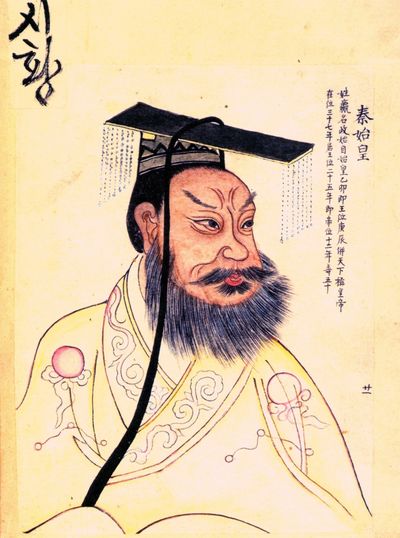
Qin Shi Huang
Emperor · Ancient
83.5Total
Basic Information
Born
-156
-259
Died
-87
-210
Era
Ancient
Ancient
Nationality
China
China
Occupation
Emperor
Emperor
Civilization
Eastern
Eastern
Score Comparison
Military (10%)
82.0
80.0
Political (20%)
69.8
88.0
Influence (20%)
77.3
82.0
Legacy (20%)
88.2
85.0
Leadership (15%)
81.6
88.0
Strategy (15%)
62.2
75.0
TOTAL
76.8
83.5
Rankings
🥇
Qin Shi HuangLeader
Mil: 80.0Pol: 88.0Inf: 82.0
83.5
🥈
Emperor Wu of Han
Mil: 82.0Pol: 69.8Inf: 77.3
76.8
+6.7 behind
How This Comparison Works
Algorithm
Each figure is scored on 6 dimensions (0—100 scale) based on structured historical data: Military (10%), Political (20%), Influence (20%), Legacy (20%), Leadership (15%), Strategy (15%). The weighted total produces the final ranking.
Data Sources
Scores are computed from structured sub-indicators in the database. Scale factors adjust for era (Ancient ×0.85, Modern ×1.0) and civilization size (Eastern ×1.05, Other ×0.80) to account for differences in population and military scale.
Maximum 3 Figures
Comparisons are limited to 2—3 figures to ensure readability and statistical meaningfulness.
Error Margins
±5 points per dimension — Sub-scores are derived from historical records with inherent uncertainty. Two figures within 5 points on a dimension should be considered roughly equivalent in that area.
Total Score Accuracy
±3 points overall — The weighted combination of 6 dimensions produces a total score with approximately ±3 points of uncertainty. Differences of less than 3 points are not statistically significant— the figures are effectively tied.
Known Limitations
- Historical records are incomplete and uneven across civilizations
- Figures from oral-tradition societies may be underrepresented
- Occupation labels can misclassify multi-role figures
- Scores measure capability and impact, not moral character
- Quantitative scoring is a comparison tool, not absolute truth
Capability Radar
Military (10%) — Battles & Warfare
Battles
85
85
Win Rate
80
90
Expansion
90
90
Political (20%) — Governance & Reform
Reform
80
95
Diplomacy
85
75
Economy
75
90
Influence (20%) — Cultural & Global Reach
Cultural
90
95
Global
85
85
Legacy (20%) — Historical Impact
Historical
95
95
Longevity
95
95
Leadership (15%) — Power & Stability
Tenure
85
70
Stability
70
65
Strategy (15%) — Tactics & Innovation
Strategy
85
85
Tactics
75
80
Reform
70
95
Analysis will be generated on first visit.
Scores and timeline are available below. The page will refresh automatically when ready.
Emperor Wu of Han — Complete Timeline
138 BC
Establishment of the Silk RoadPolitical Action
Emperor Wu dispatched Zhang Qian on a diplomatic mission to the Western Regions, initiating direct contact between China and Central Asian states. This led to the establishment of the Silk Road trade network, facilitating cultural and economic exchange.
Silk RoadDiplomacyTrade
Impact: globalconstructive
136 BC
Promotion of Confucianism as State DoctrineCultural
Emperor Wu established the Imperial Academy and made Confucian texts the basis for civil service examinations. This elevated Confucianism to the official state ideology, shaping Chinese governance and education for two millennia.
ConfucianismEducationBureaucracy
Impact: globalconstructive
133 BC
Campaigns against the XiongnuWar◆ Major
Emperor Wu launched a series of large-scale military campaigns against the Xiongnu confederation, pushing them north of the Gobi Desert. These wars secured the Hexi Corridor and opened the way for trade with Central Asia.
XiongnuExpansionSilk Road
Impact: regional
117 BC
Salt and Iron MonopoliesReform◆ Major
Emperor Wu nationalized the salt and iron industries, placing them under state control to generate revenue for his military campaigns. This policy increased central government power and became a model for later dynasties.
Economic ReformMonopolyRevenue
Impact: national
111 BC
Annexation of the Nanyue KingdomWar◆ Major
Emperor Wu's forces conquered the Nanyue kingdom in modern-day southern China and northern Vietnam. This expanded Han territory to the South China Sea and incorporated the region into the empire.
ExpansionNanyueVietnam
Impact: regional
Qin Shi Huang — Complete Timeline
246 BC
Construction of the Mausoleum and Terracotta ArmyOther◆ Major
Qin Shi Huang commissioned a vast mausoleum complex near Xi'an, guarded by thousands of life-sized terracotta soldiers, horses, and chariots. The project employed hundreds of thousands of workers and reflected his obsession with immortality and imperial power.
Impact: global
230 BC
Conquest of the Six Warring StatesWar
From 230 to 221 BCE, Ying Zheng led the Qin state in a series of campaigns that conquered the Han, Zhao, Wei, Chu, Yan, and Qi states. This unified China under a single ruler for the first time, ending the Warring States period.
Impact: global
221 BC
Standardization of Writing, Currency, and MeasurementsReform◆ Major
Qin Shi Huang ordered the standardization of Chinese script, currency, and weights and measures across the unified empire. This facilitated administration, trade, and cultural integration, laying a foundation for future dynasties.
Impact: globalconstructive
Proclamation of the Qin DynastyPolitical Action
After conquering the last independent state, Ying Zheng declared himself Shi Huangdi (First Emperor), founding the Qin Dynasty. He adopted a new title to signify his supreme authority and initiated centralized imperial rule.
Impact: global
214 BC
Initiation of the Great Wall ConstructionOther◆ Major
Qin Shi Huang ordered the connection and extension of existing northern fortifications to create a unified defensive wall against nomadic Xiongnu raids. This project involved massive conscripted labor and became the precursor to the later Great Wall.
Impact: regional
213 BC
Burning of Books and Burying of ScholarsPolitical Action◆ Major
On the advice of Li Si, Qin Shi Huang ordered the burning of historical records and philosophical texts not aligned with Legalist doctrine. He also had 460 Confucian scholars buried alive to suppress dissent and consolidate ideological control.
Impact: nationaldestructive
Similar Comparisons
Comments & Discussion
CURSED LEGACY6/17/2026
Rotting fish in the imperial carriage? Qin Shi Huang’s death was a farce straight out of a black comedy. He spent decades chasing immortality, swallowing mercury pills, and building a terracotta army for the afterlife—then stank up his own funeral procession. Emperor Wu was no saint either, with his witch hunts and paranoid purges, but at least he didn’t leave his empire to decay before the body was cold. One man built a monument to his own ego; the other built a dynasty. You pick which one actu
铁血算盘6/17/2026
数据不说谎。汉武帝在位54年,户籍人口从约3600万飙升到约6000万,文景之治攒的金库被他打匈奴打空了,但换来了河西走廊和丝绸之路。秦始皇呢?统一时算2000万人口,灭六国加修长城,死时全国人口砍到1200万。效率是高了,但拉满的生产力全砸在陵墓和阿房宫上。两位都是暴君,但一位在投资未来,一位在给冥界搞装修。账本不会骗人。
CLASSICAL SOUL6/17/2026
Qin Shi Huang unified the script and weights and measures—every schoolchild knows that. But Emperor Wu of Han institutionalized Confucianism, turning scholars from advisors into bureaucrats and giving the entire empire a shared moral language. The First Emperor burned books to silence debate; the Martial Emperor burned incense to guide it. One gave China the tools, the other gave China the purpose. Without Wu’s temple-school system, the Han dynasty would have been just another Qin—brilliant, bri
吃瓜专业户6/17/2026
说穿了,秦始皇是个创业失败者,汉武帝是个成功卷王。秦朝二世而亡,核心是那套法家机器太猛了,把老百姓当消耗品用,结果陈胜吴广两个农民一掀桌子,帝国直接崩盘。汉武帝呢?同样搞严刑峻法,但他知道给甜头——推恩令让诸侯王内斗,盐铁专营搞垄断赚钱,还能给底层一点上升通道。说白了,秦朝只懂榨取,汉朝学会分配。治理国家不是比谁拳头硬,是比谁盘子稳。
FORGOTTEN WOMAN6/17/2026
史上从来不缺“大帝”,但谁提过汉武帝的陈皇后?金屋藏娇演成废后悲剧,卫子夫生下太子照样被逼自尽。秦始皇终其一生没立皇后,对女人冷若冰霜。两位帝王在征服疆域上各有千秋,但女性在他们的世界里只是政治工具和文化符号。我不管谁统一了文字还是谁打了匈奴,就凭这一点,这两位谁都不配叫“伟人”。