Loading...
Analysis will be generated on first visit.
Scores and timeline are available below. The page will refresh automatically when ready.
Dong Yun vs Julius Caesar
Julius Caesar leads by 24.8 pts · 2 figures compared
…

Dong Yun
Politician · Ancient
58.5Total
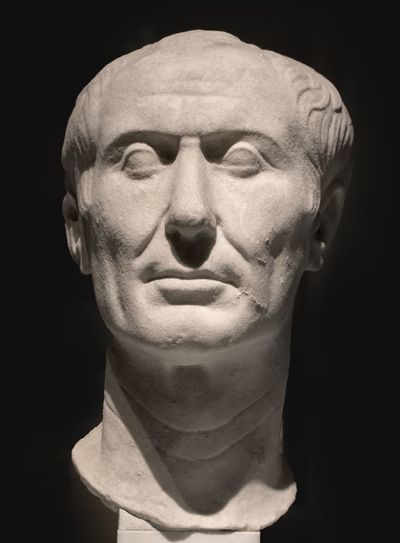
Julius Caesar
General · Ancient
83.3Total
Basic Information
Born
193
-100
Died
246
-44
Era
Ancient
Ancient
Nationality
China
Roman Republic
Occupation
Politician
General
Civilization
Eastern
Western
Score Comparison
Military (10%)
30.2
88.0
Political (20%)
62.7
78.0
Influence (20%)
72.5
85.0
Legacy (20%)
58.4
82.0
Leadership (15%)
72.0
82.0
Strategy (15%)
39.8
88.0
TOTAL
58.5
83.3
Rankings
🥇
Julius CaesarLeader
Mil: 88.0Pol: 78.0Inf: 85.0
83.3
🥈
Dong Yun
Mil: 30.2Pol: 62.7Inf: 72.5
58.5
+24.8 behind
How This Comparison Works
Algorithm
Each figure is scored on 6 dimensions (0—100 scale) based on structured historical data: Military (10%), Political (20%), Influence (20%), Legacy (20%), Leadership (15%), Strategy (15%). The weighted total produces the final ranking.
Data Sources
Scores are computed from structured sub-indicators in the database. Scale factors adjust for era (Ancient ×0.85, Modern ×1.0) and civilization size (Eastern ×1.05, Other ×0.80) to account for differences in population and military scale.
Maximum 3 Figures
Comparisons are limited to 2—3 figures to ensure readability and statistical meaningfulness.
Error Margins
±5 points per dimension — Sub-scores are derived from historical records with inherent uncertainty. Two figures within 5 points on a dimension should be considered roughly equivalent in that area.
Total Score Accuracy
±3 points overall — The weighted combination of 6 dimensions produces a total score with approximately ±3 points of uncertainty. Differences of less than 3 points are not statistically significant— the figures are effectively tied.
Known Limitations
- Historical records are incomplete and uneven across civilizations
- Figures from oral-tradition societies may be underrepresented
- Occupation labels can misclassify multi-role figures
- Scores measure capability and impact, not moral character
- Quantitative scoring is a comparison tool, not absolute truth
Capability Radar
Military (10%) — Battles & Warfare
Battles
19
95
Win Rate
25
92
Expansion
26
97
Political (20%) — Governance & Reform
Reform
30
90
Diplomacy
35
85
Economy
30
82
Influence (20%) — Cultural & Global Reach
Cultural
20
88
Global
10
94
Legacy (20%) — Historical Impact
Historical
25
95
Longevity
20
96
Leadership (15%) — Power & Stability
Tenure
40
75
Stability
50
60
Strategy (15%) — Tactics & Innovation
Strategy
33
94
Tactics
33
96
Reform
36
88
Analysis will be generated on first visit.
Scores and timeline are available below. The page will refresh automatically when ready.
Dong Yun — Complete Timeline
220 AD
Service as Palace AttendantPolitical Action
Dong Yun served as a Palace Attendant under Liu Bei and later under Liu Shan. He was known for his strict adherence to protocol and his role in maintaining order at court.
Shu-HanCourt OfficialGovernment
Impact: nationalconstructive
234 AD
Appointment as General of the HouseholdPolitical Action
After Zhuge Liang's death, Dong Yun was appointed General of the Household, responsible for the emperor's security and court discipline. He continued to enforce order and prevent factional strife.
Shu-HanAppointmentCourt Discipline
Impact: nationalconstructive
Similar Comparisons
Comments & Discussion
RubiconWitness6/17/2026
This comparison misses the forest for the trees. Caesar wasn't just "crossing a river"—he was shattering 500 years of republican precedent in one afternoon. Dong Yun's virtue-signaling in the Shu Han court is a footnote in regional history. Caesar's act reshaped Western governance for millennia: emperors, dictators, and even Napoleon modeled themselves on his gambit. You can't equate a palace bureaucrat with a world-historical figure who literally changed how power works. Dong Yun held doors; Ca
运河哨兵6/17/2026
拿董允跟凯撒比,简直是拿茶杯比江河。凯撒的每一步都踩在历史的命脉上——高卢战争杀了一百万人,跨过卢比孔河直接引爆罗马内战,他的《高卢战记》至今还是拉丁语教材。董允呢?他在蜀汉朝廷里拦着刘禅别玩太多,确实够忠心,但说难听点,就是个高级保姆。凯撒改变了世界地图,董允连自己国家的灭亡都没拦住。不是一个量级。
DataDecimator6/17/2026
Statistically, we're comparing a man who governed 50+ million people across three continents with a mid-level official in a rump state of 3 million. Caesar's actions affected the tax systems, legal codes, and military structures of Europe for two thousand years. Dong Yun's historical footprint? He appears in about four paragraphs of the Records of the Three Kingdoms. The comparison is lopsided by any metric—population, territorial impact, duration of influence. It's like comparing a supernova to
史学侦探6/17/2026
问题不在谁更伟大,而在比较框架太松散。凯撒和董允有个共同点:都面对系统崩塌前的抉择。凯撒选激烈变革,董允选维稳守成。但别忘了,董允死后十年姜维北伐就崩盘了,而凯撒死后屋大维建立了稳定的元首制——一个创造了秩序,一个没守住。历史评价不是拼道德,是拼结果。董允是好人,凯撒是塑造者。
ClassicistEye6/17/2026
You're ignoring a fundamental philosophical chasm. Caesar embodied the Greco-Roman ideal of *magnitudo animi*—greatness of soul that justifies bending rules for glory. Dong Yun represents the Confucian *junzi*—the exemplary person who upholds ritual propriety above personal ambition. They're both "servants of state," but their value systems are nearly opposites. Caesar would've found Dong Yun's caution contemptible; Dong Yun would've seen Caesar as dangerous. The comparison is only interesting i