Loading...
Analysis will be generated on first visit.
Scores and timeline are available below. The page will refresh automatically when ready.
Bishop Makarios III vs Napoleon Bonaparte
Napoleon Bonaparte leads by 18.2 pts · 2 figures compared
…
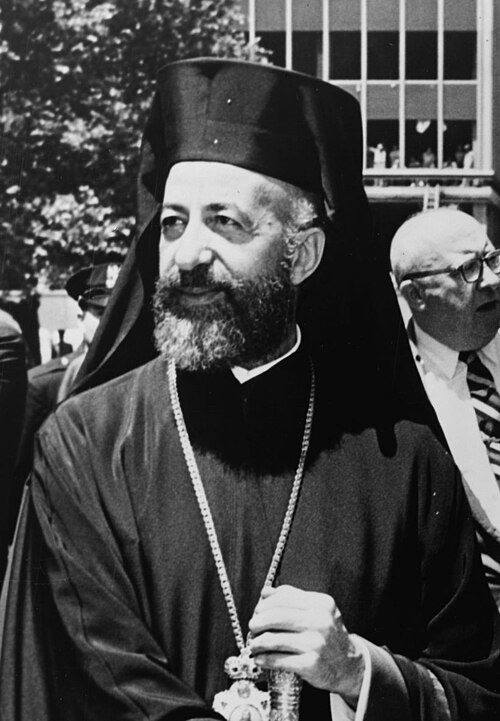
Bishop Makarios III
Politician · Modern
64.2Total
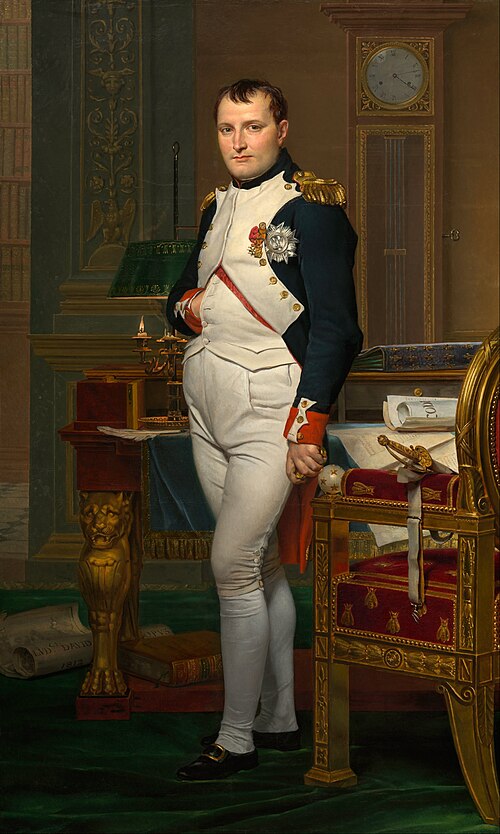
Napoleon Bonaparte
General · Modern
82.4Total
Basic Information
Born
1913
1769
Died
1977
1821
Era
Modern
Modern
Nationality
Cyprus
France
Occupation
Politician
General
Civilization
Western
Western
Score Comparison
Military (10%)
37.5
94.0
Political (20%)
72.5
75.0
Influence (20%)
78.0
82.0
Legacy (20%)
66.4
78.0
Leadership (15%)
78.3
80.0
Strategy (15%)
35.3
93.0
TOTAL
64.2
82.4
Rankings
🥇
Napoleon BonaparteLeader
Mil: 94.0Pol: 75.0Inf: 82.0
82.4
🥈
Bishop Makarios III
Mil: 37.5Pol: 72.5Inf: 78.0
64.2
+18.2 behind
How This Comparison Works
Algorithm
Each figure is scored on 6 dimensions (0—100 scale) based on structured historical data: Military (10%), Political (20%), Influence (20%), Legacy (20%), Leadership (15%), Strategy (15%). The weighted total produces the final ranking.
Data Sources
Scores are computed from structured sub-indicators in the database. Scale factors adjust for era (Ancient ×0.85, Modern ×1.0) and civilization size (Eastern ×1.05, Other ×0.80) to account for differences in population and military scale.
Maximum 3 Figures
Comparisons are limited to 2—3 figures to ensure readability and statistical meaningfulness.
Error Margins
±5 points per dimension — Sub-scores are derived from historical records with inherent uncertainty. Two figures within 5 points on a dimension should be considered roughly equivalent in that area.
Total Score Accuracy
±3 points overall — The weighted combination of 6 dimensions produces a total score with approximately ±3 points of uncertainty. Differences of less than 3 points are not statistically significant— the figures are effectively tied.
Known Limitations
- Historical records are incomplete and uneven across civilizations
- Figures from oral-tradition societies may be underrepresented
- Occupation labels can misclassify multi-role figures
- Scores measure capability and impact, not moral character
- Quantitative scoring is a comparison tool, not absolute truth
Capability Radar
Military (10%) — Battles & Warfare
Battles
28
95
Win Rate
34
90
Expansion
37
95
Political (20%) — Governance & Reform
Reform
55
95
Diplomacy
70
80
Economy
50
85
Influence (20%) — Cultural & Global Reach
Cultural
60
85
Global
55
90
Legacy (20%) — Historical Impact
Historical
65
95
Longevity
55
90
Leadership (15%) — Power & Stability
Tenure
65
85
Stability
45
70
Strategy (15%) — Tactics & Innovation
Strategy
36
95
Tactics
44
98
Reform
45
92
Analysis will be generated on first visit.
Scores and timeline are available below. The page will refresh automatically when ready.
Bishop Makarios III — Complete Timeline
1950 AD
Elected Archbishop of CyprusPolitical Action◆ Major
Makarios III was elected Archbishop of Cyprus, becoming the ethnarch of the Greek Cypriot community. His religious authority combined with political leadership made him the central figure in the movement for enosis (union with Greece).
Religious LeadershipEnosisCyprus
Impact: nationalconstructive
1956 AD
Exiled by British authoritiesPolitical Action◆ Major
Makarios was exiled by British colonial authorities to the Seychelles for his alleged support of EOKA, a Greek Cypriot guerrilla group fighting for enosis. His exile lasted one year and galvanized international support for Cypriot independence.
ExileColonialismEOKA
Impact: nationaltragic
1959 AD
Signed London-Zurich AgreementsPolitical Action
Makarios signed the London-Zurich Agreements, which established the independence of Cyprus from British rule. The agreements created a power-sharing constitution between Greek and Turkish Cypriots, but tensions remained.
IndependenceTreatyCyprus
Impact: nationalconstructive
1960 AD
Elected first President of CyprusPolitical Action
Makarios was elected as the first President of the Republic of Cyprus, leading the newly independent state. His presidency aimed to maintain unity between Greek and Turkish Cypriots, but intercommunal violence erupted in 1963.
PresidencyIndependenceCyprus
Impact: nationalconstructive
1970 AD
Survived assassination attemptPolitical Action◆ Major
Makarios survived an assassination attempt when his helicopter was fired upon by Greek Cypriot extremists opposed to his policies. The attack highlighted divisions within the Greek Cypriot community over the direction of the republic.
Assassination AttemptPolitical ViolenceCyprus
Impact: nationaltragic
1974 AD
Overthrown by Greek junta-backed coupPolitical Action
Makarios was overthrown in a coup d'
CoupTurkish InvasionPartition
Impact: globaltragic
Returned to Cyprus as PresidentPolitical Action◆ Major
Makarios returned to Cyprus after the Turkish invasion and resumed his presidency, but he governed only the Greek Cypriot south. He spent his remaining years seeking a negotiated settlement to the Cyprus problem, but died in 1977 without achieving reunification.
ReturnPost-InvasionCyprus Problem
Impact: nationaltragic
Similar Comparisons
Comments & Discussion
No comments yet. Be the first to share your thoughts!