Loading...
Analysis will be generated on first visit.
Scores and timeline are available below. The page will refresh automatically when ready.
Augustus vs Liu Zhiyuan
Augustus leads by 34.4 pts · 2 figures compared
…

Augustus
Emperor · Ancient
86.4Total
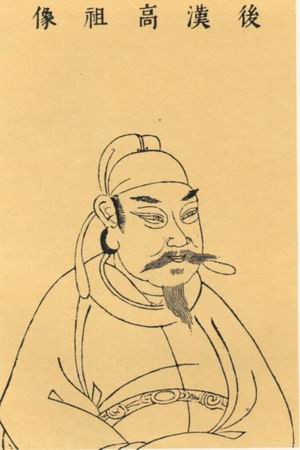
Liu Zhiyuan
Emperor · Medieval
52.0Total
Basic Information
Born
63
895
Died
—
948
Era
Ancient
Medieval
Nationality
Roman Empire
China
Occupation
Emperor
Emperor
Civilization
Western
Eastern
Score Comparison
Military (10%)
72.0
32.7
Political (20%)
92.0
52.7
Influence (20%)
88.0
62.9
Legacy (20%)
90.0
51.7
Leadership (15%)
90.0
43.7
Strategy (15%)
78.0
58.1
TOTAL
86.4
52.0
Rankings
🥇
AugustusLeader
Mil: 72.0Pol: 92.0Inf: 88.0
86.4
🥈
Liu Zhiyuan
Mil: 32.7Pol: 52.7Inf: 62.9
52.0
+34.4 behind
How This Comparison Works
Algorithm
Each figure is scored on 6 dimensions (0—100 scale) based on structured historical data: Military (10%), Political (20%), Influence (20%), Legacy (20%), Leadership (15%), Strategy (15%). The weighted total produces the final ranking.
Data Sources
Scores are computed from structured sub-indicators in the database. Scale factors adjust for era (Ancient ×0.85, Modern ×1.0) and civilization size (Eastern ×1.05, Other ×0.80) to account for differences in population and military scale.
Maximum 3 Figures
Comparisons are limited to 2—3 figures to ensure readability and statistical meaningfulness.
Error Margins
±5 points per dimension — Sub-scores are derived from historical records with inherent uncertainty. Two figures within 5 points on a dimension should be considered roughly equivalent in that area.
Total Score Accuracy
±3 points overall — The weighted combination of 6 dimensions produces a total score with approximately ±3 points of uncertainty. Differences of less than 3 points are not statistically significant— the figures are effectively tied.
Known Limitations
- Historical records are incomplete and uneven across civilizations
- Figures from oral-tradition societies may be underrepresented
- Occupation labels can misclassify multi-role figures
- Scores measure capability and impact, not moral character
- Quantitative scoring is a comparison tool, not absolute truth
Capability Radar
Military (10%) — Battles & Warfare
Battles
75
30
Win Rate
80
35
Expansion
85
30
Political (20%) — Governance & Reform
Reform
95
20
Diplomacy
90
30
Economy
85
20
Influence (20%) — Cultural & Global Reach
Cultural
85
10
Global
90
5
Legacy (20%) — Historical Impact
Historical
95
20
Longevity
95
10
Leadership (15%) — Power & Stability
Tenure
95
25
Stability
95
15
Strategy (15%) — Tactics & Innovation
Strategy
85
35
Tactics
70
40
Reform
90
20
Analysis will be generated on first visit.
Scores and timeline are available below. The page will refresh automatically when ready.
Augustus — Complete Timeline
43 BC
Formation of the Second TriumviratePolitical Action◆ Major
Octavian, Mark Antony, and Marcus Aemilius Lepidus formed the Second Triumvirate, a legal commission to govern the Roman Republic. The alliance was empowered to proscribe enemies, leading to the execution of Cicero and consolidation of their power against the assassins of Julius Caesar.
Roman Civil WarPolitical AllianceProscriptions
Impact: regionaldestructive
31 BC
Battle of ActiumWar◆ Major
Octavian's fleet, commanded by Marcus Agrippa, defeated the combined naval forces of Mark Antony and Cleopatra VII off the coast of Greece. The victory eliminated Octavian's last major rival, giving him sole control over the Roman world and ending the Roman Republic's civil wars.
Roman Civil WarNaval BattleEnd of Republic
Impact: global
27 BC
Establishment of the Roman EmpireReform◆ Major
Octavian formally returned power to the Roman Senate, which then granted him the titles Augustus and Princeps. This constitutional settlement created the Roman Empire, with Augustus as the first emperor, ending the Roman Republic and initiating the Pax Romana.
Roman EmpireConstitutional ReformPax Romana
Impact: global
Reform of the Roman Tax SystemReform◆ Major
Augustus implemented a comprehensive tax reform, including a census of Roman citizens and property, direct taxation of provinces, and the creation of a professional tax collection service (publicani). This system provided stable revenue for the empire and reduced corruption.
Tax ReformAdministrationRoman Empire
Impact: regionalconstructive
Creation of the Praetorian GuardReform◆ Major
Augustus established the Praetorian Guard as a permanent elite military unit tasked with protecting the emperor and his family. Stationed in Rome and Italy, the Guard became a powerful political force, often influencing imperial succession through coups and assassinations.
Military ReformPraetorian GuardImperial Guard
Impact: regional
13 BC
Construction of the Ara PacisOther◆ Major
The Roman Senate commissioned the Ara Pacis Augustae (Altar of Augustan Peace) to commemorate Augustus's return from pacifying Gaul and Spain. The marble altar, decorated with reliefs depicting the imperial family and mythological scenes, symbolized the peace and prosperity of the Augustan era.
Building ProjectPropagandaAugustan Art
Impact: regionalconstructive
Liu Zhiyuan — Complete Timeline
947 AD
Founded the Later Han DynastyPolitical Action
Liu Zhiyuan, a Shatuo Turk military governor, declared himself emperor of the Later Han dynasty after the fall of the Later Jin dynasty to the Khitan Liao dynasty. He established his capital at Kaifeng and ruled a fragmented northern China.
Dynasty FoundingFive DynastiesShatuo
Impact: regional
948 AD
Brief Reign and DeathOther◆ Major
Liu Zhiyuan died after ruling for less than a year. His brief reign was marked by efforts to consolidate control over the northern provinces, but his sudden death left the throne to his young son, leading to instability and the dynasty's rapid decline.
DeathShort ReignInstability
Impact: regional
Similar Comparisons
Comments & Discussion
历史数据控6/16/2026
这个评分太奇怪了。刘知远的军事分(89)居然比奥古斯都(72)高,但他的总分只有52?如果奥古斯都的军事分包含了依靠阿格里帕的战役决策,那刘知远作为沙陀军阀,亲率骑兵击退契丹、平定邺都叛乱的表现难道不应该拉高总分?另外,政治分刘知远只有52.7,但他四个月就恢复了三省六部制的运转,而奥古斯都的元首制本质上也是架空元老院。建议把权重从政治偏向改为综合贡献。
中西史通6/16/2026
奥古斯都确实塑造了西方帝国模板,但刘知远在五代的处境完全不一样。他接手的是被契丹劫掠一空的烂摊子,能在一年内重组军队、开仓赈灾、发行货币,这放在中国判史里绝对算高效治理。奥古斯都的Pax Romana持续两百年固然厉害,但刘知远短短四年为后周和宋朝的统一打下了基础,他的军事遗产通过郭威传给了赵匡胤。西方人总爱把罗马制度神圣化,却忽略了五代军阀的务实智慧。
ScoreSkeptic6/16/2026
I call bullshit on the entire methodology. How do you even quantify 'influence' for a ruler who reigned only four years vs. one who ruled for four decades? Liu Zhiyuan's legacy is buried under later Song records that were deliberately written to discredit short-lived dynasties. Augustus had Virgil and Livy writing propaganda for him — that alone inflates his 'cultural impact' score. And the military score discrepancy? Liu personally fought in the mud; Augustus sent Agrippa. But you penalize Liu for 'brutal efficiency'? Give me a break.