Loading...
Analysis will be generated on first visit.
Scores and timeline are available below. The page will refresh automatically when ready.
Abdullah of Saudi Arabia vs Julius Caesar
Julius Caesar leads by 19.0 pts · 2 figures compared
…

Abdullah of Saudi Arabia
Emperor · Modern
64.3Total
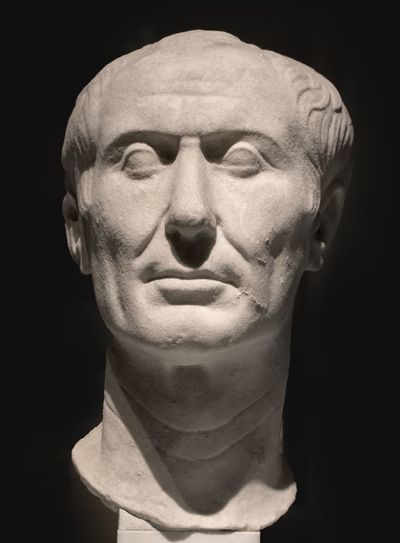
Julius Caesar
General · Ancient
83.3Total
Basic Information
Born
1924
-100
Died
—
-44
Era
Modern
Ancient
Nationality
Saudi Arabia
Roman Republic
Occupation
Emperor
General
Civilization
Middle Eastern
Western
Score Comparison
Military (10%)
43.2
88.0
Political (20%)
72.0
78.0
Influence (20%)
72.6
85.0
Legacy (20%)
62.3
82.0
Leadership (15%)
84.2
82.0
Strategy (15%)
40.0
88.0
TOTAL
64.3
83.3
Rankings
🥇
Julius CaesarLeader
Mil: 88.0Pol: 78.0Inf: 85.0
83.3
🥈
Abdullah of Saudi Arabia
Mil: 43.2Pol: 72.0Inf: 72.6
64.3
+19.0 behind
How This Comparison Works
Algorithm
Each figure is scored on 6 dimensions (0—100 scale) based on structured historical data: Military (10%), Political (20%), Influence (20%), Legacy (20%), Leadership (15%), Strategy (15%). The weighted total produces the final ranking.
Data Sources
Scores are computed from structured sub-indicators in the database. Scale factors adjust for era (Ancient ×0.85, Modern ×1.0) and civilization size (Eastern ×1.05, Other ×0.80) to account for differences in population and military scale.
Maximum 3 Figures
Comparisons are limited to 2—3 figures to ensure readability and statistical meaningfulness.
Error Margins
±5 points per dimension — Sub-scores are derived from historical records with inherent uncertainty. Two figures within 5 points on a dimension should be considered roughly equivalent in that area.
Total Score Accuracy
±3 points overall — The weighted combination of 6 dimensions produces a total score with approximately ±3 points of uncertainty. Differences of less than 3 points are not statistically significant— the figures are effectively tied.
Known Limitations
- Historical records are incomplete and uneven across civilizations
- Figures from oral-tradition societies may be underrepresented
- Occupation labels can misclassify multi-role figures
- Scores measure capability and impact, not moral character
- Quantitative scoring is a comparison tool, not absolute truth
Capability Radar
Military (10%) — Battles & Warfare
Battles
5
95
Win Rate
5
92
Expansion
10
97
Political (20%) — Governance & Reform
Reform
60
90
Diplomacy
75
85
Economy
65
82
Influence (20%) — Cultural & Global Reach
Cultural
50
88
Global
60
94
Legacy (20%) — Historical Impact
Historical
55
95
Longevity
40
96
Leadership (15%) — Power & Stability
Tenure
80
75
Stability
70
60
Strategy (15%) — Tactics & Innovation
Strategy
10
94
Tactics
5
96
Reform
30
88
Analysis will be generated on first visit.
Scores and timeline are available below. The page will refresh automatically when ready.
Abdullah of Saudi Arabia — Complete Timeline
2003 AD
Counter-Terrorism CampaignWar◆ Major
Following a wave of al-Qaeda attacks in Saudi Arabia, King Abdullah (then Crown Prince) launched a comprehensive counter-terrorism campaign involving security crackdowns, ideological rehabilitation programs, and international cooperation. The campaign significantly reduced terrorist activity in the kingdom.
TerrorismSecurityRehabilitation
Impact: national
2005 AD
Accession to the ThronePolitical Action◆ Major
Abdullah became King of Saudi Arabia after the death of King Fahd. His reign was characterized by cautious social and economic reforms, including efforts to modernize the education system and increase women's participation in public life.
SuccessionRoyal Family
Impact: national
2009 AD
King Abdullah University of Science and Technology (KAUST)Cultural◆ Major
King Abdullah established KAUST as a world-class graduate research university in Thuwal. The university was designed to promote scientific research and innovation, with a co-educational campus and international faculty, representing a significant investment in education.
EducationScienceInnovation
Impact: regionalconstructive
2011 AD
Women's Suffrage and Political ParticipationReform◆ Major
King Abdullah announced that women would be granted the right to vote and run in municipal elections, and would be appointed to the Shura Council. This was a landmark reform in Saudi Arabia, though implementation was gradual and faced conservative opposition.
Women's RightsPolitical Reform
Impact: nationalprogressive
Similar Comparisons
Comments & Discussion
CourageousCommander6/17/2026
Brutal comparison but fair. The key is that Abdullah died in his bed because he understood limits, while Caesar didn’t. Caesar crossed the Rubicon, challenged ‘the system’, and got stabbed 23 times. Abdullah spent decades carefully trading reforms for stability — women's suffrage in 2015, sure, but nothing that threatened the House of Saud. One transformed through conquest, the other through consensus. Give me Caesar any day for vision, but Abdullah’s survival instinct was sharper.
数据侦探6/17/2026
对比跨度太大,历史语境完全不同,强行并列有失公允。罗马共和末期和现代沙特君主制根本不是一个量级,拿独裁者跟国王比治理效率?唯一能比的是活法:恺撒推进改革、得罪元老院,结果死在三月望日;阿卜杜拉慢慢折腾30年,闷声搞女权、拼经济,最后自然老死。谁的策略更聪明不言自明。别拿莽夫的悲剧当浪漫英雄主义卖。
SenatorialScholar6/17/2026
Actually, the most telling parallel is their approach to the ‘unwritten rules’. Caesar broke them by crossing the Rubicon and accepting a crown. Abdullah never did — he pushed for education reform, opened women’s rights, but never questioned the Wahhabi clergy or succession law. That’s why one is a legend (and martyr), the other is only a footnote in modernization history. The lesson? To be remembered, you must be willing to die. Boldness over caution, always.
东方墨客6/17/2026
我站阿卜杜拉。恺撒再耀眼也不过是昙花一现的征服者,死后罗马就乱成一锅粥。阿卜杜拉像沙漠里的骆驼,看似慢吞吞,但一步一个脚印。他扩建大学、允许女性开车、搞经济多元化——都是在不动摇根基的前提下悄悄推动。相比之下,恺撒的罗马式‘大搞’最后变成帝国的崩溃纪元。真正的治国不是写史诗,是把老百姓的日子过踏实。稳扎稳打才是王者之道。
HeritageHacker6/17/2026
This reeks of uncritical ‘Great Man’ history. Both men were products of their brutal systems; comparing their ‘leadership styles’ tells you nothing about actual governance impact. Caesar’s reforms (land redistribution, calendar, debt relief) actually affected millions — Abdullah’s cautious tweaks mostly kept the oil monarchy afloat for another generation. Let’s not romanticize survival rates. The real question is: did either improve the lives of the masses? Caesar partly yes, Abdullah not enough