Loading...
Analysis will be generated on first visit.
Scores and timeline are available below. The page will refresh automatically when ready.
Napoleon Bonaparte vs Rawhi Fattouh
Napoleon Bonaparte leads by 35.4 pts · 2 figures compared
…
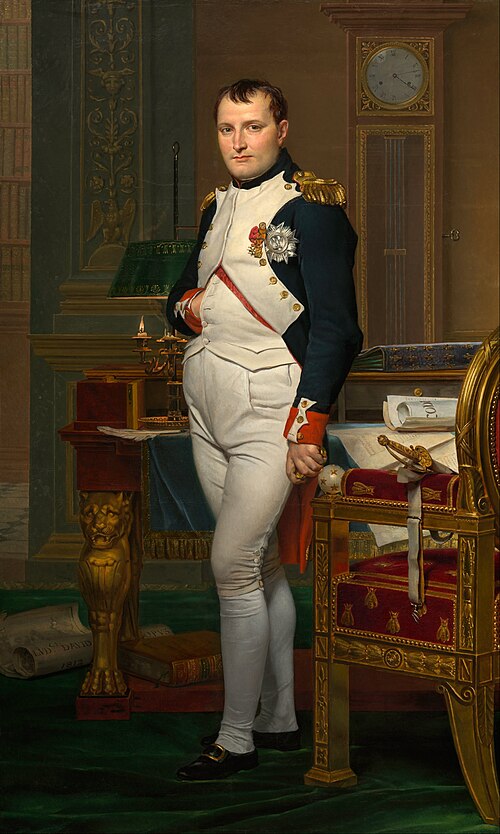
Napoleon Bonaparte
General · Modern
82.4Total

Rawhi Fattouh
Politician · Modern
47.0Total
Basic Information
Born
1769
1949
Died
1821
—
Era
Modern
Modern
Nationality
France
Palestine
Occupation
General
Politician
Civilization
Western
Middle Eastern
Score Comparison
Military (10%)
94.0
30.2
Political (20%)
75.0
42.7
Influence (20%)
82.0
59.8
Legacy (20%)
78.0
45.6
Leadership (15%)
80.0
39.2
Strategy (15%)
93.0
56.4
TOTAL
82.4
47.0
Rankings
🥇
Napoleon BonaparteLeader
Mil: 94.0Pol: 75.0Inf: 82.0
82.4
🥈
Rawhi Fattouh
Mil: 30.2Pol: 42.7Inf: 59.8
47.0
+35.4 behind
How This Comparison Works
Algorithm
Each figure is scored on 6 dimensions (0—100 scale) based on structured historical data: Military (10%), Political (20%), Influence (20%), Legacy (20%), Leadership (15%), Strategy (15%). The weighted total produces the final ranking.
Data Sources
Scores are computed from structured sub-indicators in the database. Scale factors adjust for era (Ancient ×0.85, Modern ×1.0) and civilization size (Eastern ×1.05, Other ×0.80) to account for differences in population and military scale.
Maximum 3 Figures
Comparisons are limited to 2—3 figures to ensure readability and statistical meaningfulness.
Error Margins
±5 points per dimension — Sub-scores are derived from historical records with inherent uncertainty. Two figures within 5 points on a dimension should be considered roughly equivalent in that area.
Total Score Accuracy
±3 points overall — The weighted combination of 6 dimensions produces a total score with approximately ±3 points of uncertainty. Differences of less than 3 points are not statistically significant— the figures are effectively tied.
Known Limitations
- Historical records are incomplete and uneven across civilizations
- Figures from oral-tradition societies may be underrepresented
- Occupation labels can misclassify multi-role figures
- Scores measure capability and impact, not moral character
- Quantitative scoring is a comparison tool, not absolute truth
Capability Radar
Military (10%) — Battles & Warfare
Battles
95
20
Win Rate
90
26
Expansion
95
30
Political (20%) — Governance & Reform
Reform
95
5
Diplomacy
80
10
Economy
85
5
Influence (20%) — Cultural & Global Reach
Cultural
85
5
Global
90
5
Legacy (20%) — Historical Impact
Historical
95
5
Longevity
90
5
Leadership (15%) — Power & Stability
Tenure
85
10
Stability
70
5
Strategy (15%) — Tactics & Innovation
Strategy
95
32
Tactics
98
33
Reform
92
36
Analysis will be generated on first visit.
Scores and timeline are available below. The page will refresh automatically when ready.
Napoleon Bonaparte — Complete Timeline
1799 AD
Coup of 18 BrumaireOther◆ Major
Napoleon Bonaparte, with support from his brother Lucien and key political figures, overthrew the Directory in a bloodless coup. He established the Consulate with himself as First Consul, effectively becoming the ruler of France. This event ended the French Revolution's most unstable period.
French RevolutionCoupRise to Power
Impact: regional
1804 AD
Promulgation of the Napoleonic CodeOther◆ Major
Napoleon enacted the Civil Code of the French, known as the Napoleonic Code, a comprehensive set of laws that replaced the fragmented feudal legal systems. The code established legal equality, protected property rights, and secularized law. It became the basis for legal systems in many European and world countries.
Legal ReformNapoleonic CodeCivil Law
Impact: globalconstructive
1805 AD
Battle of AusterlitzWar◆ Major
Napoleon's Grande Arm
Napoleonic WarsBattleDecisive Victory
Impact: global
1812 AD
Invasion of RussiaWar◆ Major
Napoleon led the Grande Arm
Napoleonic WarsInvasionDisaster
Impact: globaldestructive
1815 AD
Battle of WaterlooWar◆ Major
Napoleon's French army was defeated by the combined forces of the Duke of Wellington's Anglo-Allied army and Gebhard Leberecht von Bl
Napoleonic WarsBattleFinal Defeat
Impact: globaldestructive
Rawhi Fattouh — Complete Timeline
2004 AD
Served as Interim President of Palestinian AuthorityPolitical Action◆ Major
After Yasser Arafat's death, Fattouh served as interim President of the Palestinian Authority for 60 days. He oversaw the transition period until Mahmoud Abbas was elected in January 2005.
Interim PresidentArafat successionPalestinian Authority
Impact: national
Elected Speaker of Palestinian Legislative CouncilPolitical Action
Fattouh was elected Speaker of the Palestinian Legislative Council, a position he held until 2006. He played a role in legislative functions during a period of political transition and conflict.
SpeakerLegislative CouncilPalestinian Authority
Impact: national
Similar Comparisons
Comments & Discussion
No comments yet. Be the first to share your thoughts!