Loading...
Analysis will be generated on first visit.
Scores and timeline are available below. The page will refresh automatically when ready.
Li Xuan vs Napoleon Bonaparte
Napoleon Bonaparte leads by 33.3 pts · 2 figures compared
…
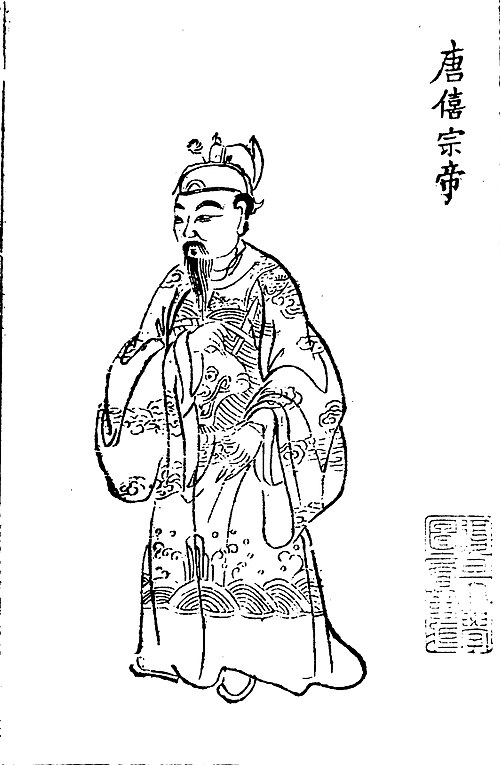
Li Xuan
Emperor · Medieval
49.1Total
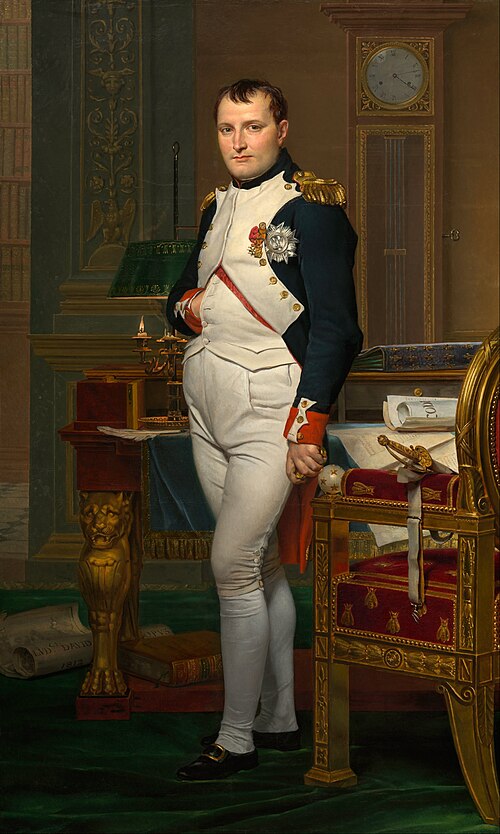
Napoleon Bonaparte
General · Modern
82.4Total
Basic Information
Born
862
1769
Died
888
1821
Era
Medieval
Modern
Nationality
China
France
Occupation
Emperor
General
Civilization
Eastern
Western
Score Comparison
Military (10%)
42.9
94.0
Political (20%)
35.3
75.0
Influence (20%)
62.9
82.0
Legacy (20%)
50.5
78.0
Leadership (15%)
33.3
80.0
Strategy (15%)
67.1
93.0
TOTAL
49.1
82.4
Rankings
🥇
Napoleon BonaparteLeader
Mil: 94.0Pol: 75.0Inf: 82.0
82.4
🥈
Li Xuan
Mil: 42.9Pol: 35.3Inf: 62.9
49.1
+33.3 behind
How This Comparison Works
Algorithm
Each figure is scored on 6 dimensions (0—100 scale) based on structured historical data: Military (10%), Political (20%), Influence (20%), Legacy (20%), Leadership (15%), Strategy (15%). The weighted total produces the final ranking.
Data Sources
Scores are computed from structured sub-indicators in the database. Scale factors adjust for era (Ancient ×0.85, Modern ×1.0) and civilization size (Eastern ×1.05, Other ×0.80) to account for differences in population and military scale.
Maximum 3 Figures
Comparisons are limited to 2—3 figures to ensure readability and statistical meaningfulness.
Error Margins
±5 points per dimension — Sub-scores are derived from historical records with inherent uncertainty. Two figures within 5 points on a dimension should be considered roughly equivalent in that area.
Total Score Accuracy
±3 points overall — The weighted combination of 6 dimensions produces a total score with approximately ±3 points of uncertainty. Differences of less than 3 points are not statistically significant— the figures are effectively tied.
Known Limitations
- Historical records are incomplete and uneven across civilizations
- Figures from oral-tradition societies may be underrepresented
- Occupation labels can misclassify multi-role figures
- Scores measure capability and impact, not moral character
- Quantitative scoring is a comparison tool, not absolute truth
Capability Radar
Military (10%) — Battles & Warfare
Battles
5
95
Win Rate
5
90
Expansion
0
95
Political (20%) — Governance & Reform
Reform
5
95
Diplomacy
5
80
Economy
5
85
Influence (20%) — Cultural & Global Reach
Cultural
10
85
Global
5
90
Legacy (20%) — Historical Impact
Historical
15
95
Longevity
10
90
Leadership (15%) — Power & Stability
Tenure
20
85
Stability
5
70
Strategy (15%) — Tactics & Innovation
Strategy
5
95
Tactics
5
98
Reform
0
92
Analysis will be generated on first visit.
Scores and timeline are available below. The page will refresh automatically when ready.
Li Xuan — Complete Timeline
880 AD
Fled Chang'an to ChengduPolitical Action
When Huang Chao's rebel army approached the Tang capital Chang'an, Li Xuan (Tang Xizong) abandoned the city and fled to Chengdu in Sichuan. This flight left the capital undefended and marked the collapse of central authority during the Huang Chao Rebellion.
FlightHuang Chao RebellionCapital Lost
Impact: nationaltragic
885 AD
Recalled to Chang'an After Huang Chao's DefeatPolitical Action◆ Major
After Huang Chao was defeated by the Shatuo Turk Li Keyong and other warlords, Li Xuan returned to Chang'an. However, the city was in ruins and the Tang court was now dependent on regional military governors, further weakening imperial power.
ReturnWarlord EraTang Decline
Impact: national
Similar Comparisons
Comments & Discussion
NICKNAME: The Ten Thousand Yea6/17/2026
"Li Xuan was a teenager running from a rebellion that had already won. Napoleon at 11 was a scholarship kid fighting for respect in a room full of nobles. The Tang emperor had every resource but zero will; the Corsican had nothing but will. Li Xuan lost his kingdom to a grain-salt smuggler (Huang Chao). Napoleon lost his to the entire continent of Europe ganging up on him. That’s not equal-opportunity failure."
天外飞将6/17/2026
“把唐僖宗跟拿破仑比?你咋不比比秦皇跟凯撒呢?一个是祖坟冒青烟躺赢了九年的娃娃,另一个是白手起家把整个欧洲揍趴下的猛人。僖宗跑成都的时候带着妃子和大臣,拿破仑从厄尔巴岛跑回巴黎的时候只有一千老兵。逃亡和复辟,天壤之别。”
Correction from Corsica6/17/2026
"You want a fair comparison? Pick Li Shimin versus Napoleon—both generals, both empire-builders. Li Xuan is the wrong Tang emperor. His grandpa Xuanzong also fled to Sichuan during the An Lushan rebellion, but Xuanzong made a comeback and kept the dynasty alive. Xuan? He just watched it disintegrate while playing polo. Napoleon lost at Waterloo; Li Xuan lost at… breathing."
数据的审判官6/17/2026
"数据不会撒谎:拿破仑打了60多场战役,只输了七八场。唐僖宗在位15年,黄巢打进长安只用了一年。拿破仑的法典还在养活着半个欧洲的律师,僖宗留下的只有藩镇割据和朱温篡唐。你说这两人能被拿来比较,除非你把‘皇帝’当成唯一的共同点,那我也能说崇祯跟拿破仑差不多——反正都败了,对不?"
The Polostick Philosopher6/17/2026
"Every time I see this meme pairing, I wince. It’s like comparing a chess master to a guy who flipped the board halfway through the game. Li Xuan was famous for his love of polo and cockfighting—while rebels marched on his capital. Napoleon would have had those rebel leaders executed, made his favorite polo player a general, and still conquered Italy before breakfast. Context matters: one was a child, the other became a titan. Let’s stop romanticizing incompetence."