Loading...
Analysis will be generated on first visit.
Scores and timeline are available below. The page will refresh automatically when ready.
Khasekhemwy vs Napoleon Bonaparte
Napoleon Bonaparte leads by 28.3 pts · 2 figures compared
…

Khasekhemwy
Emperor · Ancient
54.1Total
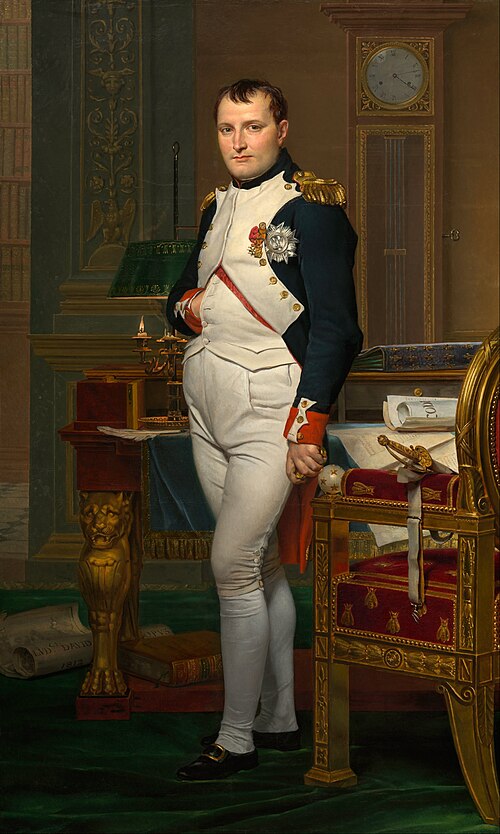
Napoleon Bonaparte
General · Modern
82.4Total
Basic Information
Born
-2730
1769
Died
-2700
1821
Era
Ancient
Modern
Nationality
Early Egypt
France
Occupation
Emperor
General
Civilization
Middle Eastern
Western
Score Comparison
Military (10%)
34.7
94.0
Political (20%)
51.2
75.0
Influence (20%)
74.2
82.0
Legacy (20%)
63.4
78.0
Leadership (15%)
45.0
80.0
Strategy (15%)
40.6
93.0
TOTAL
54.1
82.4
Rankings
🥇
Napoleon BonaparteLeader
Mil: 94.0Pol: 75.0Inf: 82.0
82.4
🥈
Khasekhemwy
Mil: 34.7Pol: 51.2Inf: 74.2
54.1
+28.3 behind
How This Comparison Works
Algorithm
Each figure is scored on 6 dimensions (0—100 scale) based on structured historical data: Military (10%), Political (20%), Influence (20%), Legacy (20%), Leadership (15%), Strategy (15%). The weighted total produces the final ranking.
Data Sources
Scores are computed from structured sub-indicators in the database. Scale factors adjust for era (Ancient ×0.85, Modern ×1.0) and civilization size (Eastern ×1.05, Other ×0.80) to account for differences in population and military scale.
Maximum 3 Figures
Comparisons are limited to 2—3 figures to ensure readability and statistical meaningfulness.
Error Margins
±5 points per dimension — Sub-scores are derived from historical records with inherent uncertainty. Two figures within 5 points on a dimension should be considered roughly equivalent in that area.
Total Score Accuracy
±3 points overall — The weighted combination of 6 dimensions produces a total score with approximately ±3 points of uncertainty. Differences of less than 3 points are not statistically significant— the figures are effectively tied.
Known Limitations
- Historical records are incomplete and uneven across civilizations
- Figures from oral-tradition societies may be underrepresented
- Occupation labels can misclassify multi-role figures
- Scores measure capability and impact, not moral character
- Quantitative scoring is a comparison tool, not absolute truth
Capability Radar
Military (10%) — Battles & Warfare
Battles
30
95
Win Rate
40
90
Expansion
40
95
Political (20%) — Governance & Reform
Reform
60
95
Diplomacy
55
80
Economy
50
85
Influence (20%) — Cultural & Global Reach
Cultural
45
85
Global
40
90
Legacy (20%) — Historical Impact
Historical
50
95
Longevity
45
90
Leadership (15%) — Power & Stability
Tenure
55
85
Stability
60
70
Strategy (15%) — Tactics & Innovation
Strategy
40
95
Tactics
35
98
Reform
45
92
Analysis will be generated on first visit.
Scores and timeline are available below. The page will refresh automatically when ready.
Khasekhemwy — Complete Timeline
2720 BC
Reunification of EgyptPolitical Action
Khasekhemwy reunited Upper and Lower Egypt after a period of division during the Second Dynasty. He is credited with ending the internal conflict that had split the country, possibly through military campaigns or political consolidation, and established a unified rule that paved the way for the Old Kingdom.
ReunificationSecond DynastyPolitical Consolidation
Impact: nationalconstructive
2715 BC
Construction of mudbrick fort at HierakonpolisOther
Khasekhemwy built a large mudbrick enclosure at Hierakonpolis, known as the 'Fort'. This structure, measuring about 67 by 57 meters, served as a ceremonial or defensive site. It is one of the earliest monumental mudbrick constructions in Egypt, reflecting the pharaoh's building program and control over resources.
ArchitectureHierakonpolisMudbrick
constructive
2700 BC
Burial in mastaba at AbydosOther
Khasekhemwy was buried in a large mudbrick mastaba tomb at Abydos (tomb V). The tomb contained stone vessels, seal impressions, and a stela. It is one of the largest and most elaborate tombs of the Second Dynasty, indicating his wealth and status.
BurialAbydosMastaba
Similar Comparisons
Comments & Discussion
Cleopatra's Echoes6/17/2026
Comparing Khasekhemwy to Napoleon is like comparing a brick pyramid to a paper crown. Sure, both unified territories, but one built a civilization that lasted 3,000 years, and the other couldn't hold power for two decades. Napoleon's alliances were marital, military, and mercenary; Khasekhemwy's were liturgical and architectural—he literally inscribed his unifying victories on stone vases. That's not just a difference in strategy—it's a difference in legacy definition. Napoleon got a museum; Kha
Pharaoh's Shadow6/17/2026
比起说拿破仑是欧洲的“统一者”,不如说他是一个骑马贴金箔的暴发户。卡塞凯姆威在战场上消灭对立者,用双神像象征上下埃及的和解,用石材记录胜利;拿破仑呢?他用法典洗脑,用勋章贿赂,用滑铁卢的泥泞收场。前者在永恒的石头中留下证据,后者的“不朽”早已被时间剥落成一堆传记和政治肥皂剧。
Data Diehard6/17/2026
Raw historical power metrics: Khasekhemwy ruled for ~30 years, subjugated Lower Egypt with ritual violence and stone monuments that survived 4,700 years. Napoleon fell from total dominance to exile in less than 15 years, and his empire dissolved upon his deposition. That’s not a comparison—it’s a gap in strategic permanence. Also, Khasekhemwy never had to fight a coalition; he fought one civil war, won, and inscribed his victory on sacred objects—hard to spin that as mere propaganda when the evi
Military Theorist6/17/2026
从军事地理看,拿破仑的失败源于他爱上“决定性会战”这个陷阱,最终在狭小的欧洲撕裂自己;而卡塞凯姆威根本没打滑铁卢式的消耗战,他选择的只是尼罗河流域内“内向统一”的路线——用有限资源完成系统性整合,而不是跨国征服。拿破仑赢了太多不该赢的仗,才输了全局;卡塞凯姆威只赢了一场不得不赢的战争,就获得了三千年的和平遗产。
Bourgeois Erudite6/17/2026
Ah yes, let's compare the man who invented the Napoleonic Code to one whose name barely survives outside Egyptology textbooks. Napoleon gave Europe modern law, meritocracy, and a central bank; Khasekhemwy gave us stone jars and a possible temple foundation. That’s not a duel of equals—it’s a mismatch of institutional impact. Sure, Egypt endured, but did Khasekhemwy do anything to make it endure beyond surviving longer? I’d rather have the legal legacy than an unpronounceable title in a broken va
历史刺头6/17/2026
你们这些“古典文明吹”真会拾遗补阙。卡塞凯姆