Loading...
Analysis will be generated on first visit.
Scores and timeline are available below. The page will refresh automatically when ready.
Jai Singh II of Amber vs Julius Caesar
Julius Caesar leads by 13.8 pts · 2 figures compared
…
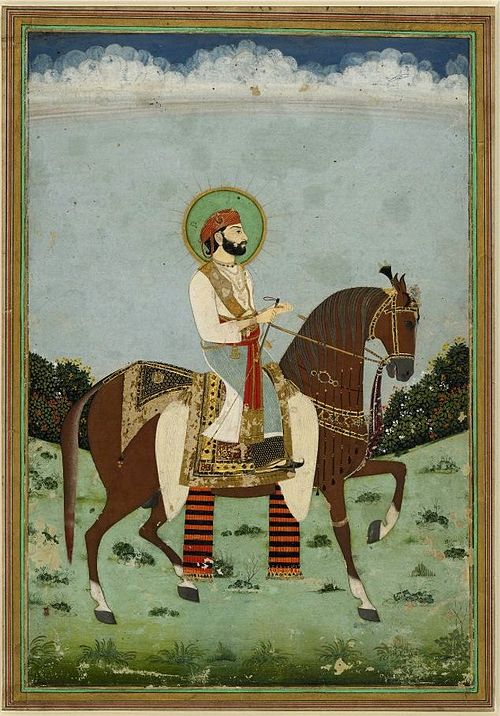
Jai Singh II of Amber
Emperor · Modern
69.5Total
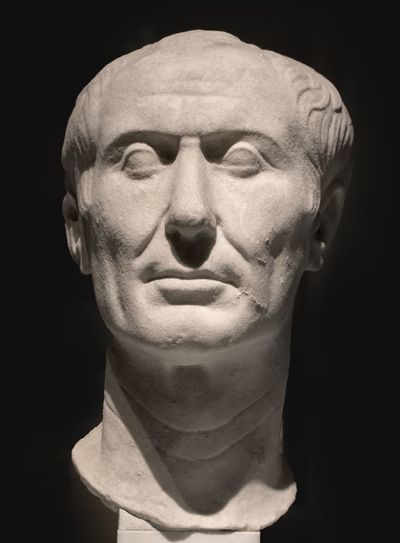
Julius Caesar
General · Ancient
83.3Total
Basic Information
Born
1688
-100
Died
1743
-44
Era
Modern
Ancient
Nationality
India
Roman Republic
Occupation
Emperor
General
Civilization
Indian
Western
Score Comparison
Military (10%)
52.2
88.0
Political (20%)
76.6
78.0
Influence (20%)
72.7
85.0
Legacy (20%)
66.8
82.0
Leadership (15%)
87.7
82.0
Strategy (15%)
52.5
88.0
TOTAL
69.5
83.3
Rankings
🥇
Julius CaesarLeader
Mil: 88.0Pol: 78.0Inf: 85.0
83.3
🥈
Jai Singh II of Amber
Mil: 52.2Pol: 76.6Inf: 72.7
69.5
+13.8 behind
How This Comparison Works
Algorithm
Each figure is scored on 6 dimensions (0—100 scale) based on structured historical data: Military (10%), Political (20%), Influence (20%), Legacy (20%), Leadership (15%), Strategy (15%). The weighted total produces the final ranking.
Data Sources
Scores are computed from structured sub-indicators in the database. Scale factors adjust for era (Ancient ×0.85, Modern ×1.0) and civilization size (Eastern ×1.05, Other ×0.80) to account for differences in population and military scale.
Maximum 3 Figures
Comparisons are limited to 2—3 figures to ensure readability and statistical meaningfulness.
Error Margins
±5 points per dimension — Sub-scores are derived from historical records with inherent uncertainty. Two figures within 5 points on a dimension should be considered roughly equivalent in that area.
Total Score Accuracy
±3 points overall — The weighted combination of 6 dimensions produces a total score with approximately ±3 points of uncertainty. Differences of less than 3 points are not statistically significant— the figures are effectively tied.
Known Limitations
- Historical records are incomplete and uneven across civilizations
- Figures from oral-tradition societies may be underrepresented
- Occupation labels can misclassify multi-role figures
- Scores measure capability and impact, not moral character
- Quantitative scoring is a comparison tool, not absolute truth
Capability Radar
Military (10%) — Battles & Warfare
Battles
45
95
Win Rate
40
92
Expansion
35
97
Political (20%) — Governance & Reform
Reform
65
90
Diplomacy
70
85
Economy
55
82
Influence (20%) — Cultural & Global Reach
Cultural
60
88
Global
40
94
Legacy (20%) — Historical Impact
Historical
65
95
Longevity
70
96
Leadership (15%) — Power & Stability
Tenure
60
75
Stability
50
60
Strategy (15%) — Tactics & Innovation
Strategy
55
94
Tactics
50
96
Reform
30
88
Analysis will be generated on first visit.
Scores and timeline are available below. The page will refresh automatically when ready.
Jai Singh II of Amber — Complete Timeline
1724 AD
Construction of Jantar Mantar in DelhiInvention◆ Major
Jai Singh II built the first Jantar Mantar observatory in Delhi, commissioned by Mughal Emperor Muhammad Shah. The observatory featured instruments like the Samrat Yantra and Jai Prakash Yantra for astronomical calculations. It was one of five observatories he built across India.
AstronomyScienceMughal Patronage
Impact: regionalconstructive
1727 AD
Founding of Jaipur cityCultural◆ Major
Jai Singh II founded the planned city of Jaipur, designed according to Vastu Shastra and Shilpa Shastra. The city was laid out in a grid pattern with wide streets and designated commercial zones. It became the capital of the Jaipur princely state.
Urban PlanningCity FoundingArchitecture
Impact: regionalconstructive
1733 AD
Battle of JavliWar
Jai Singh II led a campaign against the Jat ruler Badan Singh of Javli. The battle resulted in Jai Singh's victory and the annexation of Javli territory into Jaipur. This expanded Jaipur's influence in the region.
Territorial ExpansionRajput-Jat Conflict
Impact: regional
1734 AD
Construction of Jantar Mantar in JaipurInvention◆ Major
Jai Singh II built the Jantar Mantar observatory in Jaipur, a collection of 19 astronomical instruments. The observatory allowed precise measurements of time, celestial positions, and eclipses. It remains one of the largest stone observatories in the world.
AstronomyScienceArchitecture
Impact: globalconstructive
1735 AD
Publication of Zij-i Muhammad ShahiInvention◆ Major
Jai Singh II compiled the Zij-i Muhammad Shahi, an astronomical table based on observations from his observatories. The work updated earlier Islamic astronomical tables and provided accurate data for celestial movements. It was presented to Mughal Emperor Muhammad Shah.
AstronomySciencePublication
Impact: globalconstructive
Similar Comparisons
Comments & Discussion
No comments yet. Be the first to share your thoughts!