Loading...
Analysis will be generated on first visit.
Scores and timeline are available below. The page will refresh automatically when ready.
Harsha Vardhana vs Julius Caesar
Julius Caesar leads by 13.2 pts · 2 figures compared
…

Harsha Vardhana
Emperor · Ancient
70.1Total
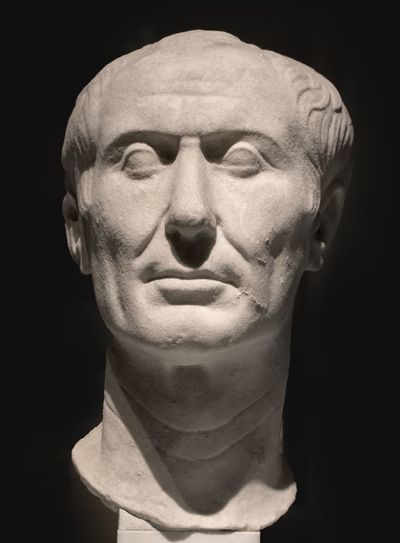
Julius Caesar
General · Ancient
83.3Total
Basic Information
Born
-590
-100
Died
—
-44
Era
Ancient
Ancient
Nationality
India
Roman Republic
Occupation
Emperor
General
Civilization
Indian
Western
Score Comparison
Military (10%)
73.0
88.0
Political (20%)
72.0
78.0
Influence (20%)
73.4
85.0
Legacy (20%)
69.7
82.0
Leadership (15%)
72.0
82.0
Strategy (15%)
59.6
88.0
TOTAL
70.1
83.3
Rankings
🥇
Julius CaesarLeader
Mil: 88.0Pol: 78.0Inf: 85.0
83.3
🥈
Harsha Vardhana
Mil: 73.0Pol: 72.0Inf: 73.4
70.1
+13.2 behind
How This Comparison Works
Algorithm
Each figure is scored on 6 dimensions (0—100 scale) based on structured historical data: Military (10%), Political (20%), Influence (20%), Legacy (20%), Leadership (15%), Strategy (15%). The weighted total produces the final ranking.
Data Sources
Scores are computed from structured sub-indicators in the database. Scale factors adjust for era (Ancient ×0.85, Modern ×1.0) and civilization size (Eastern ×1.05, Other ×0.80) to account for differences in population and military scale.
Maximum 3 Figures
Comparisons are limited to 2—3 figures to ensure readability and statistical meaningfulness.
Error Margins
±5 points per dimension — Sub-scores are derived from historical records with inherent uncertainty. Two figures within 5 points on a dimension should be considered roughly equivalent in that area.
Total Score Accuracy
±3 points overall — The weighted combination of 6 dimensions produces a total score with approximately ±3 points of uncertainty. Differences of less than 3 points are not statistically significant— the figures are effectively tied.
Known Limitations
- Historical records are incomplete and uneven across civilizations
- Figures from oral-tradition societies may be underrepresented
- Occupation labels can misclassify multi-role figures
- Scores measure capability and impact, not moral character
- Quantitative scoring is a comparison tool, not absolute truth
Capability Radar
Military (10%) — Battles & Warfare
Battles
75
95
Win Rate
70
92
Expansion
75
97
Political (20%) — Governance & Reform
Reform
65
90
Diplomacy
75
85
Economy
70
82
Influence (20%) — Cultural & Global Reach
Cultural
60
88
Global
45
94
Legacy (20%) — Historical Impact
Historical
65
95
Longevity
50
96
Leadership (15%) — Power & Stability
Tenure
70
75
Stability
65
60
Strategy (15%) — Tactics & Innovation
Strategy
70
94
Tactics
65
96
Reform
60
88
Analysis will be generated on first visit.
Scores and timeline are available below. The page will refresh automatically when ready.
Harsha Vardhana — Complete Timeline
606 AD
Conquest of Northern IndiaWar
Harsha Vardhana unified the kingdoms of northern India after the fall of the Gupta Empire. He conquered territories from Gujarat to Bengal, establishing the Vardhana dynasty's rule over a vast empire centered at Kannauj.
UnificationNorthern IndiaVardhana Dynasty
Impact: national
618 AD
Battle of the Narmada RiverWar◆ Major
Harsha attempted to expand southward but was defeated by the Chalukya king Pulakeshin II on the banks of the Narmada River. This battle halted Harsha's southern expansion and established the Narmada as the boundary between north and south India.
BattleChalukyaNarmada
Impact: national
620 AD
Patronage of the Nalanda UniversityCultural◆ Major
Harsha was a major patron of Nalanda University, donating land and resources. He built monasteries and supported Buddhist scholarship, making Nalanda a premier center of learning in Asia visited by scholars like Xuanzang.
PatronageNalandaBuddhism
Impact: globalconstructive
643 AD
Hosting of the Prayag AssemblyCultural◆ Major
Harsha organized a grand religious assembly at Prayag (Allahabad) every five years. He distributed his wealth to Buddhist, Hindu, and Jain monks, demonstrating his religious tolerance and generosity, as recorded by the Chinese pilgrim Xuanzang.
AssemblyReligious ToleranceXuanzang
Impact: nationalconstructive
Similar Comparisons
Comments & Discussion
No comments yet. Be the first to share your thoughts!