Loading...
Analysis will be generated on first visit.
Scores and timeline are available below. The page will refresh automatically when ready.
George Curzon vs Julius Caesar
Julius Caesar leads by 16.2 pts · 2 figures compared
…

George Curzon
Politician · Modern
67.1Total
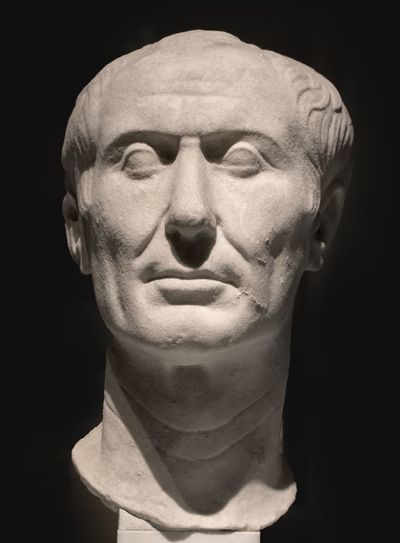
Julius Caesar
General · Ancient
83.3Total
Basic Information
Born
1859
-100
Died
1925
-44
Era
Modern
Ancient
Nationality
Great Britain
Roman Republic
Occupation
Politician
General
Civilization
Western
Western
Score Comparison
Military (10%)
33.8
88.0
Political (20%)
69.4
78.0
Influence (20%)
72.5
85.0
Legacy (20%)
67.7
82.0
Leadership (15%)
79.2
82.0
Strategy (15%)
66.3
88.0
TOTAL
67.1
83.3
Rankings
🥇
Julius CaesarLeader
Mil: 88.0Pol: 78.0Inf: 85.0
83.3
🥈
George Curzon
Mil: 33.8Pol: 69.4Inf: 72.5
67.1
+16.2 behind
How This Comparison Works
Algorithm
Each figure is scored on 6 dimensions (0—100 scale) based on structured historical data: Military (10%), Political (20%), Influence (20%), Legacy (20%), Leadership (15%), Strategy (15%). The weighted total produces the final ranking.
Data Sources
Scores are computed from structured sub-indicators in the database. Scale factors adjust for era (Ancient ×0.85, Modern ×1.0) and civilization size (Eastern ×1.05, Other ×0.80) to account for differences in population and military scale.
Maximum 3 Figures
Comparisons are limited to 2—3 figures to ensure readability and statistical meaningfulness.
Error Margins
±5 points per dimension — Sub-scores are derived from historical records with inherent uncertainty. Two figures within 5 points on a dimension should be considered roughly equivalent in that area.
Total Score Accuracy
±3 points overall — The weighted combination of 6 dimensions produces a total score with approximately ±3 points of uncertainty. Differences of less than 3 points are not statistically significant— the figures are effectively tied.
Known Limitations
- Historical records are incomplete and uneven across civilizations
- Figures from oral-tradition societies may be underrepresented
- Occupation labels can misclassify multi-role figures
- Scores measure capability and impact, not moral character
- Quantitative scoring is a comparison tool, not absolute truth
Capability Radar
Military (10%) — Battles & Warfare
Battles
0
95
Win Rate
0
92
Expansion
15
97
Political (20%) — Governance & Reform
Reform
75
90
Diplomacy
65
85
Economy
60
82
Influence (20%) — Cultural & Global Reach
Cultural
40
88
Global
50
94
Legacy (20%) — Historical Impact
Historical
55
95
Longevity
40
96
Leadership (15%) — Power & Stability
Tenure
70
75
Stability
55
60
Strategy (15%) — Tactics & Innovation
Strategy
0
94
Tactics
0
96
Reform
10
88
Analysis will be generated on first visit.
Scores and timeline are available below. The page will refresh automatically when ready.
George Curzon — Complete Timeline
1899 AD
Appointed Viceroy of IndiaPolitical Action◆ Major
George Curzon was appointed Viceroy of India. His tenure was marked by administrative reforms, including the partition of Bengal, and a focus on British imperial interests.
British IndiaViceroy
Impact: regional
1905 AD
Partition of BengalPolitical Action
Curzon ordered the partition of Bengal into two provinces, ostensibly for administrative efficiency. The move was widely seen as a divide-and-rule tactic, sparking widespread protests and the Swadeshi movement.
PartitionBengalSwadeshi
Impact: regionaldestructive
Resignation as ViceroyPolitical Action◆ Major
Curzon resigned as Viceroy after a policy dispute with the British government over the appointment of a military commander. His resignation marked the end of his active role in Indian affairs.
ResignationBritish India
Impact: regional
1919 AD
Appointed Foreign SecretaryPolitical Action◆ Major
Curzon was appointed British Foreign Secretary. He played a key role in post-World War I diplomacy, including the negotiation of the Treaty of Lausanne and the establishment of the League of Nations mandates.
Foreign SecretaryTreaty of Lausanne
Impact: global
Similar Comparisons
Comments & Discussion
PONTIFEX MAXIMUS6/17/2026
Caesar crossed the Rubicon with ONE legion—about 5,000 men—against the Senate's entire military apparatus. That's not gambling; that's reading the political terrain like a master strategist. Curzon partitioned Bengal with a stroke of his pen and zero ground support. He had India's entire civil service and thought he could just dictate demographics. The difference is brutal: Caesar calculated his odds, Curzon assumed his authority was enough. One played chess, the other played solitaire.
河神过河6/17/2026
凯撒跨过卢比孔河时,身后只有5000老兵,却敢直面罗马全境。这才是军事家的胆识——他把元老院的算盘看透了。寇松呢?1905年一纸上谕就分割孟加拉,连基层民情都没摸清。历史告诉你:敢赌不是问题,问题是你会不会算牌面。凯撒是赌神,寇松是送财童子。