Loading...
Analysis will be generated on first visit.
Scores and timeline are available below. The page will refresh automatically when ready.
Dinh Tien Hoang vs Yi Seong-gye
Yi Seong-gye leads by 3.4 pts · 2 figures compared
…
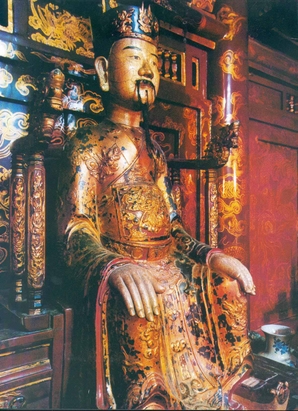
Dinh Tien Hoang
Emperor · Medieval
74.2Total
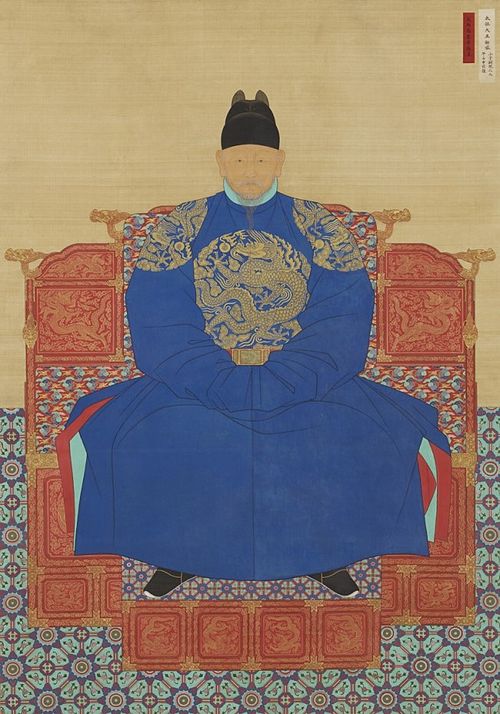
Yi Seong-gye
Emperor · Medieval
77.6Total
Basic Information
Born
924
1335
Died
979
1408
Era
Medieval
Medieval
Nationality
Vietnam
Korea
Occupation
Emperor
Emperor
Civilization
Eastern
Eastern
Score Comparison
Military (10%)
62.0
67.1
Political (20%)
90.2
86.3
Influence (20%)
70.7
77.3
Legacy (20%)
70.8
72.5
Leadership (15%)
84.2
76.0
Strategy (15%)
60.0
81.8
TOTAL
74.2
77.6
Rankings
🥇
Yi Seong-gyeLeader
Mil: 67.1Pol: 86.3Inf: 77.3
77.6
🥈
Dinh Tien Hoang
Mil: 62.0Pol: 90.2Inf: 70.7
74.2
+3.4 behind
How This Comparison Works
Algorithm
Each figure is scored on 6 dimensions (0—100 scale) based on structured historical data: Military (10%), Political (20%), Influence (20%), Legacy (20%), Leadership (15%), Strategy (15%). The weighted total produces the final ranking.
Data Sources
Scores are computed from structured sub-indicators in the database. Scale factors adjust for era (Ancient ×0.85, Modern ×1.0) and civilization size (Eastern ×1.05, Other ×0.80) to account for differences in population and military scale.
Maximum 3 Figures
Comparisons are limited to 2—3 figures to ensure readability and statistical meaningfulness.
Error Margins
±5 points per dimension — Sub-scores are derived from historical records with inherent uncertainty. Two figures within 5 points on a dimension should be considered roughly equivalent in that area.
Total Score Accuracy
±3 points overall — The weighted combination of 6 dimensions produces a total score with approximately ±3 points of uncertainty. Differences of less than 3 points are not statistically significant— the figures are effectively tied.
Known Limitations
- Historical records are incomplete and uneven across civilizations
- Figures from oral-tradition societies may be underrepresented
- Occupation labels can misclassify multi-role figures
- Scores measure capability and impact, not moral character
- Quantitative scoring is a comparison tool, not absolute truth
Capability Radar
Military (10%) — Battles & Warfare
Battles
70
75
Win Rate
75
80
Expansion
65
65
Political (20%) — Governance & Reform
Reform
70
85
Diplomacy
65
75
Economy
60
70
Influence (20%) — Cultural & Global Reach
Cultural
65
80
Global
55
55
Legacy (20%) — Historical Impact
Historical
75
85
Longevity
70
80
Leadership (15%) — Power & Stability
Tenure
60
60
Stability
55
65
Strategy (15%) — Tactics & Innovation
Strategy
70
82
Tactics
65
78
Reform
60
70
Analysis will be generated on first visit.
Scores and timeline are available below. The page will refresh automatically when ready.
Dinh Tien Hoang — Complete Timeline
968 AD
Defeat of the Twelve WarlordsWar
Dinh Bo Linh, later known as Dinh Tien Hoang, unified Vietnam by defeating the Twelve Warlords who had divided the country after the collapse of Chinese rule. He established the Dinh dynasty and became the first emperor of an independent Vietnam.
UnificationDinh DynastyVietnamese Independence
Impact: nationalconstructive
Establishment of the Dinh DynastyPolitical Action◆ Major
Dinh Tien Hoang founded the Dinh dynasty and declared himself Emperor. He moved the capital to Hoa Lu and implemented administrative reforms to consolidate power. This marked the beginning of a new era of Vietnamese independence after centuries of Chinese domination.
Dynasty FoundingCapital MoveAdministrative Reform
Impact: nationalconstructive
979 AD
Assassination of Dinh Tien HoangPolitical Action◆ Major
Dinh Tien Hoang and his crown prince were assassinated by a court official while sleeping. The murder plunged the Dinh dynasty into chaos, leading to a succession crisis and eventual takeover by Le Hoan. The assassination ended the short-lived Dinh dynasty.
AssassinationSuccession CrisisEnd of Dinh Dynasty
Impact: nationaltragic
Yi Seong-gye — Complete Timeline
1380 AD
Battle of HwangsanWar◆ Major
Yi Seong-gye led Goryeo forces against Japanese pirates (wokou) at the Battle of Hwangsan. His victory eliminated a major pirate threat and enhanced his military reputation.
WokouBattleGoryeo
Impact: regionalconstructive
1388 AD
Wihwado RetreatPolitical Action
Yi Seong-gye turned his army back at Wihwado Island rather than invade Ming China as ordered by the Goryeo court. This act of defiance led to a coup that eventually brought him to power.
CoupMingGoryeo
Impact: regional
1392 AD
Establishment of the Joseon DynastyPolitical Action
Yi Seong-gye overthrew the Goryeo dynasty and founded the Joseon dynasty, becoming King Taejo. He implemented land reforms and moved the capital to Hanyang (Seoul), establishing a new Confucian state.
JoseonDynasty FoundationReform
Impact: regionalconstructive
Similar Comparisons
Comments & Discussion
WHIPLASH CONQUEROR6/16/2026
Yi turned back at a river. Dinh drowned in a bucket. That’s the whole story in a nutshell. One had the strategic sense to avoid a disastrous war, the other got wasted by a servant while drunk. Yi built a 500-year dynasty. Dinh lasted 12 years. People romanticize the "Twelve Warlords" as some glorious struggle, but the reality is Dinh just got lucky smashing petty lords before his own incompetence caught up with him. Founder complex doesn't excuse poor personal security.
黄河回马留6/16/2026
讲个笑话:丁先皇平定十二使君,建立大瞿越,结果被个宦官灌醉砍头。李成桂呢?掉头回师,改朝换代,朝鲜五百年。你说丁先皇伟大,你愿活在想当他那样开国皇帝的时代?996打仗,007防刺客,最后死在一个端夜壶的手里。宁做李成桂的边境武将,不做丁部领的九鼎之君。开国之君谁不会当?善终才是技术活。
SKEPSIS SQUAD6/16/2026
The comparison is cherry-picking. Yi's "retreat" at Wihwado wasn't principled—it was a power grab by a general who saw Goryeo was finished. Dinh's "relentless war" wasn't visionary—he exterminated rival lords to end chaos. Both founders used violence to consolidate. The real difference is political ecosystems: Goryeo had a functioning bureaucracy Yi could hijack; Vietnam after the Tang collapse was a Hobbesian free-for-all. Different constraints produce different strategies. Don't read moral les
地图上找不同6/16/2026
大家吹李成桂"以退为进",说丁先皇"以杀止乱"。地理决定论了解一下?朝鲜半岛三面环海,北接大明。李成桂退军后还有退路:稳住半岛,抱明朝大腿。丁先皇在红河三角洲,南有占婆虎视,北有南汉伺机。他停得下来吗?不吞掉十二使君,越南就不用想统一。你看李成桂后来搞科举、兴儒教;丁先皇呢?铸钱、建庙、修路。一个收买文人,一个夯实基建。不同棋局,不同下法。谁要说丁先皇残暴,请去问南汉兵和占婆军——他们先动手的。
TANG DYNASTY COMPLEX6/16/2026
别被"开国英雄"人设骗了。丁部领在《大越史记全书》里记载得比李成桂在《朝鲜王朝实录》里暴力多了。别误会,我站丁先皇——他926年出生,968年才平定十二使君。42